Choosing among China’s top Industrial Cantilever Rack System manufacturers requires more than comparing prices or product photos. The right system must match the materials, handling equipment, and available floor space. A bundle of steel tubing needs different arm lengths and load ratings from timber boards or aluminum profiles. Measure the heaviest load, its length, and how often operators retrieve it.
As a practical design principle, “Choose the rack for the load, not the catalog image.” Confirm each arm’s capacity, column spacing, base dimensions, and anchoring requirements with the manufacturer. Ask for drawings that show the proposed layout and rated loads. A clear answer should explain how the system handles uneven loading, future expansion, and routine inspection. If specifications are vague, pause. It is a warning sign.
A reliable supplier should also explain its manufacturing process, quality checks, installation support, and spare-parts availability. Request project references for similar long-load applications. Then compare the full offer, including transport, installation, and after-sales service—not just the quoted rack price. Small details matter. A few centimeters can affect aisle clearance and forklift access.
This guide examines leading Chinese manufacturers through practical criteria, including engineering capability, customization, product documentation, and service reliability. No supplier is right for every warehouse. The best choice is the one that can support its claims with clear calculations, consistent documentation, and relevant project experience. One limitation deserves attention: published specifications cannot replace a site-specific assessment. Before ordering, verify the proposed design against actual loads and operating conditions.
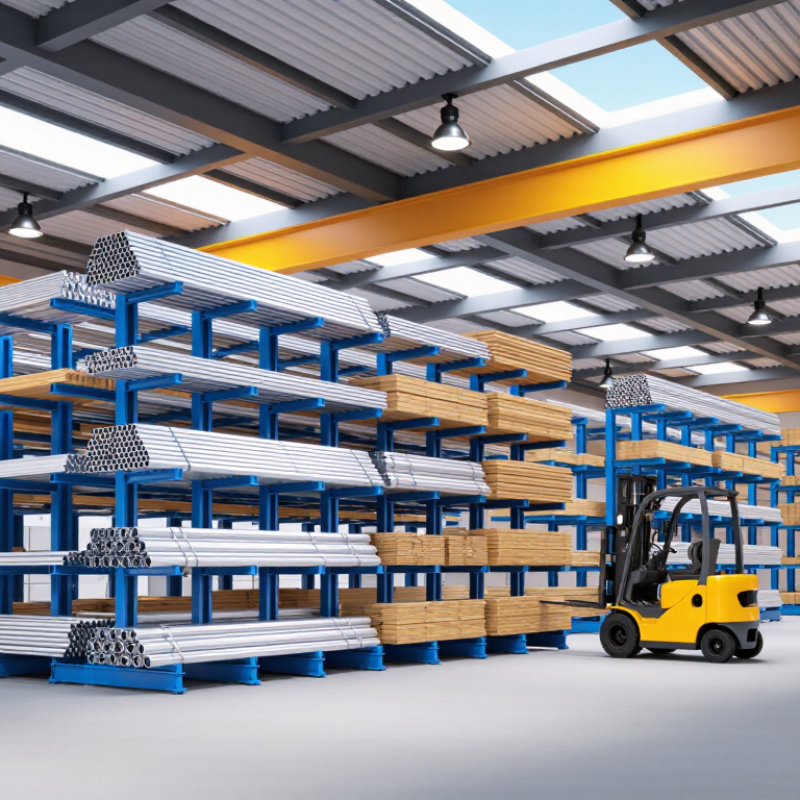
An industrial cantilever rack stores long or awkward loads, such as timber, pipes, and metal sections. Its open front lets forklifts place items without shelf uprights blocking access. The system has vertical columns, projecting arms, a supporting base, and bracing between columns. Arms carry the load; the base and braces help stabilize the structure. Simple in appearance, but not simple to size.
Capacity depends on arm length, column spacing, steel dimensions, anchoring, and how weight is distributed. A long bundle placed near an arm’s tip creates different forces than one resting close to the column. Check the rack’s rated capacity and installation drawings before loading it. Floor conditions matter too. A sound rack on an uneven floor may still need careful assessment.
Tips: Keep loads centered on each arm and within its rated limit. Use end stops where suitable, and inspect arms, braces, anchors, and visible welds regularly. Record damage promptly. One detail is easy to overlook: operators may assume every arm has equal capacity, though the actual rating depends on the rack configuration. Clear labels and consistent loading habits reduce that risk.
China Top Industrial Cantilever Rack System Manufacturers?
How Arm, Column, and Bay Load Ratings Shape Rack Selection
Choosing a cantilever rack starts with the load, not the aisle. Measure each bundle’s weight, length, and support points. Arm ratings usually apply to each arm, but capacity can change with load placement and arm spacing. A pipe resting near the tips creates different forces than one supported close to the column. Small details matter.
Column capacity reflects the upright’s ability to carry loads from multiple arms. Bay capacity accounts for the combined load across a rack section, subject to its design and configuration. These ratings are not interchangeable. A rack may have strong arms yet exceed its column limit when every level is fully loaded. It is tempting to focus on the biggest number on a chart. That is not enough.
Check the rating documentation for the exact arm length, column height, spacing, and loading conditions. Keep bundles centered and evenly supported, and confirm that the floor and anchoring suit the installation. Forklift impacts and uneven loads can also affect real-world performance. A qualified rack professional can review the layout and verify the selected capacities. In practice, measurements are not always perfect, so leave room for uncertainty rather than designing right at the limit.
Worked planning example: each 1.0 m arm is rated at 500 kg. With four storage levels and two opposing arms supporting each level, the bay capacity is 4,000 kg; each column carries up to 2,000 kg in this layout. These figures illustrate how component ratings relate and are not universal product ratings. Confirm the engineered ratings for the specific rack, load, anchoring, and floor conditions before use.
ANSI MH16.3-2016 provides design, testing, and use guidance for industrial steel cantilevered storage racks. It gives buyers a practical basis for comparing engineering documents, not just steel thickness or advertised capacity. Ask manufacturers to show how rated loads apply to the exact rack configuration, including arm length, column spacing, and load position. Details matter.
A credible evaluation should consider stability, connections, base plates, and anchorage alongside stated capacities. Check whether calculations and test information match the proposed rack and operating conditions. A system designed for evenly distributed bundles may behave differently when long stock rests near an arm’s tip. The standard is a benchmark, not a substitute for site-specific engineering or careful installation. I would also question vague capacity claims; they can sound reassuring while leaving important assumptions unstated.
Tips: Request drawings, load tables, and documentation showing the applicable design assumptions. Confirm the intended material dimensions and handling method before ordering. Keep the approved capacity information visible near the rack, and inspect for bent arms, loose connections, or damaged anchors. Small defects deserve attention. Even a well-designed rack needs sensible loading and regular checks.
Comparing Chinese cantilever rack manufacturers means checking how capacity is calculated, not just reading a headline load rating. Ask for ratings per arm, column, and complete bay, with the assumed load length and distribution clearly stated. Long steel tubes placed unevenly can create very different forces from evenly spaced bundles. Small details matter. Request engineering drawings and calculations for your actual product sizes, forklift approach, and floor anchors. A catalog figure can look reassuring, but it may rely on conditions your warehouse does not have.
Materials deserve the same scrutiny. Confirm steel grades, member thicknesses, weld details, and surface treatment in writing; a thicker-looking upright is not proof of a stronger system. Ask how the manufacturer checks weld quality and protects exposed steel from corrosion. Then compare compliance documents against the standards required for your project and destination market. Verify document scope, issuing body, and whether reports cover the proposed rack configuration. A neat certificate alone is not enough. I would also request inspection records or arrange an independent review before production approval. There is room for judgment here: paperwork can be incomplete, and buyers should note unanswered questions rather than assume every supplier uses the same test method.
A cantilever rack’s capacity claim is only meaningful for a stated arm length, column spacing, and load pattern. Ask the factory for drawings, steel mill certificates, and a traceable bill of materials. Check that measured arm thickness, column dimensions, and hole spacing match the approved drawings. Small gaps matter. They can change how a load sits.
The ANSI/RMI MH16.1 specification sets design and testing criteria for industrial steel storage racks; request evidence that the proposed system was evaluated against the applicable edition. Inspect welds and coating records, and ask how nonconforming parts are quarantined. For a factory audit, watch a sample assembly and compare its labels with the test documentation. One rack is not every rack. BLS’s 2023 Survey of Occupational Injuries and Illnesses reports higher recordable injury rates in warehousing and storage than across private industry, making clear load labels and installation checks practical safeguards. Ask for the test method, configuration, and report date—not just a capacity figure. I would still verify the finished installation: uneven floors, damaged anchors, or changed beam spacing can undermine a sound factory design.
Use these checks to compare manufacturers and verify product claims. Rack capacity depends on the complete configuration, loading conditions, materials, connections, and installation—not on a single component or headline rating.
| Verification Area | What to Request or Inspect | How to Verify It | Warning Signs |
|---|---|---|---|
| Factory identity and production capability | Registered business details, factory address, production-process list, equipment inventory, and recent production records for structural rack components. | Match the legal entity and site details across business documents, quotations, purchase contracts, and inspection records. Conduct a live or independent factory audit and observe the relevant fabrication processes. | Unexplained differences between the seller, contract party, factory, and document issuer; a site visit that cannot show the claimed production processes. |
| Design basis and load rating | Project-specific drawings, design assumptions, rated arm and column capacities, allowable load diagrams, and the calculation basis for the proposed rack configuration. | Check that the documents identify the actual arm length, column spacing, number of arms, base arrangement, load position, and loading pattern. Have a qualified structural engineer review the design for the applicable project requirements. | A capacity figure without stated conditions, or a rating presented as applicable to every arm length, layout, or loading arrangement. |
| Steel grade and material traceability | Material certificates for the steel used in columns, arms, bracing, and base components, including grade and heat or batch identification where available. | Compare certificate details with purchase and production records; check that material markings or batch records can be linked to the supplied components. Use independent material testing if traceability or grade is in doubt. | Generic certificates with no clear link to the supplied batch, or a claimed steel grade that is absent from supporting records. |
| Dimensions and fabrication tolerances | Approved drawings and specified dimensions for arm length, column section, base plates, holes, connection details, and component tolerances. | Measure representative finished parts with suitable calibrated tools and compare results against the approved drawings and agreed tolerances. Record sample identification and results. | Measurements taken only from brochures or unapproved samples; no agreed tolerances or inspection records. |
| Welding quality | Welding procedures where applicable, welder qualification records where required, inspection instructions, and records for critical welded joints. | Inspect representative welds for visible defects and consistency. Specify any required non-destructive examination, method, sampling, and acceptance criteria in the contract or inspection plan. | Claims of “100% tested” without identifying the test method, locations, results, or acceptance criteria. |
| Coating and corrosion protection | Specified finish, coating process, surface preparation requirements, and documented coating inspection results. | Confirm the finish matches the purchase specification. Measure coating thickness using an appropriate calibrated gauge where a thickness requirement is specified; inspect coverage and surface condition. | A coating thickness claim without a specified measurement method or records, or a finish that does not match the agreed environment and specification. |
| Prototype or load-test evidence | Test reports identifying the tested component or assembly, configuration, load application, test method, results, and test organization. | Confirm that the tested configuration is representative of the proposed rack and that the report states its scope and limitations. Treat a component test as distinct from proof of capacity for a complete installed system. | A report for a different design, an unidentified sample, or a test result used as a universal system rating. |
| Production quality control | Incoming material checks, in-process inspection records, final inspection criteria, nonconformance handling, and batch identification. | Review recent, dated records and trace a sample finished component back through inspection and material documentation. Confirm that rejected or reworked items are recorded. | Blank templates presented as completed records, inconsistent dates, or no traceable connection between inspection records and production batches. |
| Installation and site requirements | Installation instructions, anchoring details, required floor information, layout drawings, and guidance on inspection and safe loading. | Check compatibility with the project’s slab, anchors, clearances, load handling equipment, and operating conditions. Confirm that installation and inspection responsibilities are clearly defined. | Anchoring or floor suitability treated as automatic, without checking site conditions or the project design. |
| Standards and compliance claims | A list of claimed standards or regulations, their editions, the products and processes covered, and supporting certificates or assessment reports. | Verify the issuing organization, validity, scope, and product coverage directly with the issuer where possible. Confirm with the project engineer which requirements apply to the intended market and installation. | A certificate shown without its scope or validity, or a general standards claim presented as proof that every design is suitable. |
| Packaging, identification, and shipment | Packaging plan, component labels, packing list, quantity records, and protection measures for transport and storage. | Compare a pre-shipment inspection against the approved drawings, packing list, component identification, and agreed finish requirements. Photograph discrepancies before dispatch. | Unmarked components, mismatched quantities, or no way to identify components against the approved drawings. |
Note: This checklist is for supplier due diligence, not a substitute for project-specific engineering, applicable local requirements, professional inspection, or safe operating procedures.
Measure each bundle’s weight, length, and support points. Start with the actual load, not the aisle.
No. It usually applies to one arm under stated conditions. Load position and arm spacing can change the forces.
Arm capacity covers an individual arm. Column capacity covers loads transferred through an upright. Bay capacity covers the combined load across one rack section. They are not interchangeable.
A pipe near an arm’s tip creates different forces than one supported near the column. Keep bundles centered and evenly supported. Small details matter.
Ask for drawings, steel mill certificates, and a traceable bill of materials. Confirm dimensions against approved drawings, including arm thickness and hole spacing.
Request the test method, rack configuration, report date, and evidence of evaluation against the applicable design specification. Watch a sample assembly and compare its labels with the records. One sample is not every rack.
Check floor condition, anchoring, and installed spacing. Uneven floors, damaged anchors, or changed spacing can undermine a sound design. Real sites are messy.
Better not. Leave room for uncertainty, since measurements may be imperfect. Ask a qualified rack professional to review the layout and capacities.
An Industrial Cantilever Rack System is designed to store long, bulky, or irregular materials on horizontal arms extending from vertical columns. Its main components include the base, columns, arms, bracing, and connections, which work together to support loads and maintain stability. Choosing a suitable system requires more than checking its overall capacity: arm ratings, column ratings, and the load capacity of each bay should all match the intended materials, storage layout, and handling equipment. Understanding how these ratings interact helps prevent a system from being selected based on a single misleading number.
ANSI MH16.3-2016 provides a benchmark for cantilever rack design and testing, making it a useful reference when comparing manufacturers. Buyers can assess capacity claims alongside material specifications, engineering documentation, and evidence of applicable compliance. Factory reviews should also examine production processes, weld quality, component dimensions, load testing records, and quality-control procedures. These checks help verify that a rack’s stated performance is supported by consistent manufacturing and reliable documentation.