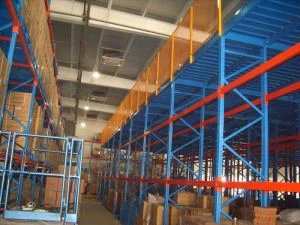
Structural Heavy-Duty Mezzanine
Built with heavy-section structural steel columns and I-beam main purlins. Provides large column-free spans underneath (up to 8 to 10 meters) for uninhibited forklift travel, assembly lines, or bulky staging areas.
Engineered for global warehouse directors, supply chain managers, and industrial logistics consultants seeking high-gain vertical space expansion without building extensions or commercial relocation.
As industrial real estate costs escalate globally, logistics managers face a critical challenge: maximizing storage volume within existing building footprints while keeping structural costs strictly controlled.
A Multi Layer Steel Mezzanine Platform converts unused overhead overhead space into functional, multi-tier floor area for warehousing, order picking, automated sorting, or administrative office suites. Unlike permanent concrete expansions that require extensive architectural modifications and lengthy permitting cycles, modular heavy-duty steel mezzanine platforms provide flexible, bolt-together structural strength that can be expanded, relocated, or reconfigured as operational demands evolve.
At Random Racks Storage Equipment Co., Ltd., we design, engineer, and manufacture factory-direct multi-tier structural platforms engineered to meet international safety codes including AS4084, EN 15512, FEM 10.2.02, and RMI standards. From cold-rolled high-tensile steel profiles to heavy structural H-beams, our systems deliver maximum deflection control (up to L/500) and uniform load distribution up to 1,500 kg/m² per floor level.
Selecting the ideal Multi Layer Steel Mezzanine Platform configuration depends on operating height, pallet handling methodology, uniform distributed load (UDL), and pick-face density. Below are our three flagship structural configurations designed for international industrial applications:
Built with heavy-section structural steel columns and I-beam main purlins. Provides large column-free spans underneath (up to 8 to 10 meters) for uninhibited forklift travel, assembly lines, or bulky staging areas.
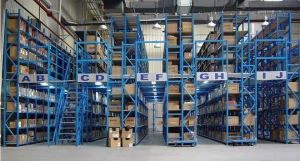
Utilizes heavy-duty shelf or pallet rack upright frames as the vertical support columns for walkway deck levels. Ideal for spare parts, e-commerce order picking, and dense SKU hand-loading across 2 to 4 tiers.
Engineered to integrate vertical reciprocating conveyors (VRC), spiral chutes, automated guided vehicles (AGVs), and safety pallet tipping gates for high-throughput 24/7 logistics distribution centers.
Choosing the correct floor decking is crucial for safety, noise dampening, fire code compliance, and trolley wheel mobility across upper levels.
| Decking Material | Load Profile | Fire & Water Sprinkler Clearance | Noise Level | Best Suited Application |
|---|---|---|---|---|
| Solid Steel Checker Plate (3mm–5mm) | Heavy (1000–1500 kg/m²) | Requires lower-level sprinkler piping | Moderate | Heavy machinery, oil-resistant zones, tool cribs |
| Perforated Steel Planking | Medium-Heavy (500–1000 kg/m²) | High (up to 50% open area for sprinkler drainage) | Low | Multi-story logistics centers, fire-regulated facilities |
| Steel Bar Grating (Welded/Press-locked) | Very Heavy (1000+ kg/m²) | Maximum airflow & light penetration | High (Mesh effect) | Industrial manufacturing, chemical storage, outdoor platforms |
| High-Density Plywood + Galvanized Sub-sheet | Light-Medium (300–600 kg/m²) | Standard building code compliance | Quiet / Soft walking | E-commerce manual picking, retail stockrooms, office decks |
Note: All decking options manufactured by Random Racks Storage Equipment Co., Ltd. are treated with durable anti-corrosion finishes, including hot-dip galvanizing or thermosetting powder coating.
As supply chain automation and ESG (Environmental, Social, and Governance) targets become executive priorities, global buyers must evaluate mezzanine procurement through a future-proof lens. Here are four emerging trends transforming steel platform specifications:
Next-generation multi-tier platforms require ultra-flat steel floor plates with tight joints (<1mm tolerance) and high structural stiffness to accommodate Autonomous Mobile Robots (AMRs) operating on upper levels without sensor distortion or frame flex.
Global logistics operators are moving away from on-site welding due to fire hazards and labor costs. Advanced factory pre-punching and laser-cut structural connections enable 100% bolted field installation, shortening on-site erection time by over 40%.
Corporate sustainability mandates favor manufacturers that utilize recyclable structural steel coils (Q235B / Q355B grades) produced with electric arc furnace (EAF) technology and non-toxic thermosetting epoxy-polyester coatings.
High-capacity mezzanines in seismic zones are increasingly outfitted with strain gauges and deflection sensors connected to facility IoT networks, providing real-time structural health monitoring during peak load cycles.
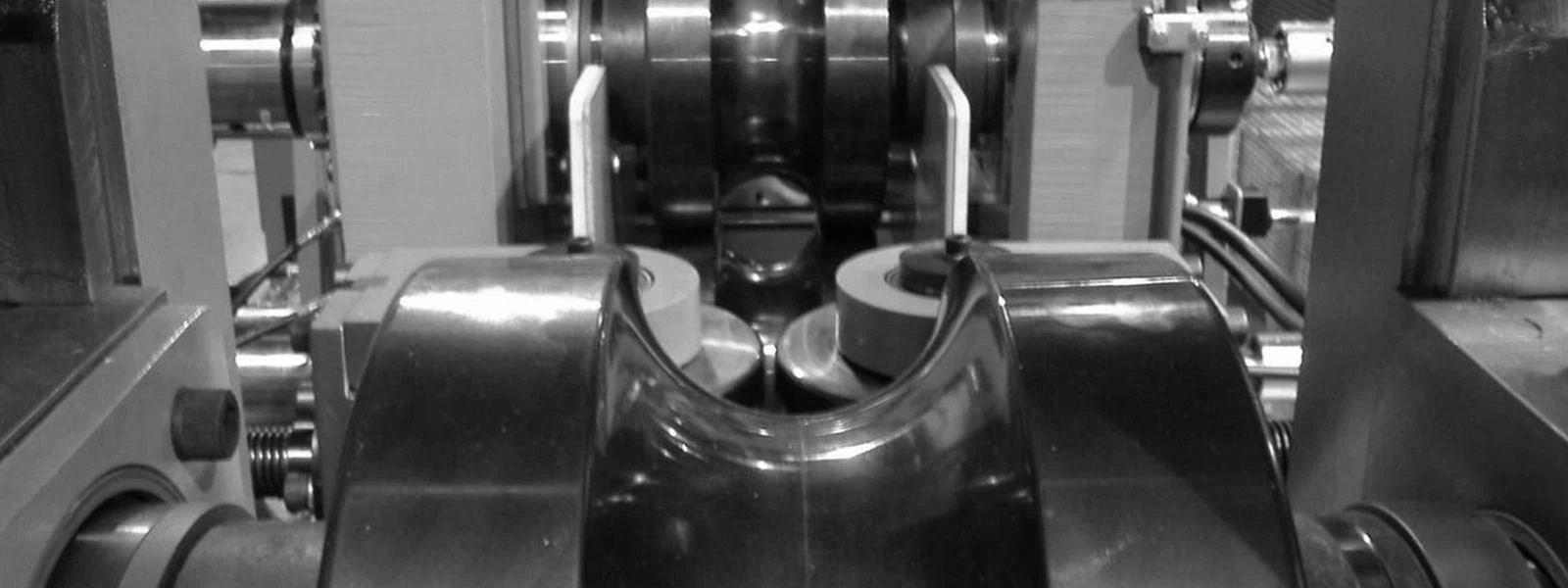
From a manufacturing standpoint, Random Racks Storage Equipment Co., Ltd. continues to invest in advanced roll-forming machinery, automated robotic welding cells, and precision laser cutting systems. The evolution of steel platform manufacturing emphasizes three technical breakthroughs:
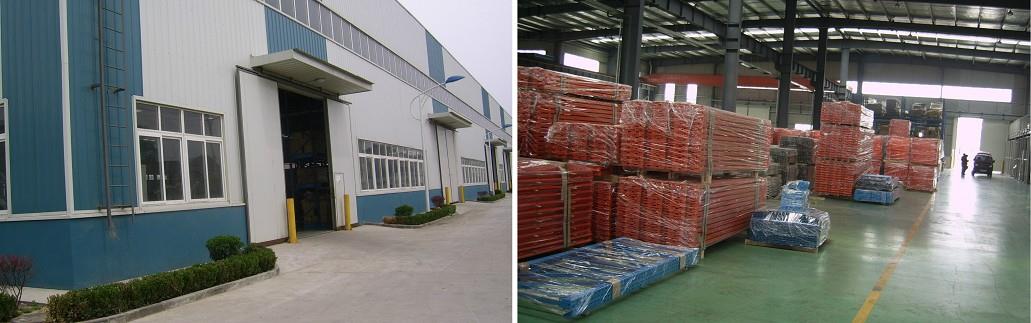
Random Racks Storage Equipment Co., Ltd. specializes in industrial warehouse storage racks, heavy steel mezzanine platforms, logistics equipment, and material handling systems. Founded in 2004, with our main export brand registered in 2012, we operate a modern production facility equipped with high-precision roll-forming lines, automated welding robots, and thermosetting powder coating lines.
Because we control the full manufacturing process — from structural steel coil inspection to final powder coat curing — global buyers receive traceable steel mill certifications, rigorous dimensional quality control, and guaranteed production lead times.
In-house steel fabrication since 2004.
Verified static & dynamic load reports.
Load calculation & CAD layout design.
Custom colors, decking, and beam sizes.
Steel profile & decking samples available.
A proven engineering process ensuring structural integrity and precise jobsite fit.
Client submits floor drawing, clear height under truss, concrete slab specs, and target load capacity.
Random Racks structural engineers prepare 3D models, FEA stress reports, and bill of materials.
Automated roll-forming, robot welding, shot-blasting, and thermosetting powder coating.
Components bundled with plastic film wrap and steel strapping, optimized for container volume.
Detailed component labeling, 3D erection assembly drawings, and video supervision support.
Comprehensive technical answers to critical questions asked across global procurement searches.
Load capacities for Multi Layer Steel Mezzanine Platforms designed by Random Racks Storage Equipment Co., Ltd. typically range from 300 kg/m² to over 1,500 kg/m² (60 to 300 lbs/sq.ft). The exact capacity is custom-engineered based on your operational requirements by adjusting column section profiles (such as 100x100mm, 150x150mm box columns or H-beams), primary beam depths, joist center-to-center spacing (typically 500mm to 1000mm), and deck plating thickness.
Every layout is calculated for both Uniform Distributed Load (UDL) and Point Loads (such as concentrated pallet jack or trolley wheel loads) to prevent permanent deck deformation.
A Rack-Supported Mezzanine Floor uses industrial storage racking (such as medium-duty longspan shelving or heavy-duty pallet racking frames) as the primary vertical load-bearing columns. This design is highly cost-effective for multi-tier e-commerce order picking where storage shelves are required both above and below the floor levels.
A Heavy Structural Steel Mezzanine Platform utilizes wide-flange structural H-beam columns and heavy main girders, creating wide open bays beneath the platform (6m to 10m grid spans). This leaves the lower ground floor entirely clear for forklift traffic, assembly machinery, or bulk packing lines.
Our structural engineers design multi-layer platforms in strict accordance with major global codes depending on the buyer's destination country:
Fire code compliance often dictates decking selection. For facilities requiring downward sprinkler water penetration, Random Racks provides perforated steel floor plates (up to 50% open area) or open steel bar grating. These decking types allow water flow from roof-mounted ESFR sprinklers through lower deck levels. Additionally, integrated electrical conduit channels can be pre-punched into main beams to simplify LED lighting and emergency sensor wiring.
Once CAD layout drawings and structural calculations receive client approval, standard factory manufacturing takes 20 to 30 days. For projects exceeding 5,000 square meters, production schedules are phased to match shipping container dispatch. Overseas transit times vary by destination port (typically 12–18 days to Australia/Southeast Asia, 22–32 days to Europe, and 18–28 days to the Americas).
Yes. As a direct manufacturer, Random Racks Storage Equipment Co., Ltd. offers complete OEM/ODM flexibility. Columns, beams, and handrails can be powder-coated in custom RAL colors to match corporate branding or safety zone coding. Every shipment includes step-by-step 3D assembly guides, component piece-mark tags, and on-site engineering supervision upon request.
Transform your overhead space into profitable operational floor area. Send us your building dimensions and storage goals for a free 3D design and factory-direct quote.
Include these key details in your inquiry to accelerate your drawing turn-around time: