Electric Mobile Racking System: Maximized Cube Storage
Double your warehouse pallet capacity, eliminate unnecessary aisles, and cut cold chain energy costs by up to 50% with motorized high-density rack engineering.
Electric Mobile Racking System Engineering & Procurement Guide: Maximizing Cube Utilization, Cold Chain ROI, and Automation Integration
An engineer-backed breakdown of high-density motorized racking technology, structural floor loading, safety arrays, and total cost of ownership for global B2B procurement leaders.
Global warehouse operators and logistics developers face a sharp structural challenge: rising industrial real estate costs, surging energy rates in cold-chain logistics, and the urgent imperative to increase storage density without giving up direct selectivity. The Electric Mobile Racking System (also designated as Motorized Mobile Pallet Racking) stands out as the ultimate engineering response to this dilemma.
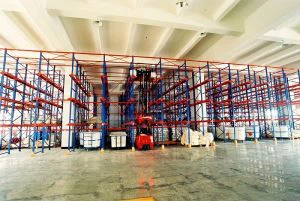
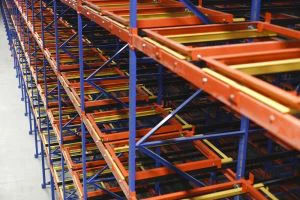
Unlike static selective pallet racking—which requires fixed forklift aisles for every pair of rack rows—an Electric Mobile Racking System mounts heavy-duty structural steel racks onto electronically driven mobile bases that glide across embedded floor guide rails. By opening a single working aisle on demand via PLC control, this architecture eliminates up to 80% of unused aisle footprint. The result is an instant increase of 85% to 100% in storage capacity within the exact same building footprint, while preserving 100% direct access to every individual SKU.
Information Gain Insight: Static vs. Electric Mobile Racking ROI
While standard Selective Pallet Racking utilizes only 35–40% of warehouse floor area for actual storage, an Electric Mobile Racking System increases floor space utilization to over 85%. In refrigerated or frozen warehouses (-25°C to -30°C), this dense volume configuration reduces cooled air volume requirements per pallet by up to 50%, generating direct operational energy savings that pay back the capital expenditure within 14 to 26 months.
Random Racks Storage Equipment Co., Ltd. designs and manufactures four primary configurations of Electric Mobile Racking Systems tailored to distinct operational profiles, load thresholds, and thermal environments:
Designed for industrial logistics, heavy machinery parts, and high-bay distribution hubs. Supports bay loads up to 24,000 kg with continuous mobile blocks exceeding 800 metric tons per block.
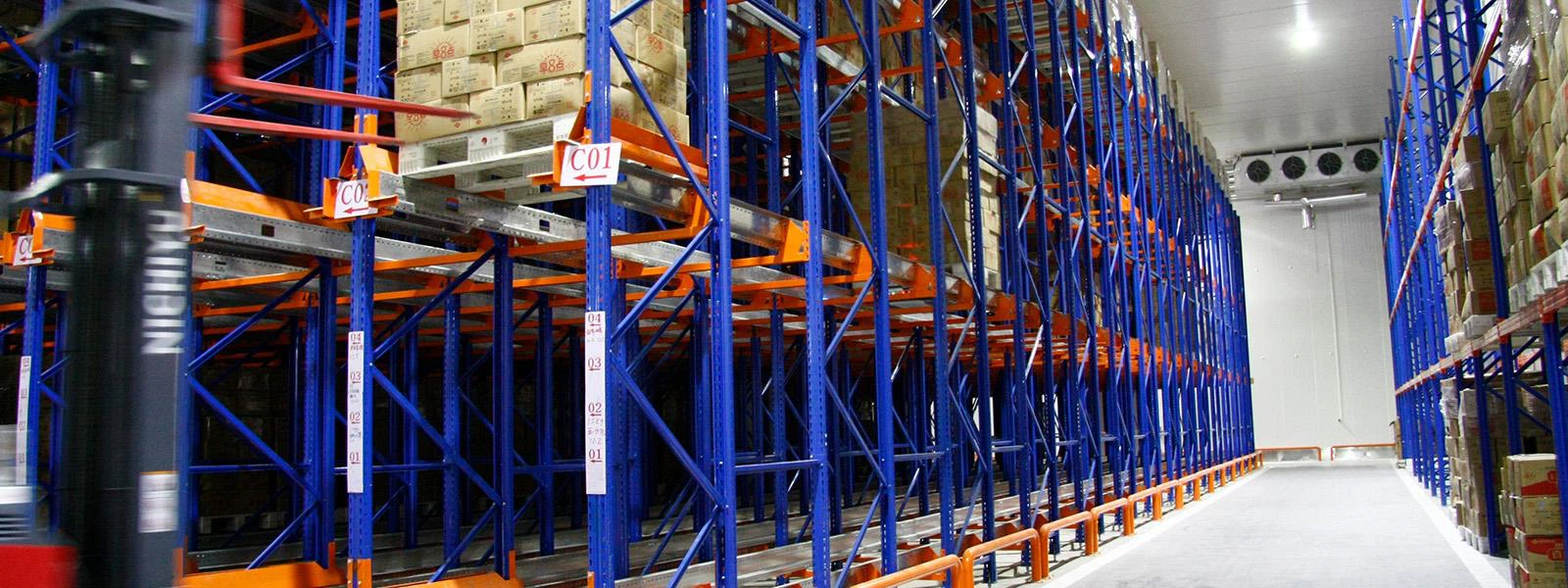
Built with low-temperature structural steel, IP65 anti-condensation control boxes, and sub-zero synthetic lubricants. Engineered to prevent cold bridge effects and wheel flat-spotting in frozen environments.
Optimized for long, non-standard items such as steel pipes, aluminum extrusions, timber packs, and sheet metal. Combines obstruction-free cantilever arms with motorized base mobility.
2. Deep Technical Architecture: Electrical, Mechanical, and Safety Systems
An Electric Mobile Racking System is a complex integration of civil engineering, structural steel framing, mechanical drives, and automation safety controls. Understanding these sub-systems ensures procurement teams specify the correct performance parameters:
A. Steel Structural Framing & Floor Rail Embedment
The mobile chassis base is fabricated from high-tensile hot-rolled or cold-formed steel channels. It travels on heavy-duty machined steel wheels along precision-leveled steel guide rails embedded into the concrete slab. Random Racks offers two primary floor rail installation methods:
Recessed In-Slab Rail System: Rails are cast directly into sub-floor recesses or top screed cuts during concrete pouring. Flush with the finished floor surface, this setup ensures smooth, bump-free forklift transit across aisles.
Surface-Mounted Flat Rail System: Ideal for existing warehouse retrofits where floor cutting is restricted. Features low-profile tapered ramp plates to facilitate seamless forklift wheel crossing.
B. Drive System & Variable Frequency Control (VFD)
Power distribution is managed via synchronized multi-motor drives operating with Variable Frequency Drives (VFD). This configuration enables soft start and soft stop control, preventing pallet vibration, tip-overs, or structural jerk during base movement. Siemens or Schneider Electric PLCs manage motion sequencing, remote radio frequency (RF) controls, and real-time status reporting.
C. Multi-Layer Active & Passive Safety Arrays (EN 15095 Compliant)
Operational safety inside high-density mobile blocks is maintained through redundant safety systems engineered according to European standard EN 15095:
Aisle Entrance Light Curtains: Infrared barrier screens cover the length of every open aisle. If a forklift or technician interrupts the light beam, base movement freezes instantly.
Base Foot Safety Bump Bars: Micro-switch contact bumpers along the lower chassis trigger immediate mechanical braking upon contact with unexpected obstacles.
Optical Distance & Anti-Collision Sensors: Laser distance meters maintain alignment across long rack runs (up to 50 meters), preventing rack frame skewing or racking binding.
Random Racks offers structural point-load calculations, slab flatness specs (DIN 18202), and complete electrical single-line diagrams at no initial cost.
As logistics environments shift toward higher automation and carbon neutrality, the Electric Mobile Racking System is evolving rapidly across four technological fronts:
1. Seamless Convergence with AGVs, AMRs, and Automated Forklifts
Modern distribution centers no longer rely solely on human-operated reach trucks. Electric Mobile Racking Systems are increasingly integrated via API with Warehouse Management Systems (WMS) and Fleet Management Software controlling Autonomous Mobile Robots (AMRs) and Automated Guided Vehicles (AGVs). The WMS automatically signals the mobile rack block to open the required aisle prior to the AMR's arrival, eliminating vehicle dwell time and enabling 24/7 dark-warehouse operations.
Next-generation mobile bases embed smart vibration sensors, motor thermal monitors, and wheel-wear detectors linked to cloud analytics dashboards. Maintenance teams receive automated alerts for motor bearing wear or rail misalignment long before structural downtime occurs, maintaining 99.9% system operational availability.
3. Low-Carbon Sustainable Cold-Chain Logistics
Energy efficiency regulations and carbon footprint tracking are driving cold storage operators away from static racking. Because freezing empty aisle air accounts for up to 40% of cold room utility overhead, dense electric mobile racking blocks represent a primary decarbonization tool for third-party logistics (3PL) providers.
4. Future Procurement Trends for B2B Global Buyers
Procurement executives evaluating high-density storage are shifting away from traditional evaluation methods to holistic total-cost-of-ownership (TCO) benchmarks:
Shift from Rigid AS/RS to Flexible Mobile Automation: While automated storage and retrieval systems (AS/RS) require massive capital investment and rigid building envelopes, Electric Mobile Racking provides comparable volumetric storage density at 40% to 60% lower CapEx, with the flexibility to relocate or reconfigure racking as business demands evolve.
Focus on Seismic & Structural Certification: Global buyers in active seismic regions (such as the Pacific Rim, Americas, and Southern Europe) demand dynamic seismic modeling. Random Racks designs mobile bases with integrated anti-topple rail locks and top-beam safety ties complying with EN 15512 and RMI standards.
Factory-Direct OEM Customization & Modular Sourcing: Sourcing directly from certified manufacturers allows buyers to customize beam profile gauges, upright punching pitch, paint systems (hot-dip galvanized or epoxy powder coating), and PLC hardware brands to match localized facility spares standards.
5. Enterprise Strengths & Why Sourcing from Random Racks Advantageous
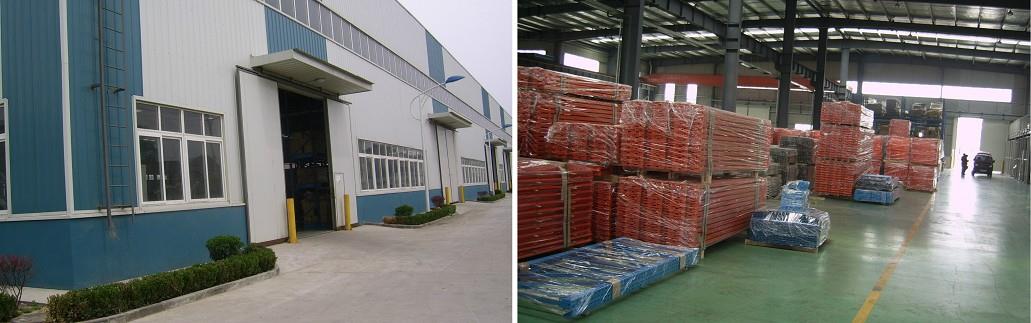
Founded in 2004 (with brand registration in 2012), Random Racks Storage Equipment Co., Ltd. has grown into a premier global racking manufacturer. Located in Jiangning District, Nanjing, China, our specialized manufacturing facilities provide comprehensive engineering and structural steel fabrication capabilities for major international projects.
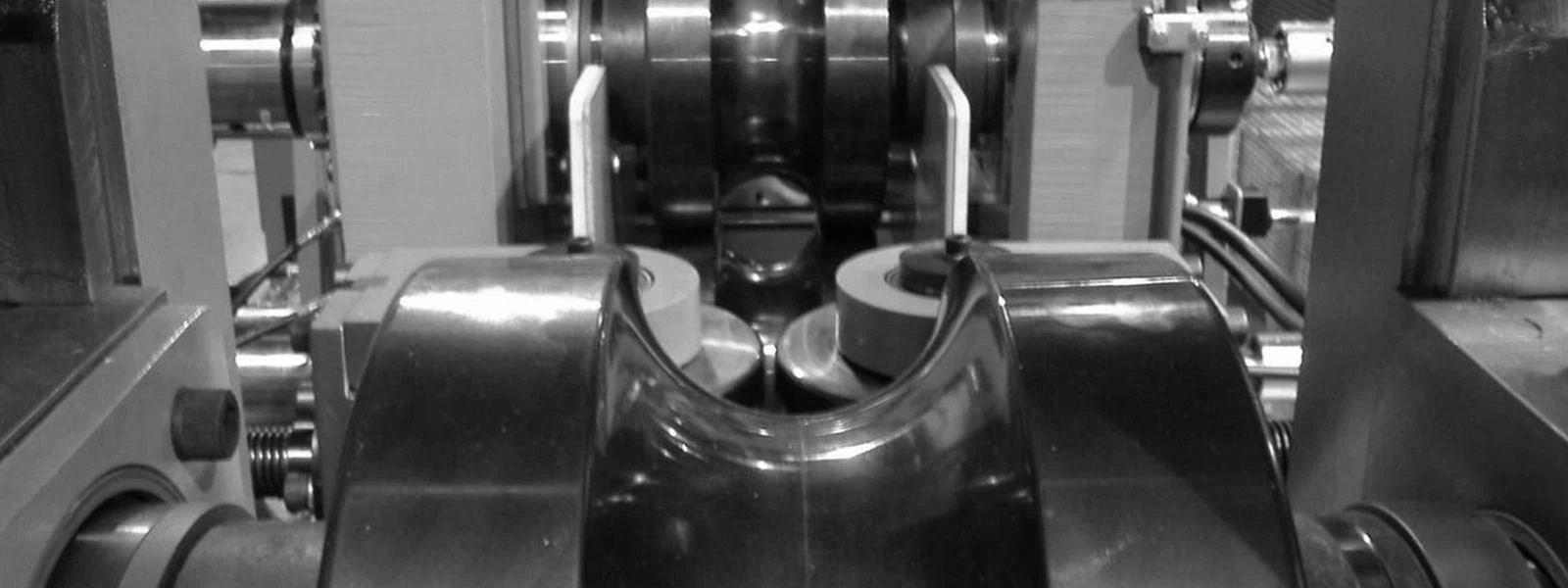
Random Racks controls the complete production chain—from raw steel coil slitting and automated roll-forming to robotic welding and automated powder coating. This ensures precise dimensional tolerances and structural integrity on every project.
Free 3D / CAD Floor Layouts & Point Load Calculation Reports
AS4084, EN 15512, FEM 10.2.07 & RMI Design Compliance
Third-Party Metallurgical & Weld Load Test Certification
Sub-Zero Tested Materials (-30°C Cold Room Grade)
Complete OEM/ODM Manufacturing with Custom Colors & Branding
20+ Years Experience
In-house rack manufacturing expertise since 2004.
Third-Party Certified
Verified structural capacity with mill certificates.
Free CAD/3D Layouts
Engineering drawings prior to order commitment.
Complete OEM / ODM
Custom dimensions, colors and electrical options.
Export Engineering
Seaworthy container packing and global guidance.
Technical Decision Matrix
Comparative Analysis: Electric Mobile Racking vs. Alternative High-Density Systems
Review key technical and operational parameters to select the optimal racking architecture for your project requirements.
Storage System
Floor Footprint Utilization
Pallet Selectivity
Operational Rotation
Cold Storage Energy Efficiency
Relative CapEx per Pallet
Electric Mobile Racking System
85% - 90%
100% Direct Access
FIFO / LIFO (Flexible)
Maximum (50% Cost Cut)
Medium - High
Standard Selective Pallet Rack
35% - 40%
100% Direct Access
FIFO / LIFO
Low
Low
Drive-In Pallet Racking
65% - 75%
Low (Batch Access)
LIFO Only
Moderate
Low - Medium
Radio Shuttle Racking
75% - 85%
Moderate (Lane Selectivity)
FIFO / LIFO
High
Medium
Fully Automated AS/RS System
90% - 95%
100% Automated
System Controlled
Very High
Very High (3x CapEx)
Engineering FAQ
Frequently Asked Questions by Global Procurement & Engineering Teams
Technical solutions and structural guidance from Random Racks senior engineering department.
What concrete slab specifications are required for an Electric Mobile Racking System?
Electric Mobile Racking Systems require a reinforced concrete slab with a minimum compressive strength of C30/37 (or equivalent 4,000 PSI) and a slab depth typically between 200mm to 300mm depending on point load calculations. Guide rails must be anchored with micro-tolerance levelling under DIN 18202 Class 3 standards to prevent uneven wheel wear and frame racking.
How does an Electric Mobile Racking System perform in cold storage and sub-zero (-30°C) environments?
Random Racks engineers cold-chain specific electric mobile racking using low-temperature structural steel, specialized synthetic lubricants rated for -30°C, IP65-sealed electrical control cabinets with internal anti-condensation heating elements, and cold-resistant polyurethane wheels to maintain 99.8% uptime in freezer applications.
What safety mechanisms protect personnel and forklifts inside moving aisles?
Our systems incorporate a multi-layered safety array complying with EN 15095 standards: photoelectric safety light curtains across aisle entrances, continuous optical/laser proximity sensors along mobile base fronts, mechanical emergency stop bump bars, optical distance sensors, and warning buzzers with flashing beacons.
What happens to the Electric Mobile Racking System during a facility power outage?
In the event of a power blackout, the system automatically locks electromagnetically to prevent unwanted drift. Operators can utilize an integrated manual release hand-crank system, plug in an optional uninterruptible power supply (UPS) backup module, or connect to an emergency diesel generator to shift bases and retrieve critical pallets.
What is the typical Return on Investment (ROI) and payback period for a mobile racking project?
For cold storage facilities and high-cost industrial real estate, the average payback period ranges from 14 to 26 months. By eliminating static service aisles, electric mobile racking increases storage capacity by up to 100% within the existing footprint, cutting per-pallet refrigeration energy expenditure by 35% to 50%.
Can existing standard selective pallet racks be converted into an electric mobile racking system?
Yes, provided the structural upright frames and beams meet required point-load structural integrity standards. Random Racks can design retrofitted heavy-duty motorized mobile bases, run surface-mounted or recessed floor guide rails, and integrate central PLC control software to transform existing selective racks into a high-density mobile system.
Consultation & Project Engineering
Request Your Free CAD Layout & Engineering Proposal
Share your warehouse floor plan, clear ceiling height, pallet unit loads, and target operating temperature. Our engineering department will prepare a complete 3D design, structural bill of materials, and factory-direct cost quotation.
CompanyRandom Racks Storage Equipment Co., Ltd.
Manufacturing BaseGuli Industry Zone, Jiangning District, Nanjing, Jiangsu, China
 Heavy Duty