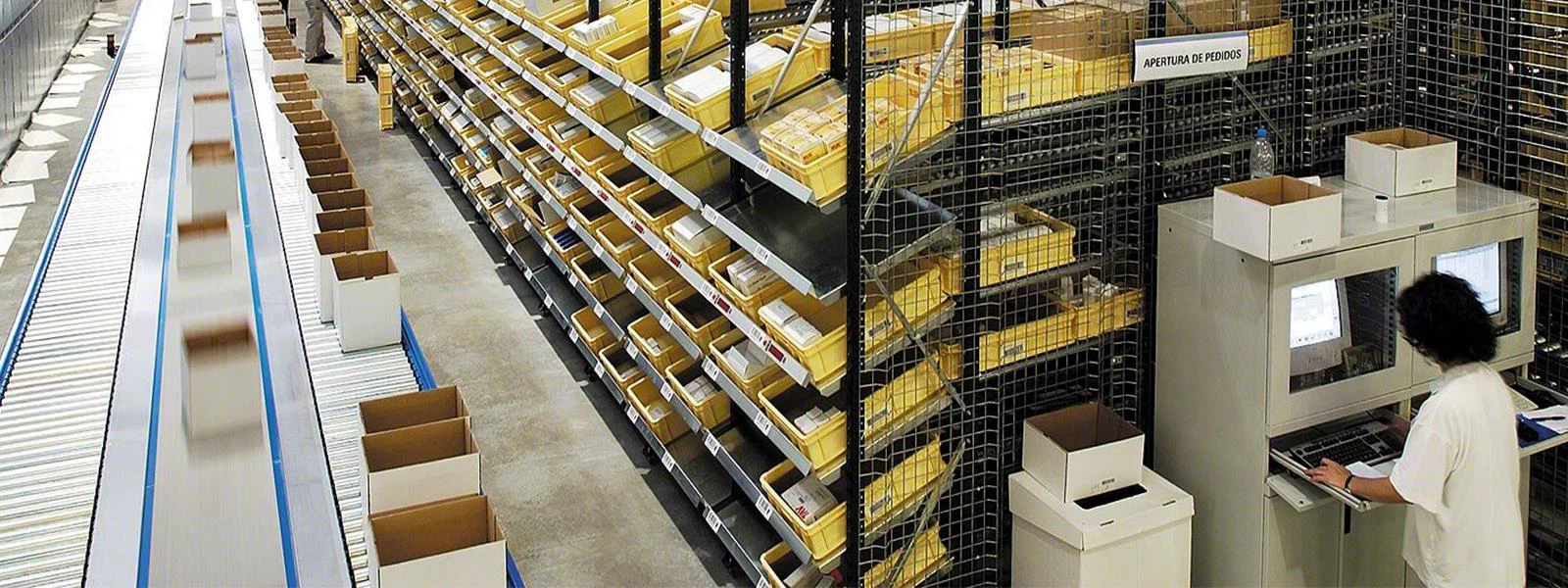
 AS/RS High-Bay
 Unit-Load AS/RS High-Bay Racking System
Engineered for vertical heights up to 40+ meters. Accommodates heavy pallet loads (up to 3,000 kg/pallet) with crane-guided aisle channels and structural tie-ins.
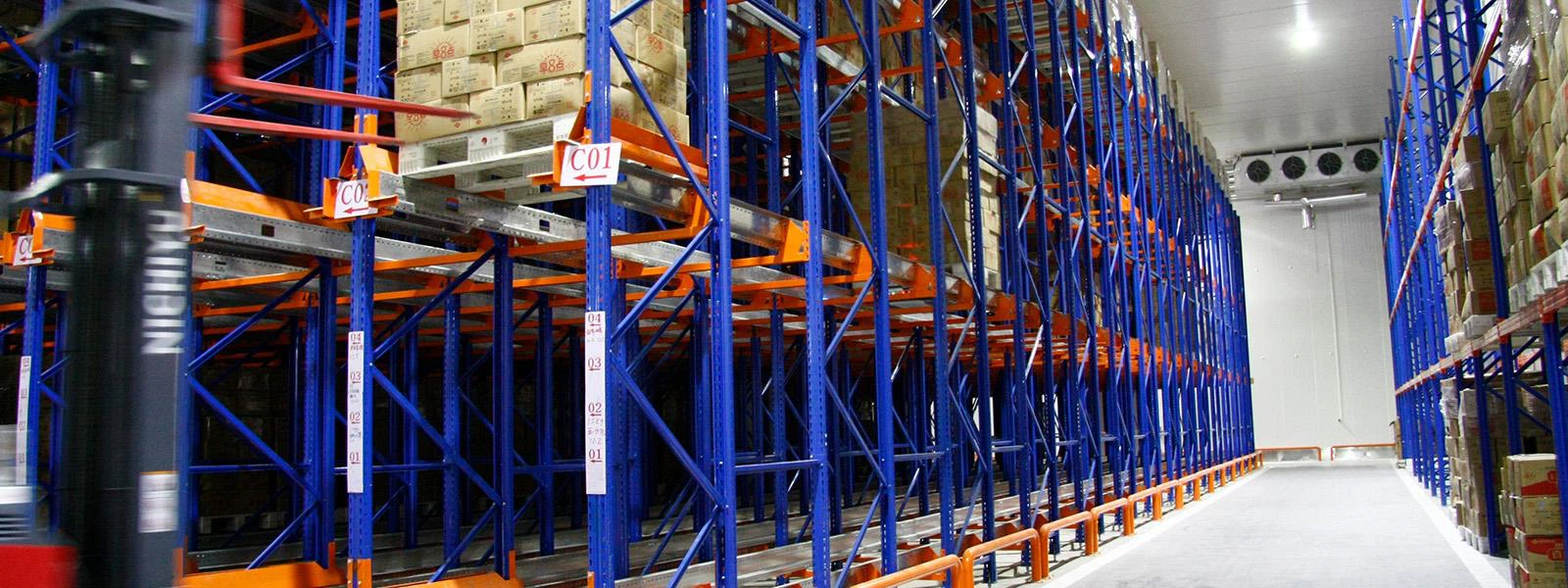
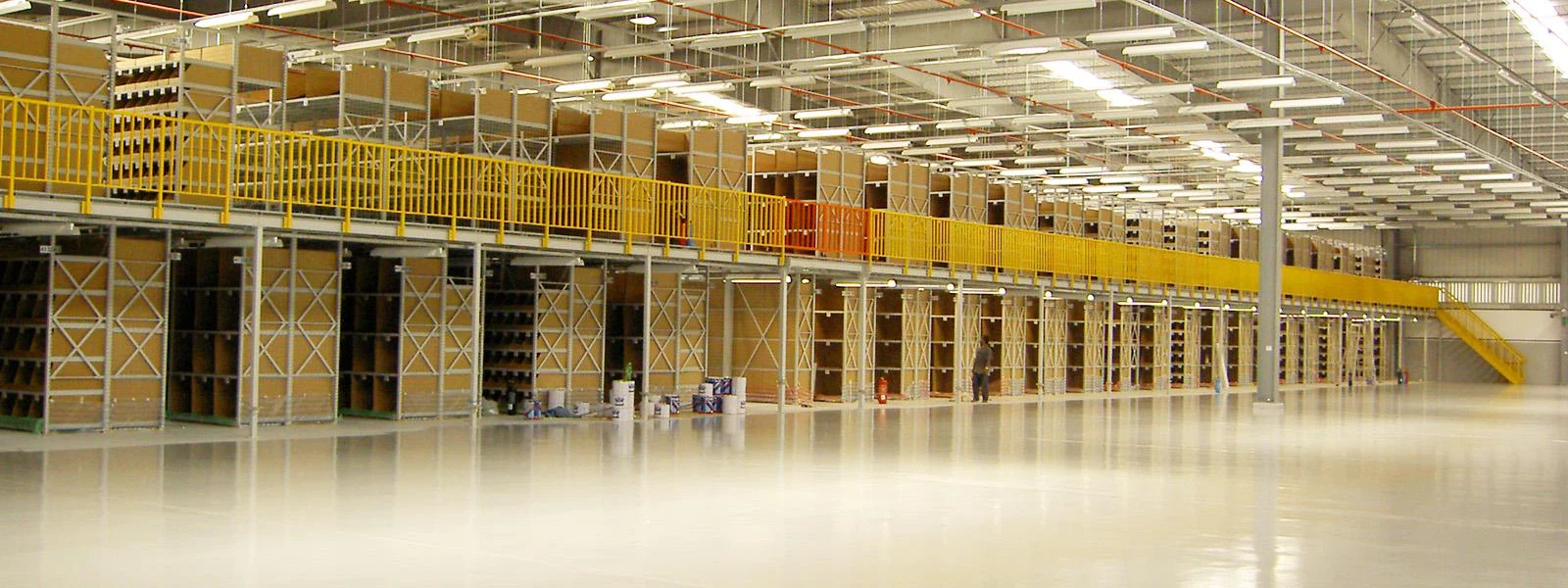
As global supply chains shift toward hyper-automation, procurement directors and industrial engineers require validated structural intelligence, precise load calculations, and seamless WMS/WCS hardware integration.
An Automated Warehouse Racking System is a high-precision, structural steel infrastructure engineered to operate in direct synchronization with robotic material handling systems—including Stacker Cranes (AS/RS), Radio Shuttles, Autonomous Mobile Robots (AMRs), Automated Guided Vehicles (AGVs), and vertical lifters. Unlike conventional pallet racking, automated racking requires millimeter-level manufacturing tolerances (per FEM 9.831 and EN 15512 standards), ultra-high structural stiffness to withstand dynamic acceleration forces, and integrated sensor bracketry for continuous warehouse management system (WMS) communication.
At Random Racks Storage Equipment Co., Ltd., we design, roll-form, and manufacture structural automated racking systems that eliminate human error, multiply cubic space utilization by up to 400%, and deliver continuous 24/7 material throughput for cold chain, e-commerce, pharmaceutical, and automotive industrial hubs worldwide.
In manual selective pallet racking, vertical beam deflection tolerances are typically calculated at L/200. In an Automated Warehouse Racking System, deflection must be tightly constrained to L/300 or L/400 to prevent optical sensor misalignment on stacker cranes or shuttle trajectory jamming. Random Racks utilizes Q355B high-tensile structural cold-rolled steel and laser-guided punching machines to achieve linear beam tolerances within ±0.5mm across spans up to 3600mm.
Our structural engineering team produces fully certified 3D CAD layouts and bill of materials within 48 hours.
Tailored structural configurations designed to match your specific SKU velocity, bay height, pallet weight, and robotic automation technology.
AS/RS High-Bay Engineered for vertical heights up to 40+ meters. Accommodates heavy pallet loads (up to 3,000 kg/pallet) with crane-guided aisle channels and structural tie-ins.
4-Way Shuttle Autonomous shuttle cars navigate both longitudinal and lateral channels. Ideal for deep-lane pallet storage, food & beverage, and high-turnover logistics hubs.
 AMR / AGV Ready
 Features magnetic strip floor guides or wire-guided structural base-rails, enabling autonomous mobile robots and VNA turret trucks to operate safely at tight 1.6m aisle widths.
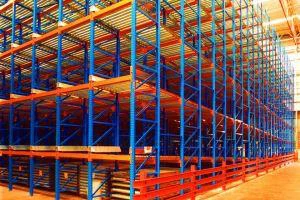 FIFO Gravity Flow
 Integrates magnetic speed controllers and pneumatic separator brakes with automated pick-and-place conveyors for zero-energy, strict FIFO rotation.
Compare key architectural metrics across our primary automated racking structural configurations:
| System Type | Max Height (m) | Payload / Pallet (kg) | Structural Standard | Automation Level | Primary Industry Fit |
|---|---|---|---|---|---|
| Unit-Load AS/RS | Up to 40m | 500 - 3,500 kg | EN 15512 / FEM 9.831 | 100% Fully Automated Crane | Cold Storage, Pharma, Heavy Mfg |
| 4-Way Radio Shuttle | Up to 25m | 500 - 1,500 kg | AS4084 / RMI Certified | Semi to Fully Automated | FMCG, Food & Beverage, 3PL |
| Mini-Load AS/RS | Up to 18m | 50 - 300 kg (Totes) | FEM 10.2.02 | Robot Shuttle / Gripper | E-commerce, Spare Parts, Electronics |
| AMR/AGV VNA Racking | Up to 16m | 1,000 - 2,000 kg | EN 15620 Class 300 | Autonomous AMR Fleet | Retail Distribution, Automotive |
How global enterprise buyers are evaluating Total Cost of Ownership (TCO), carbon neutrality, and dynamic scalability in automation hardware investments.
Modern global logistics operators are increasingly abandoning traditional tilt-slab construction in favor of Rack-Supported Buildings (Clad-Rack AS/RS). In these systems, the automated racking structure serves dual roles: supporting the stored pallet loads while concurrently acting as the structural framework for the building’s exterior wall cladding and roof truss assemblies.
Procurement Benefit: Reduces civil construction timelines by 30-40% and delivers significant tax depreciation acceleration in overseas jurisdictions, drastically lowering upfront capital expenditure.
Leading buyers are demanding smart automated racking equipped with strain gauges, dynamic vibration sensors, and micro-tilt indicators directly connected to the facility’s WMS or Digital Twin platform. This allows predictive alerts for column impact damage, thermal expansion distress in cold stores, or unexpected seismic shear forces.
Sustainability protocols now dictate that cold-rolled structural steel must carry environmental product declarations (EPDs) and low-carbon mill certifications. Random Racks Storage Equipment Co., Ltd. utilizes 100% recyclable, premium-grade steel coils with eco-friendly VOC-free electrostatic powder coating finishes.
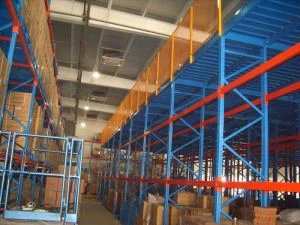
The technological forces driving the design of structural automated racking systems over the next decade.
Urban micro-fulfillment hubs rely on high-density automated racking in compact footprints to enable 1-hour e-commerce deliveries, driving demand for modular, rapid-assembly AS/RS frames.
Facilities operating fully unlit and unheated require automated racking built from corrosion-resistant, thermal-stable alloys with zero-maintenance mechanical locking joints.
Multi-shuttle and AMR fleets rely on machine learning algorithms to continuously re-pass and optimize pallet slotting, requiring racking channels with dual-directional optical sensor targets.
Explosive growth in frozen meal and biopharma logistics demands sub-zero automated racking rated down to -30°C without risk of cold-shortness or steel fracture.
Combining heavy-duty automated pallet AS/RS levels with multi-tier robotic tote-picking floors for seamless mixed-case order fulfillment within a unified structure.
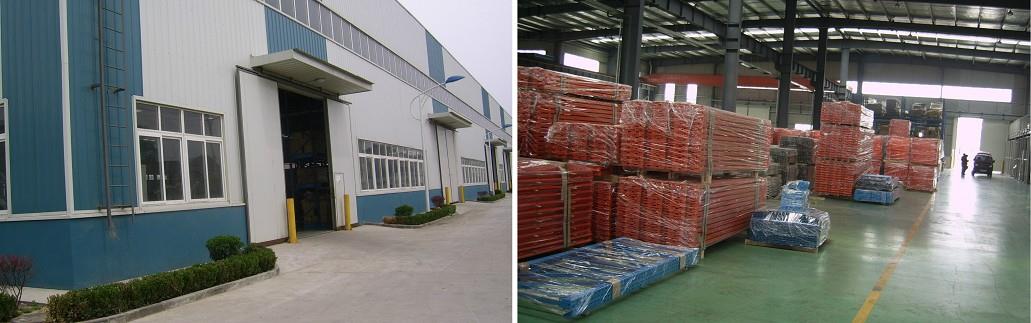
Founded in 2004, Random Racks Storage Equipment Co., Ltd. has grown into a premier international engineering manufacturer of high-precision warehouse racking systems. Operating from our state-of-the-art production base in Nanjing, China, our registered brand has delivered engineered storage systems across 90+ countries.
Our commitment to Google E-E-A-T principles (Experience, Expertise, Authoritativeness, and Trustworthiness) is backed by rigorous structural testing, fully certified material supply chains, and transparent engineering processes.
Automated continuous rolling lines for tight-tolerance AS/RS upright profiles.
Full penetration robotic welds ensuring flawless beam connector integrity.
Structural stress and seismic simulations completed for every custom project.
Automated powder coating lines matching exact RAL brand spectrums.
Custom heavy-gauge protective packaging designed for safe ocean transit.
Detailed technical answers addressing complex inquiries submitted by global procurement teams, structural consultants, and logistics architects.
Calculating slab loading for AS/RS or automated racking involves evaluating dynamic point loads from stacker cranes or shuttle carts alongside static structural dead loads. High-bay automated systems up to 40 meters exert concentrated point loads ranging from 120 kN to over 300 kN per column footplate. Random Racks Storage Equipment Co., Ltd. performs finite element analysis (FEA) and structural simulations per EN 15512 and FEM 9.831 standards to supply accurate baseplate shear, punch, and moment forces directly to your civil engineering team.
A 2-Way radio shuttle moves longitudinally inside deep racking channels to transport pallets back and forth, requiring a forklift to change aisles. A 4-Way radio shuttle system can travel both longitudinally and laterally across cross-beams using automated hoist elevators, operating entirely without manual forklift intervention. 4-Way shuttles provide up to 40% higher throughput velocity and superior flexibility for complex SKU matrix management.
In seismic regions (zones 2 to 4), high-bay automated racking must withstand severe lateral ground accelerations. Engineering adjustments include using high-tensile Q355B cold-rolled steel, upgrading column cross-sections, employing heavy-duty baseplates with anchor studs embedded up to 250mm into concrete, and integrating longitudinal/transverse vertical X-bracing towers. Random Racks tailors seismic racking profiles compliant with RMI, EN 16681, and AS4084 codes.
While initial capital expenditure for automated racking is higher than standard pallet rack, global logistics operations typically reach total cost ROI payback within 18 to 36 months. Financial returns are driven by a 60-80% increase in storage density, 70% reduction in labor overhead, near-zero inventory damage, and 24/7 continuous operational throughput with significant energy savings in cold storage environments.
Cold environments induce steel embrittlement and rapid battery degradation. Random Racks uses low-temperature fine-grain structural steels with certified impact toughness (Charpy V-notch tested) for sub-zero racking integrity. Automated shuttle components are equipped with internal heating elements, IP65-sealed electronics, and specialized lithium iron phosphate (LiFePO4) thermal battery packs designed for uninterrupted sub-zero performance.
Connect directly with our senior racking design engineers. Receive a complimentary 3D/CAD structural design layout, dynamic capacity analysis, and factory-direct quotation tailored to your operational KPIs.
Submit these parameters to receive a certified layout proposal: