0%

Choosing a Heavy Duty Steel Pallet supplier is not simply a matter of comparing prices. These pallets may carry dense loads, move through busy warehouses, and face repeated forklift contact. Small design details can affect stability, handling, and service life. Details matter.

This guide introduces ten manufacturers in China and offers a practical starting point for supplier research. It considers factors buyers commonly need to examine, including pallet dimensions, stated load capacity, steel thickness, weld quality, surface treatment, and customization options. A polished product page is useful, but it cannot replace clear technical documents or direct questions. Ask how load ratings are established, whether drawings match the delivered product, and what inspection records are available. For outdoor or humid settings, discuss corrosion protection and maintenance needs before ordering.

Supplier suitability depends on the job. A pallet designed for a fixed production line may not fit a mixed-use warehouse, while a custom model can affect cost and delivery time. Not every supplier fits. Compare quotations on equal specifications, and confirm packaging, lead times, replacement-part support, and communication arrangements. Where possible, review samples or arrange an independent inspection. This list should guide evaluation, not serve as a guarantee of performance. Even a strong-looking pallet can disappoint if its rating, finish, or dimensions do not match real operating conditions. A careful buyer checks the details.
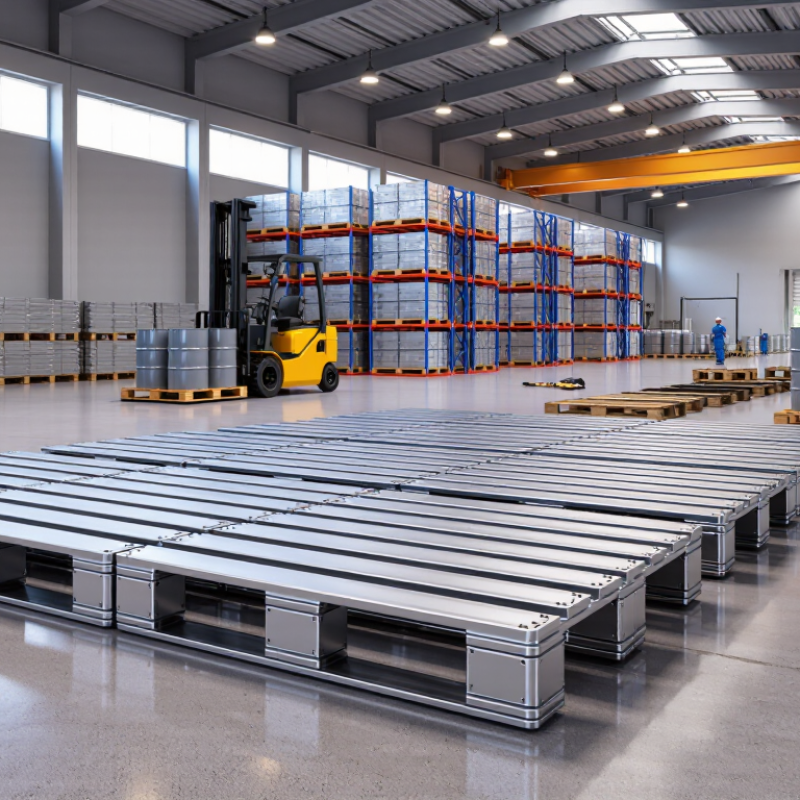
China Top 10 Heavy Duty Steel Pallet Manufacturers

Heavy-Duty Steel Pallets: Definition, Design, and Industrial Uses

A heavy-duty steel pallet is a reusable load platform built to support demanding storage and transport tasks. Its deck, runners, and joints are typically made from welded or formed steel sections. The design may include open mesh, solid plate, or raised edges, depending on the goods being handled. Small details matter. Fork-entry clearance and base geometry affect how smoothly a pallet moves through a warehouse.

Capacity is not a single number. Static, moving, and rack-supported loads place different stresses on the structure. A pallet that safely holds a stationary stack may behave differently on a forklift or warehouse rack. Buyers should check the rated load, dimensions, weld quality, and compatibility with handling equipment. Look closely at corners and contact points; damage there can be easy to miss. Steel can be strong, but it is not indestructible.

These pallets suit factories, distribution centers, and other operations handling heavy components, machinery parts, or dense packaged goods. A corrosion-resistant finish can help in damp environments, though scratches may expose the underlying metal. Regular inspection is sensible, especially after impacts or repeated use. Even good specifications cannot predict every rough turn by a forklift. That part deserves attention.

Common Pallet Footprints for Heavy-Duty Logistics

Comparison of floor area for common flat-pallet dimensions listed in ISO 6780. These dimensions can be used for steel pallet designs; load capacity depends on the pallet’s construction and operating conditions.

Floor area is calculated from the stated length and width. Dimensions are nominal; this chart does not represent load ratings.

China’s Steel Pallet Industry and Its Manufacturing Landscape

China’s steel-pallet industry is shaped by a deep metalworking base and expanding logistics needs. The World Steel Association’s World Steel in Figures 2025 reports that China produced 1,005.1 million tonnes of crude steel in 2024, about 53% of global output. This scale supports access to sheet, tube, welding, and surface-treatment capacity, though steel production alone does not measure pallet output.

The China Federation of Logistics and Purchasing reported that China’s total social logistics value reached 360.6 trillion yuan in 2024, up 5.8% year on year. This indicates a large flow of goods through factories, warehouses, and transport hubs. It is not a direct measure of pallet demand. Still, it helps explain demand for reusable platforms carrying heavy machinery and dense components.

Manufacturers typically balance load rating, tare weight, corrosion resistance, and fork-entry clearance. Thick decks and reinforced corners can withstand rough handling, but add weight and shipping costs. Details matter. A pallet that fits a rack poorly may waste space, even when its welds look solid. Quality checks should cover dimensions, weld consistency, coating coverage, and static and dynamic load performance. Public data on China’s steel-pallet production remain limited, so comparisons should rely on tested samples, not catalogue figures alone.

Criteria for Selecting Heavy-Duty Steel Pallet Manufacturers

China Top 10 Heavy Duty Steel Pallet Manufacturers

Criteria for Selecting Heavy-Duty Steel Pallet Manufacturers

Choosing a heavy-duty steel pallet manufacturer starts with the actual loads and handling conditions. Ask whether the stated capacity covers static storage, moving loads, or both. These ratings are not interchangeable. Share details such as forklift entry, rack support, load dimensions, and daily handling frequency. A pallet carrying steel parts in a warehouse may face different stresses from one used outdoors. Check material thickness, weld consistency, surface finish, and corner reinforcement. Request drawings or a sample when specifications are unclear.

Manufacturing quality matters as much as a capacity figure. Ask how dimensions and welds are inspected, and whether inspection records can be shared. A site visit or sample review can reveal uneven joints and sharp edges. Discuss corrosion protection, repair options, customization limits, and replacement-part availability. Compare lead times and quote details, not just the unit price. A polished quotation can still leave questions about testing or packaging. I have seen buyers overlook these details; it is worth checking assumptions twice.

Tips: Send the same load description to each supplier. Ask for written capacity ratings and clarify how they were tested. Keep a simple comparison sheet. Small differences matter.

Profiles of 10 Leading Heavy-Duty Steel Pallet Manufacturers in China

China’s heavy-duty steel pallet sector serves warehouses, factories, and export supply chains. China’s 2023 total social logistics value reached 352.4 trillion yuan, up 5.2%, according to the China Federation of Logistics and Purchasing. That scale makes load capacity, weld consistency, and repeatable dimensions practical buying concerns. The profiles below compare capabilities, not a verified ranking of named companies.

Ten useful manufacturer profiles emerge by specialization: heavy-load welded frames for dense components; rack-compatible pallets for selective storage; nestable designs that save return-trip space; galvanized models for damp work areas; powder-coated options for cleaner indoor handling; custom-size fabricators for unusual machinery; automated-welding producers focused on consistent joints; small-batch workshops suited to trials; repair-friendly makers offering replaceable runners; and export-oriented suppliers experienced with clear drawings and packing details. A profile alone proves little. Actual capacity depends on steel grade, beam spacing, and how loads are placed.

Tips: Request a drawing with dimensions, material thickness, and rated load conditions. Ask whether the rating assumes an evenly distributed load. Inspect sample welds and coating around corners. Small details matter. I would also check whether the supplier can explain its test method; a polished catalogue is not enough.

China Top 10 Heavy Duty Steel Pallet Manufacturers - Profiles of 10 Leading Heavy-Duty Steel Pallet Manufacturers in China

The table below summarizes ten common heavy-duty steel pallet configurations and application profiles. These are product-type benchmarks, not verified profiles or performance claims for specific manufacturers. Dimensions are common market formats; confirm pallet ratings and suitability with the supplier for the intended handling method and load.

No. Pallet Configuration Common Footprint (L × W) Typical Design Features Typical Application Key Verification Point
1 Standard warehouse steel pallet 1,200 × 1,000 mm Welded steel deck with runners; available with open or closed deck surfaces. General warehouse storage and material handling. Confirm rated capacity for static, dynamic, and racking conditions separately.
2 Square-format steel pallet 1,100 × 1,100 mm Symmetrical footprint; deck and runner layout can be configured for the handling system. Warehouses and distribution operations using square pallet footprints. Check rack-beam spacing, fork entry, and compatibility with conveyors.
3 Euro-footprint steel pallet 1,200 × 800 mm Compact rectangular deck; steel construction can be specified for reusable handling cycles. Export, production, and logistics systems designed around this footprint. Verify fit with the actual rack, vehicle, and automated equipment dimensions.
4 North American footprint steel pallet 1,219 × 1,016 mm (48 × 40 in) Rectangular steel platform; runner direction and entry openings depend on the design. Supply chains configured for a common North American pallet footprint. Confirm exact dimensions and clearances; nominal footprint alone does not ensure compatibility.
5 Four-way-entry steel pallet Common formats include 1,200 × 1,000 mm Designed to allow fork entry from four sides, subject to the specific base construction. Operations requiring flexible forklift or pallet-truck access. Check entry opening dimensions and pallet-truck compatibility.
6 Rackable steel pallet Often specified to match the warehouse rack bay Reinforced runners or supports intended for use across rack beams. Selective pallet racking and other approved storage systems. Obtain the rack-load rating and test conditions; do not infer it from a floor-load rating.
7 Mesh-deck steel pallet Available in multiple footprints, including 1,200 × 1,000 mm Open mesh deck; mesh pattern and support spacing vary by design. Storage where visibility, drainage, or reduced deck weight is useful. Check the mesh opening size against the smallest items and support requirements.
8 Solid-deck steel pallet Available in multiple footprints Continuous or closely covered deck intended to provide a more even support surface. Handling smaller packages or loads needing more continuous deck support. Check drainage, cleaning, load distribution, and the deck’s permissible loading.
9 Collapsible steel pallet or stillage Custom or matched to the required pallet footprint Foldable or removable sides designed to contain goods and reduce return-trip volume when empty. Reusable closed-loop transport and storage of parts or components. Verify locking mechanisms, stacking limits, and folded dimensions.
10 Custom heavy-load steel pallet Engineered to the product and handling system May include load-specific supports, stops, locating features, or lifting points. Machinery, metal components, and other non-standard loads. Provide load geometry, center of gravity, handling method, and stacking requirements for design review.

Capacity and durability depend on pallet geometry, material, weld quality, load distribution, and handling conditions. For a formal comparison, request technical drawings, material specifications, and test reports; ISO 8611 is a relevant test-method series for flat pallets.

Comparing Manufacturers by Products, Customization, and Services

A useful comparison of the top 10 heavy duty steel pallet manufacturers starts with the load, not the brochure. Check static, dynamic, and racking capacities separately; a pallet safe on the floor may behave differently on beams. Compare dimensions, fork-entry sides, deck style, weld finish, and corrosion protection against the actual warehouse environment. World Steel Association’s World Steel in Figures 2024 reports 1,888.2 million tonnes of crude steel production in 2023. That signals a large material base, not consistent pallet quality. Details matter. Ask how steel grade and finished units are inspected, and request test documentation tied to the quoted design.

Customization should solve a real handling problem. Specify rack-beam spacing, forklift entry, load distribution, stacking height, and any conveyor interface before comparing quotations. Then check whether design changes affect lead time, minimum order quantity, repairability, or replacement-part supply.

A low unit price can be misleading. Service matters after delivery: compare sample approval, packaging, shipment updates, warranty terms, and response times for defects. Ask for a drawing and written load limits, not just a verbal assurance. A polished specification sheet can still omit awkward details, so verify claims against a sample or documented test. The best fit is the supplier whose product, engineering support, and after-sales process match your operating conditions.

FAQS

What is a heavy-duty steel pallet?

It is a reusable platform made from steel sections. Its deck may use mesh or solid plate. Fork-entry openings help equipment lift it.

Why do load ratings differ?

Static, moving, and rack-supported loads stress a pallet differently. A floor-stacked pallet may not be suitable for warehouse beams. Check each rating.

What details should buyers share with a supplier?

Provide load weight, dimensions, distribution, forklift entry, and rack-beam spacing. Include daily handling frequency. Small details matter.

How can buyers assess manufacturing quality?

Ask how welds and dimensions are inspected. Request drawings, inspection records, or a sample. Check corners for uneven joints and sharp edges.

When is a customized pallet useful?

Custom features can address rack spacing, conveyor use, or unusual load shapes. Confirm how changes affect lead time and repairs. Not every change helps.

Does a corrosion-resistant finish prevent all rust?

It can help in damp environments, but scratches may expose the metal underneath. Inspect damaged areas, especially after rough handling.

How should manufacturers be compared?

Compare written load limits, product dimensions, finish, delivery details, and warranty terms. Unit price alone can hide important gaps. Double-check assumptions.

What should be inspected during regular use?

Look for damage at corners, joints, and contact points. Check after forklift impacts or repeated use. Steel is strong, not indestructible.

Conclusion

This article explores the role of the Heavy Duty Steel Pallet in demanding industrial environments, explaining its basic structure, design features, and common uses in storage, handling, and transportation. It also introduces China’s steel pallet manufacturing landscape, where production capabilities, material choices, and engineering approaches vary across suppliers.

To help buyers make informed decisions, the article outlines key criteria for evaluating manufacturers, including product strength, construction quality, customization options, production capacity, and after-sales support. It then presents profiles of ten leading manufacturers in China and compares their products and services. By considering these factors together, readers can better identify a supplier whose capabilities match their load requirements, operating conditions, and long-term business needs.

Ethan

Ethan

Ethan is a highly experienced marketing professional dedicated to helping customers better understand innovative products and practical solutions. With a strong combination of market insight, communication skills, and product knowledge, he regularly contributes expert articles to the company’s......