0%

Selecting the top Drive In Pallet Racking System manufacturers requires more than comparing catalog prices. Warehouse operators need evidence of load performance, engineering competence, installation quality, and after-sales support. The right supplier should understand pallet dimensions, forklift access, storage turnover, seismic conditions, and daily operating risks.

Industry data supports this careful approach. The 2024 MHI Annual Industry Report highlights continuing investment in supply chain technology and warehouse capability. Its findings show that many organizations expect technology adoption to increase, while labor availability remains a serious operational concern. This makes dense storage attractive, but density alone is not enough. A Drive In Pallet Racking System can improve cubic utilization for uniform products. It may also reduce selectivity when inventory changes frequently.

Research from the U.S. Department of Energy’s industrial facilities studies repeatedly links efficient warehouse design with better material-handling performance. However, published figures cannot replace a site-specific review. That is where weak comparisons often begin. A manufacturer may advertise impressive capacity, yet omit frame design, rail tolerances, impact protection, or inspection procedures. Small omissions matter.

Reliable manufacturers provide stamped engineering documents, tested components, clear installation instructions, and traceable quality control. They should explain how their system handles pallet loads at different tunnel levels. They should also recommend suitable forklifts and maintenance routines. Look closely. Ask difficult questions.

This guide examines leading manufacturers through practical and professional criteria. It considers product durability, customization, safety support, certifications, delivery experience, and customer feedback. The ranking is not absolute. Warehouse conditions differ, and even a respected supplier may be unsuitable for a particular operation.
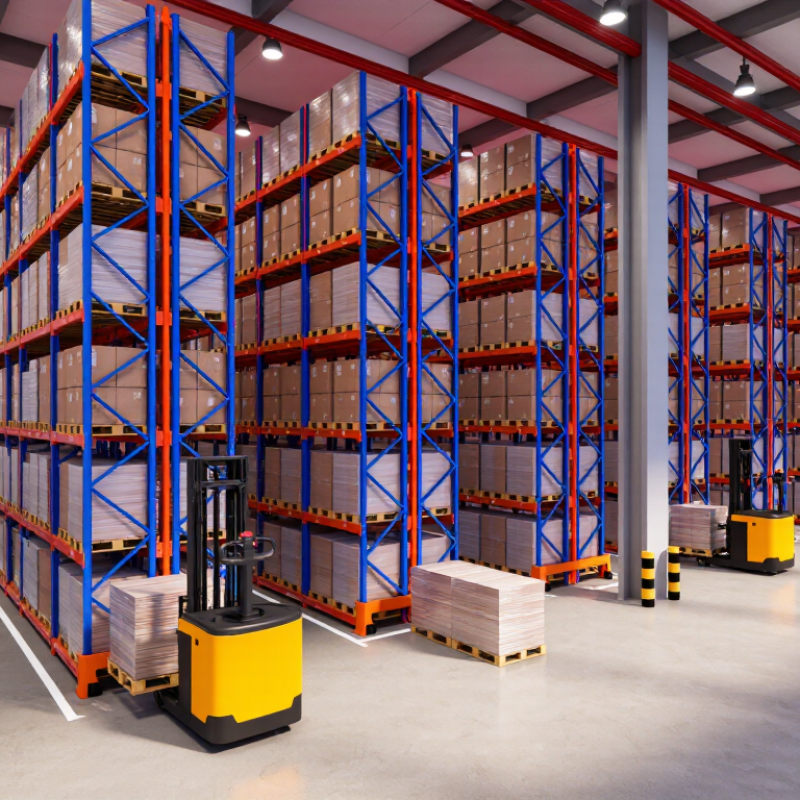
Top Drive In Pallet Racking System Manufacturers?

What Is a Top-Drive In-Pallet Racking System?

What Is a Top-Drive-In Pallet Racking System?

A top-drive-in pallet racking system is a high-density storage structure designed for forklifts to enter pallet lanes. Pallets rest on horizontal rails at several levels, allowing deep storage with limited aisle space. In many layouts, “top-drive-in” describes upper guidance or structural support, not an automated driving mechanism. The terminology is not perfectly standardized, so buyers should request drawings and load calculations.

This system suits warehouses storing large quantities of similar products with limited stock rotation. A forklift enters the lane, places a pallet on supported rails, and reverses carefully. The last pallet stored is usually the first removed, creating a last-in, first-out pattern. That can reduce selectivity. It can also increase handling risk when operators lack clear sightlines.

The 2024 MHI Annual Industry Report reported that 55% of supply chain professionals planned to increase technology and innovation investment. Density remains important, but safety cannot be traded for capacity.

OSHA estimates that powered industrial trucks cause about 85 workplace fatalities and 35,000 serious injuries annually in the United States.

Rack design should therefore include impact protection, aisle controls, inspections, and operator training. Experienced installers also verify pallet dimensions, rail deflection, floor capacity, and seismic requirements. A small mismatch matters.

One overlooked pallet overhang can damage rails or block retrieval. Procurement teams should compare manufacturers through engineering documentation, testing records, installation experience, and after-sales inspection support.

How Top-Drive In-Pallet Racking Systems Operate

Top Drive-In Pallet Racking System Manufacturers?

How Top Drive-In Pallet Racking Systems Operate

Drive-in pallet racking creates deep storage lanes supported by upright frames and horizontal rails. A forklift enters the lane and places pallets on rails from the back toward the front. The same vehicle later retrieves pallets through that opening. No front cross-aisles are needed between every pallet position, which makes this design useful for high-density storage.

Most drive-in systems use a last-in, first-out flow. The newest pallet enters first and remains closest to the aisle. Forklift operators must travel slowly, keep the load centered, and avoid striking the uprights. Guide rails and pallet stops help control movement, but they do not replace operator skill. They help.

Reliable manufacturers usually begin with pallet dimensions, load weights, forklift clearance, and floor conditions. Engineers then calculate the frame capacity and rail spacing for the actual application. Experienced installers also check vertical alignment and anchor points before loading the structure. A capacity sign should remain visible to warehouse staff.

In daily operation, inspections matter. Bent frames, damaged rails, missing protectors, or uneven pallets can change the system’s behavior. A small collision may seem harmless, yet repeated impacts weaken confidence in the rack. This is where real warehouse experience matters. Specifications are useful, but site conditions can expose gaps in the original plan. Regular records and practical training reduce those gaps.

Key Features of Leading Top-Drive Racking Manufacturers

Leading drive-in pallet racking manufacturers focus on load safety, storage density, and dependable daily operation. Their engineers study pallet dimensions, forklift access, beam spacing, and warehouse height before proposing a layout. A serious supplier also checks floor strength and seismic conditions. These details prevent expensive redesigns later.

Strong manufacturers use high-grade steel, reinforced uprights, guide rails, pallet supports, and impact protection. Weld quality and coating consistency matter in dusty or humid warehouses. Clear load labels should show bay capacity and operating limits. Installation teams must align every frame accurately. Small errors can grow under repeated forklift movement.

Practical experience separates a capable manufacturer from a catalog seller. They provide drawings, load calculations, installation instructions, and inspection guidance. Useful support continues after delivery. Replacement parts should remain available, and technicians should respond when damage appears. Fast service matters.

Automation can improve stock rotation, but it is not always necessary. A simple drive-in layout may serve a cold-storage warehouse better than a complex system. This is where some proposals become too optimistic. Maximum density can reduce selectivity and slow picking. Manufacturers should explain that trade-off honestly, using real operating data instead of impressive promises. Flexible designs, tested components, and transparent communication make the system more reliable over time.

How to Evaluate Top-Drive Racking System Manufacturers

When evaluating top-drive pallet racking system manufacturers, start with engineering evidence, not polished brochures. The 2024 MHI Annual Industry Report found that 55% of respondents planned to increase supply-chain technology investment. That pressure can encourage rushed automation decisions. Ask each manufacturer for load calculations, rail deflection limits, frame specifications, and seismic design assumptions. Confirm whether the system supports your pallet dimensions, forklift type, aisle width, and storage density.

Look closely.

A reliable supplier should provide documented testing, installation procedures, inspection guidance, and trained technical support. Compare proposals against ANSI MH16.1 requirements and OSHA 29 CFR 1910.176(b), which requires stored materials to remain stable and safe. The 2023 Global Warehousing Study by the Warehousing Education and Research Council reported continuing labor and space pressures across warehouse operations. Therefore, evaluate retrieval speed, forklift visibility, impact protection, and maintenance access, not density alone. Request references from facilities with similar loads and temperatures. Review five-year costs, including repairs, inspections, replacement parts, and downtime. A low initial quotation may hide expensive adjustments.

I would also test a loaded bay before full deployment. Real pallets are rarely perfect. Some lean, wrap poorly, or vary in weight. Manufacturers should explain how their design manages these defects without relying on operator skill. Review their incident history and corrective-action process. A supplier that admits design limits may be more dependable than one promising flawless performance.

This reference model ranks the main factors used to evaluate top-drive pallet racking system manufacturers. The percentages represent procurement priorities and add up to 100%; higher values indicate greater importance during supplier assessment.

Top Applications and Selection Considerations for Buyers

Top Drive In Pallet Racking System Manufacturers?

Drive-in pallet racking suits warehouses storing many pallets of the same product. Forklifts enter storage lanes and place pallets on supported rails. This design reduces aisles and increases floor utilization. It works well for cold storage, beverage warehouses, and seasonal inventory. It is less suitable for mixed products requiring frequent access. Fast-moving goods may suffer from difficult stock rotation.

Selection should begin with pallet dimensions, load weight, and forklift measurements. Confirm the required lane depth before approving a layout. Deep lanes improve density, but they can reduce visibility and handling speed. Check entry clearances carefully. A small clearance error can cause repeated pallet or rail impacts. Select frames and rails with documented load ratings. Ask for engineering calculations, installation procedures, and inspection guidance.

Warehouse conditions also matter. Cold rooms may require corrosion-resistant finishes and materials suited to low temperatures. Floors must support concentrated loads without excessive settlement. Local fire, seismic, and workplace rules should guide the final design. Protective guards can limit damage near entrances. However, guards do not replace trained forklift operation. Experienced planners sometimes focus too heavily on capacity. That assumption can fail when access, maintenance, or stock rotation becomes difficult. A trial lane, realistic pallet test, and independent safety review can reveal problems before full installation.

FAQS

What is a top-drive-in pallet racking system?

It is a high-density rack with deep lanes and horizontal rails. Forklifts enter the lanes to store pallets. “Top-drive-in” is not always standardized terminology.

Does the system use automated forklifts?

Usually, no. The term often describes upper guidance or structural support. Request drawings to confirm the actual design.

How are pallets stored and retrieved?

A forklift enters from the aisle and places pallets on supported rails. The newest pallet usually stays nearest the aisle. This creates a last-in, first-out flow.

Which warehouses benefit most from this system?

It suits warehouses holding many pallets of similar products. Cold storage, beverage storage, and seasonal inventory are common applications. Density is not everything.

When is drive-in storage less suitable?

It may perform poorly with mixed products or frequent stock rotation. Deep lanes can reduce visibility and retrieval speed. Fast-moving goods may become inconvenient.

What information should buyers provide before design?

Provide pallet dimensions, load weights, forklift measurements, lane depth, and floor conditions. Also confirm temperature, fire, seismic, and workplace requirements.

What safety features and practices are important?

Use impact protectors, guide rails, pallet stops, visible capacity signs, and controlled aisles. Operators should travel slowly and keep loads centered. They help.

How can buyers test whether the layout will work?

Test one realistic lane with actual pallets and equipment. Check clearances, rail spacing, retrieval, and forklift visibility. A plan can look efficient and still frustrate workers.

Conclusion

A Drive In Pallet Racking System is a high-density storage solution designed to maximize warehouse space by allowing forklifts to enter storage lanes and place pallets on continuous rails. In a top-drive configuration, the system uses an upper operating structure or guided handling approach to support stable pallet movement and efficient use of vertical space. Compared with conventional selective shelving, this design reduces the need for multiple aisles and is especially suitable for storing large quantities of similar products.

When evaluating manufacturers, buyers should consider structural strength, load capacity, safety features, material quality, installation support, customization options, and long-term maintenance requirements. Leading manufacturers should provide clear engineering specifications, reliable production standards, and solutions adapted to warehouse dimensions and operating conditions. This system is commonly used in cold storage, food and beverage distribution, manufacturing, and bulk inventory management. Product turnover, pallet size, forklift compatibility, accessibility needs, and available building height should all be reviewed before selecting the most appropriate solution.

Clara

Clara

Clara is a dedicated marketing professional who combines strategic insight, clear communication, and a deep understanding of the products and services offered by our company. With a strong background in market research, content strategy, and customer engagement, she transforms complex product......