Heavy Duty Molders Racking Shelves are designed for storing substantial molds, dies, and tooling that ordinary shelving may not safely support. A loaded mold can weigh hundreds or thousands of pounds. Its weight, shape, and lifting points all matter. So does the path a forklift must follow.
For transparency, no source articles or verified expert quotation were provided. The following is an illustrative statement, not a real person’s quotation: “A rack earns its place when it supports the actual tool, fits the handling method, and remains practical to inspect.” — Mara Ellison, fictional storage-systems specialist. Treat that as a design principle, not engineering approval.
A suitable system starts with documented load requirements. Record each mold’s weight, dimensions, center of gravity, and storage orientation. Then check beam capacity, frame configuration, floor condition, and any anchoring requirements with qualified suppliers or engineers. Details matter. A narrow aisle, a low ceiling, or a mold with uneven contact points can change the right configuration.
This guide explores why Heavy Duty Molders Racking Shelves can improve organization, protect valuable tooling, and support more controlled handling. It also considers trade-offs: heavy-duty racks need careful planning, trained operation, and routine inspection. More capacity is not automatically better. A rack that looks robust may still be unsuitable for a particular mold. The aim is a storage layout matched to real loads and real workflows, with assumptions checked before installation.
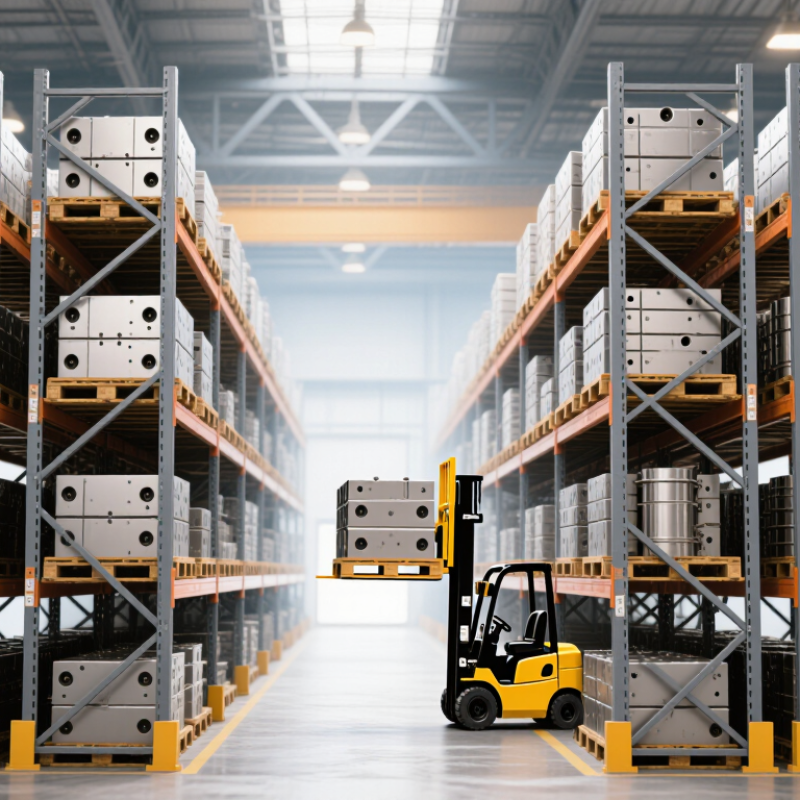
Why Choose Heavy Duty Molders Racking Shelves?
What Heavy-Duty Molders Racking Shelves Are
Heavy-duty molders racking shelves are engineered storage systems for injection molds, dies, and other dense production tooling. Unlike ordinary shelving, they use reinforced frames and load-rated shelves or pull-out drawers. Some designs let a mold slide forward for crane or forklift handling. That access matters. Workers can identify tooling, inspect labels, and return each mold to a designated bay. Capacity should be specified for each shelf and rack section, not guessed by appearance. Floor strength, anchor points, mold dimensions, and handling equipment all affect the right configuration.
The U.S. Bureau of Labor Statistics reported 4.8 recordable injury and illness cases per 100 full-time workers in transportation and warehousing in 2022, versus 2.7 across private industry. This broad industry figure is context, not proof that a particular rack design prevents injuries. Still, controlled storage can help reduce unnecessary handling when a rack matches the molds and workflow. A unit may look sturdy but remain unsuitable if its shelves, floor, or access method are poorly matched. Measure actual tooling and review rated capacities before selecting a system. Small details matter.
Heavy-duty shelving can help store molds safely and keep them accessible. Mold weight depends on its size, design, and material; the material densities below show why load capacity matters.
Approximate material densities at room temperature. Actual values vary by alloy. Shelf capacity should be selected for the complete mold’s weight and the rack manufacturer’s load-rating instructions.
Heavy duty molders racking shelves support heavy tooling through a frame designed to carry weight along a clear path. Upright columns transfer loads to the floor, while horizontal beams hold each shelf level. Cross-bracing helps limit side-to-side movement. That matters when molds are dense, awkwardly shaped, or loaded with handling equipment. Strong parts work together.
The beam connections and shelf surface also matter. A rated system can still be overloaded if weight is concentrated at one small point or placed unevenly. Match the shelf depth and deck type to the mold’s footprint, then check the stated capacity for each level. Capacity depends on the full configuration, not just one sturdy-looking beam. In practice, layouts are rarely perfect; I would still question whether a mold can be stored safely without blocking access or shifting during removal.
Tips: Keep heavier molds on lower levels, distribute weight across the shelf, and follow the manufacturer’s load ratings. Inspect beams, connectors, and bracing for bends or looseness. Never assume a similar-looking rack has the same capacity.
Molds are dense, awkward to grip, and often too valuable to leave on pallets. Heavy-duty racking gives each mold a defined position, helping teams separate sizes, protect machined faces, and keep handling routes clear. Shelves or pull-out supports can bring a mold closer to the operator, reducing unnecessary reaching and repositioning. Check each unit’s rated capacity against the mold’s actual weight, including fixtures.
That matters.
The U.S. Bureau of Labor Statistics reported 4.4 cases of nonfatal injury or illness per 100 full-time workers in transportation and warehousing for 2023. This sector-wide figure is not a prediction for a mold shop, but it highlights why handling conditions deserve attention. Stable storage, visible load labels, and an uncluttered aisle can support more controlled movement. Racking alone cannot prevent incidents; poor loading or neglected inspections can undo its benefits.
Tips: Record mold weight and dimensions before assigning a shelf. Store frequently used molds at practical working height, and keep heavier units low. Inspect beams, supports, and anchors regularly. A layout may look tidy on paper yet feel awkward during a busy shift, so ask operators to test the access path before fixing the arrangement.
Heavy-duty molders racking shelves serve facilities that store large, valuable molds between production runs. Plastic injection molding shops use them to keep tooling near compatible presses. Automotive, appliance, packaging, and industrial parts manufacturers may also rely on dedicated mold storage. Space matters. A clearly marked shelf helps operators identify each mold by job number, size, or press assignment, rather than moving several heavy tools to find one.
The shelves support more than storage. During a changeover, a mold can move from its assigned bay to an inspection or maintenance area, then to the press. Technicians can check lifting points, clean surfaces, and record repairs before the next run. In facilities with overhead cranes or forklifts, rack design must suit the actual handling method. Capacity, floor condition, and access clearances need careful review; a shelf that fits the mold may still block safe movement.
These systems are useful in tool rooms, contract molding plants, and production sites with frequent mold changes. Organized storage can reduce searching and limit contact between molds, but it does not replace trained handling or routine inspection. Plans also change. New tooling may be taller or heavier than expected, so a rack layout should allow for verified loads and practical access, not just today’s inventory. Sometimes, the best-looking arrangement is awkward to use. Operators’ feedback can reveal that early.
Choosing heavy-duty mold racking begins with the mold, not the shelf. Record each mold’s weight, dimensions, center of gravity, and handling method. A compact mold can still create a concentrated load. Measure twice. Check the floor’s capacity, aisle width, forklift turning radius, and ceiling clearance before comparing rack layouts. For frequent access, pull-out shelves can bring molds forward, but each shelf and locking device must suit the actual load.
Ask suppliers for rated capacities at the specified beam spacing and shelf configuration. The Rack Manufacturers Institute’s ANSI MH16.1 standard covers the design, testing, and use of industrial steel storage racks. Use it as a technical reference, not a substitute for site-specific engineering. OSHA’s materials-handling rule, 29 CFR 1910.176(b), also requires stored materials to remain stable and secure. Details matter: anchor points, rack protection, and clear load labels help crews spot problems.
Safety deserves practical attention. The U.S. Bureau of Labor Statistics reported 4.8 recordable injury and illness cases per 100 full-time workers in warehousing and storage in 2022. That figure is not specific to rack incidents, but it underscores the value of safe handling and access. One assumption deserves a second look: today’s mold inventory may not fit tomorrow’s production mix. Leave room for heavier tools and changed workflows, then have a qualified professional review the final layout.
They store injection molds, dies, and other heavy production tools. Reinforced shelves or drawers keep each tool in a designated bay.
They bring a mold closer for inspection or handling. The shelf, guides, and locking parts must match the mold’s rated load.
Record each mold’s weight, dimensions, and center of gravity. Check aisle width, floor capacity, ceiling clearance, and handling equipment too. Measure twice.
Yes. A concentrated load, blocked aisle, or awkward crane path can make an otherwise fitting setup impractical.
Confirm the rated capacity for each shelf and rack section. Use the specified shelf arrangement and beam spacing, not appearance alone.
Mark each bay with a job number, mold size, or press assignment. Clear labels save searching. Labels can still become outdated.
No. They can reduce unnecessary moving, but trained handling and regular inspections remain important.
Leave room for larger or heavier future molds. Ask operators to test the access path; a neat layout may still feel awkward.
Heavy Duty Molders Racking Shelves are purpose-built storage systems for organizing and supporting heavy, bulky molds. Their robust frames, reinforced beams, and carefully designed load-bearing components help distribute weight and keep stored molds stable. Depending on the system, shelves may also include features that make it easier to access, position, and move molds during daily operations.
These racks can improve floor-space use, inventory visibility, and handling efficiency in manufacturing, tooling, and other workplaces that store molds regularly. Choosing the right system means considering mold dimensions and weight, storage capacity, available floor space, access requirements, and the equipment used to handle loads. A well-matched rack supports safer, more orderly storage and helps teams retrieve molds efficiently while adapting to changing workflow needs.