Featured Commercial & Industrial Storage Systems
Factory-direct heavy-duty racking, lineside flow shelves, and modular warehouse equipment engineered to international safety standards.
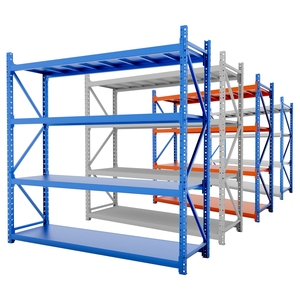
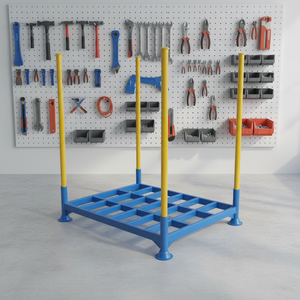
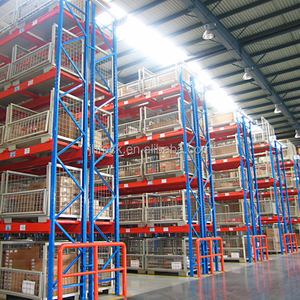
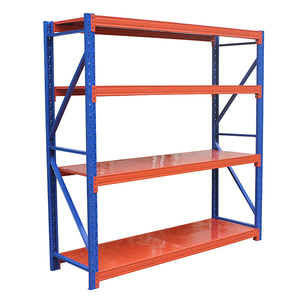
Why Leading Global Buyers Partner With Us
Combining advanced metallurgical engineering, rigorous safety standards, and end-to-end OEM/ODM manufacturing capability.
Full CE Certification & EN Compliance
Our structural rack designs strictly adhere to EN 15512, EN 15620, EN 15629, and FEM 10.2.02 standards, ensuring total compliance for European and global commercial projects.
Free 3D & CAD Layout Engineering
We eliminate spatial layout uncertainties by providing complimentary, customized 3D/CAD structural drawings, load capacity calculations, and bill of materials before production.
Q235B & Q355B High-Tensile Steel
Manufactured exclusively from certified cold-rolled structural steel coils with mill test certificates, guaranteeing high yield strength and long-term dynamic seismic stability.
End-to-End OEM/ODM Manufacturing
From fully customized beam profiles, specialized roll-formed uprights, custom electrostatic powder coating (RAL colors), to branded export packaging, we cater to exact client specs.
Executive Whitepaper: Strategic Selection & Engineering of Commercial Storage Racks
In modern global logistics, material handling, and supply chain management, commercial storage racking systems serve as the structural backbone of warehouse throughput and spatial efficiency. As global e-commerce volumes expand, cold chain distribution networks mature, and floor space costs rise, warehouse operators can no longer view storage racks merely as passive steel shelves. Instead, modern commercial storage systems are highly engineered, structural frameworks designed to maximize vertical cubic storage space, optimize inventory turnover, and ensure rigorous workplace safety under heavy static and dynamic loads.
This technical report provides supply chain directors, industrial engineers, procurement specialists, and warehouse managers with an authoritative overview of commercial storage racking engineering, international regulatory standards, system selection frameworks, future technological trends, and global sourcing strategies.
1. The Engineering Standard: Why CE Certification Matters in Storage Racking
Structural reliability in heavy-duty commercial storage racking is paramount. A structural failure in high-bay pallet racking can lead to cataclysmic inventory damage, operational downtime, and life-threatening workplace hazards. Compliance with International standards—specifically European CE Marking requirements—serves as the definitive benchmark for structural integrity and manufacturing consistency.
Core Regulatory Standards for Storage Racks
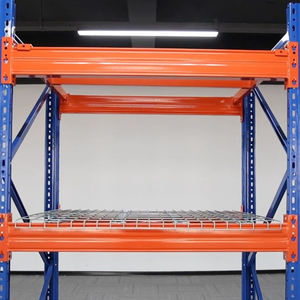
- EN 15512: Structural design specification for adjustable pallet racking systems, governing load calculations, beam-to-upright connection rigidity, and frame stability under ultimate limit state (ULS) and serviceability limit state (SLS).
- EN 15620: Tolerances, deformations, and clearances for high-bay racking and automated storage systems, ensuring precise alignment with forklifts and automated guided vehicles (AGVs).
- EN 15635: The application and maintenance of storage equipment, detailing operational inspection protocols and structural safety limits.
- AS 4084-2012: Australian standard for steel storage racking, mandating strict seismic resistance factors and beam safety lock pin tests.
- ANSI/RMI MH16.1: US specification for the design, testing, and utilization of industrial steel storage racks.
Our manufacturing facility utilizes high-grade Q235B and Q355B cold-rolled structural steel. Yield strength testing, tensile verification, and 3rd-party destructive load tests guarantee that every upright frame and shelf beam exceeds nominal load capacities with an engineered safety factor of 1.5 to 1.94.
2. Structural Systems Breakdown & Product Selection Matrix
Selecting the optimal storage rack layout requires balancing three core metrics: Pallet Selectivity, Storage Density, and Handling Throughput Speed. Below is an engineering comparison of primary commercial storage racking systems:
| Racking System Type | Storage Density | Pallet Selectivity | Inventory Rotation | Ideal Industry Application |
|---|---|---|---|---|
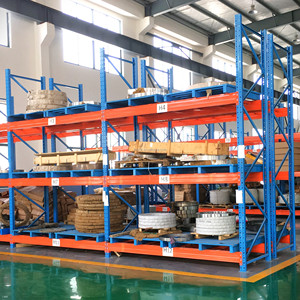
| Selective Pallet Racking | Standard (40-50%) | 100% Direct Access | FIFO / LIFO | FMCG, 3PL Logistics, General Warehouse, Multi-SKU Distribution |
| Very Narrow Aisle (VNA) | High (65-75%) | 100% Direct Access | FIFO / LIFO | High-Bay Distribution Centers, E-Commerce Hubs with Specialized Trucks |
| Drive-In / Drive-Thru Rack | Very High (75-85%) | Low (Block Storage) | LIFO (Drive-In) / FIFO (Drive-Thru) | Cold Storage, Frozen Food, Seasonal Products, Low-SKU High-Volume |
| Push-Back Cart Racking | High (60-70%) | Medium (2-6 Deep) | LIFO (Last-In, First-Out) | Cold Rooms, Fast-Moving Consumer Goods, Medium SKU Counts |
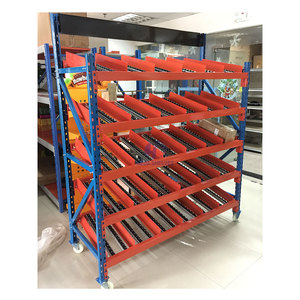
| Gravity Flow / Pallet Flow | Very High (80-90%) | Medium (Per Lane) | Strict FIFO (First-In, First-Out) | Perishable Goods, Pharmaceuticals, Food Processing, High Throughput |
| Radio Shuttle Automation | Maximum (85-92%) | High Speed / Automated | Flexible FIFO / LIFO | Automated Warehousing, Beverage Logistics, Deep Lane Cold Chains |
| Multi-Tier Mezzanines | Doubled/Tripled Space | 100% Manual Access | Customized | Auto Spare Parts, Apparel Picking, E-Commerce Packing Centers |
3. Technical Innovations & Manufacturing Excellence
Modern commercial storage rack manufacturing combines metallurgical science with precision automated roll-forming and robotic welding technology. The structural lifecycle of a warehouse rack depends directly on the manufacturing processes executed in the factory:
A. Advanced Roll-Forming & Upright Geometry
Upright posts must withstand combined axial compressive loads and flexural bending moments. Utilizing multi-station automated continuous cold roll-forming machines, steel profiles are shaped with intricate ribbing geometries (such as 11-fold and 13-fold profile cross-sections). This multi-stage profiling increases structural moment of inertia without adding unnecessary steel weight, optimizing cost-per-pallet position for global exporters.
B. Automatic Continuous Robotic Welding
Beam-to-claw connectors and base plate assemblies are welded using high-precision robotic MIG/MAG welding systems. Automated welding eliminates human error, guarantees complete weld penetration, eliminates internal stress concentration, and ensures consistent load transmission between structural members.
C. Surface Pre-treatment & Epoxy Powder Coating
Environmental durability is critical, especially for humid or cold-storage environments. Our 9-stage automatic surface pre-treatment process includes chemical degreasing, rust removal, zinc phosphating, and deionized water rinsing. Subsequently, racks undergo electrostatic powder coating with TGIC-free polyester-epoxy resins, cured at 200°C. This creates an anti-scratch, anti-corrosion barrier exceeding 500 hours of salt-spray corrosion resistance tests.
4. Future Procurement Trends in Commercial Storage Racks (2025–2030)
As the global supply chain landscape shifts toward automation, sustainability, and resilience, procurement executives must anticipate future technology trends before committing capital to rack infrastructure:
1. Seamless Integration with AS/RS & Shuttle Robotics
Traditional static racking is rapidly evolving to support semi-automated Radio Shuttles and fully automated AS/RS (Automated Storage and Retrieval Systems). Future racking designs require hyper-precise manufacturing tolerances (down to ±0.5mm across frame lengths) and integrated sensor rails to accommodate high-speed robotic shuttles and AGVs.
2. Cold Chain Optimization & Low-Temperature Steel Alloys
Global demand for frozen foods, biologics, and pharmaceuticals is accelerating cold storage facility construction. Operating at temperatures from -25°C down to -40°C causes standard structural steel to become brittle. Future procurement favors specialized micro-alloyed low-temperature steels (such as Q355D/E) combined with thermal expansion structural joints to prevent cold-brittleness fractures.
3. Sustainable Green Steel & Zero-VOC Coatings
Global ESG (Environmental, Social, and Governance) policies require supply chain infrastructure to reduce embodied carbon footprints. Leading manufacturers are transitioning to green steel produced via renewable-energy electric arc furnaces (EAF) and ultra-low-VOC, solvent-free powder coatings.
4. Seismic Design & Dynamic Structural Monitoring
With warehouse distribution centers expanding in seismically active regions, storage racks must be engineered using finite element analysis (FEA) to withstand severe lateral seismic accelerations. Integration of Internet-of-Things (IoT) strain gauges and structural displacement sensors directly into rack frames is emerging as a trend to monitor rack health in real-time.
5. Enterprise Overview & Export Advantage: Random Racks / OTS Racking
Founded in 2004 and headquartered in the Guli Industry Zone, Jiangning District, Nanjing, China, Random Racks Storage Equipment Co., Ltd. (OTS Racking) has established itself as an authoritative global manufacturer of high-grade commercial storage racking and automated warehouse systems.
With over two decades of dedicated manufacturing experience, our enterprise encompasses modern industrial workshops equipped with continuous automated steel roll-forming lines, 3D laser cutting machinery, automatic robotic welding cells, and eco-friendly powder coating lines. We hold comprehensive export certifications, including ISO9001 quality management system certification and European CE structural certification.
Our Comprehensive Engineering Service Package:
- Free Engineering & CAD/3D Layout Design: Send us your warehouse floor plan, clear height dimensions, forklift specs, and pallet load criteria. Our structural engineers generate complete 2D/3D CAD layouts and bill of materials within 24–48 hours free of charge.
- Customized OEM/ODM Solutions: Tailor-made beam profile sizes, custom frame heights up to 15 meters, specialized mold rack drawers, cantilever arms, and custom corporate colors.
- Third-Party Load Testing & Traceable QA: Complete raw material mill certificates, coating thickness verification, and third-party load test reports for complete peace of mind.
- Global Export Logistics & On-site Assembly Support: Expert container packing to prevent transit damage, detailed installation manuals, video instruction, and professional installation supervision for international projects.
6. Frequently Asked Questions (FAQ)
Can you design a custom storage racking system based on our warehouse drawings?
Yes, absolutely. Send your CAD warehouse floor plan, clear ceiling height, pallet dimensions (W x D x H), unit load weight, and forklift truck specifications. Our engineering team will return a customized 3D/CAD layout design, structural load calculations, and a competitive commercial quote within 24 to 48 hours completely free of charge.
Which design and safety standards do your commercial storage racks comply with?
Our structural racking systems are engineered and tested in strict accordance with European standards (EN 15512, EN 15620, EN 15629, FEM 10.2.02), Australian standard AS 4084-2012, and American RMI specifications. All products are CE certified and produced under ISO9001 certified quality control systems.
How do I choose between Drive-In, Push-Back, and Gravity Flow Racking?
Choice depends on your inventory velocity and rotation rules: Drive-In Racking suits high-density storage of homogeneous goods with low SKU counts and LIFO rotation; Push-Back Racking allows 2 to 6 pallets deep per lane with faster selectivity than drive-in; while Gravity Flow Racking provides high-density storage with strict FIFO rotation, making it ideal for perishable foods, cold chain storage, and date-sensitive pharmaceuticals.
What is the typical production lead time and export container delivery schedule?
Standard manufacturing lead time for container load orders is typically 15 to 25 days after final drawing approval and deposit receipt. For complex automated shuttle systems or customized high-bay projects, schedules are finalized during project planning. We offer optimized container loading plans to maximize freight volume utilization.
What structural steel grades are utilized in your storage rack manufacturing?
We exclusively utilize prime structural cold-rolled steel coils matching Q235B and Q355B (equivalent to SS400 / S235 JR and S355 JR standards). Mill Test Certificates (MTC) detailing chemical composition and mechanical yield strength tests are provided with every shipment batch.
Do you provide sample components and OEM branding for regional distributors?
Yes, we provide sample components (upright sections, beam profile cuts, beam claws, safety locks) for quality inspection and coating testing prior to mass production. We also fully support OEM/ODM branding, customized powder coat RAL colors, and branded packaging for regional racking distributors and systems integrators.
Transform Your Warehouse Storage Efficiency Today
Partner with a certified 20+ year manufacturer. Contact our engineering design team now to receive a customized 3D layout, load calculation, and comprehensive product catalog.