Featured Industrial Racking & Logistics Systems
Engineered for extreme structural loads, high space efficiency, and seamless material handling integration.
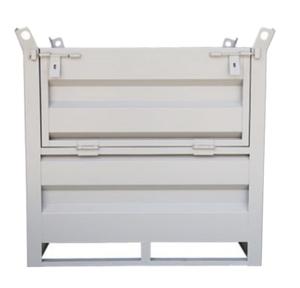
DOPRO Horseshoe Type Steel Pallet Box, Foldable & Stackable Metal Storage Bin, Heavy Duty Steel Stillage Box Customizable
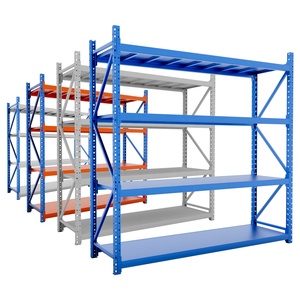
Factory Direct 4-Layer 800kg Medium Heavy Duty Pallet Racking System Steel Adjustable Longspan Warehouse Storage Pallet Racks
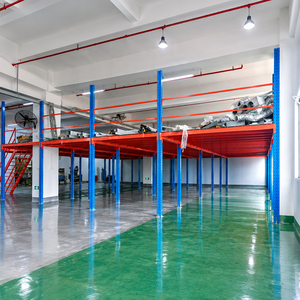
Multi Level Warehouse Mezzanine Racking With Shelving Heavy Duty Steel Storage Platform Customized Industrial Storage
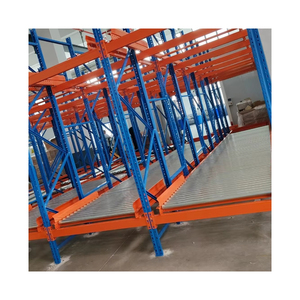
High Quality FIFO Gravity Carton Flow Rack Pallet Rack System Pallet Flow Racking Warehouse Equipment
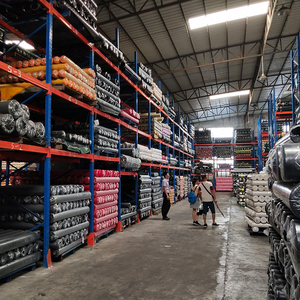
Highly Customizable Free Design Storage Rack For Various Heavy Duty Storing 1000KG 2000KG 3000KG Pounds Tons
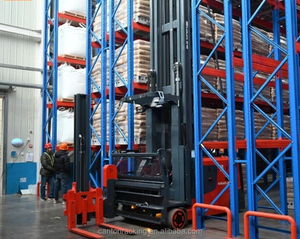
Very Narrow Aisle Racking Is Similar to Standard Rackingsystem Design, but the Aisles Are Minimized to Maximize Storage Capacity
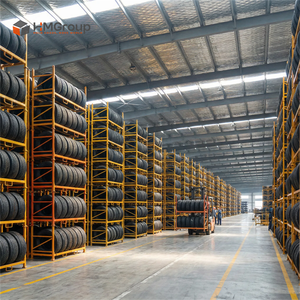
Factory Professional Auto Industry Warehouse Stacking 4 High Collapsible Portable Metal Steel Tire Storage Rack
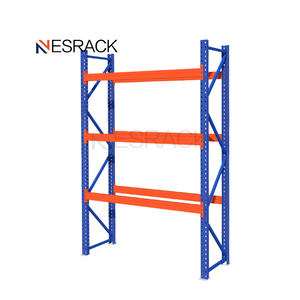
Heavy Duty Pallet Rack Shelving Pallet Racking Dimensions Warehouse Storage Racks Customized Adjustable Steel Q235B Pallet Rack
Cantilever Storage Rack Engineering & Sourcing Guide
An Executive Technical Report on Heavy-Duty Cantilever Racking Design, Steel Metallurgy, Load Distribution, and Safety Standards.
1. Structural Architecture of Industrial Cantilever Racks
Cantilever storage racks represent the definitive engineering response to long, bulky, irregularly shaped, or linear materials handling challenges. Unlike standard selective pallet racking systems constrained by front vertical columns, cantilever systems provide unobstructed horizontal load access. This structural freedom makes them essential for storing steel pipes, plastic tubing, structural timber, aluminum extrusions, sheet metal plates, automotive chassis components, and heavy industrial molds.
At the core of a heavy-duty cantilever rack's load-bearing capacity is its upright column and arm assembly. China’s premier manufacturing facilities utilize high-tensile hot-rolled structural steel sections (H-Beams/I-Beams) such as Q235B and Q355B grades (compliant with GB/T 1591 and international standards EN 10025 S355JR). Hot-rolled structural steel delivers vastly superior shear resistance, lateral stability, and moment capacity compared to light-gauge cold-formed profiles, especially when dynamic impact loads from heavy forklifts are factored in.
| Specification Parameter | Cold-Formed Light Duty | Hot-Rolled Heavy-Duty H-Beam | Extra Heavy Duty Custom |
|---|---|---|---|
| Column Section Profiles | C-Channel / Roll-formed (150-250mm) | HN / HW Structural H-Beam (200-450mm) | Custom Box Column / Heavy I-Beam |
| Arm Load Capacity | 100 kg - 500 kg per arm | 500 kg - 2,500 kg per arm | 2,500 kg - 6,000+ kg per arm |
| Steel Grade Standard | Q235B / Cold-Rolled Strip | Q355B (S355JR Equivalent) | Q355D High Impact Grade |
| Height Capability | Up to 4.5 Meters | Up to 12.0 Meters | Up to 18.0 Meters (Automated AS/RS) |
| Surface Treatment | Standard Electrostatic Powder | Thermosetting Epoxy Powder Coating | Hot-Dip Galvanized (HDG ISO 1461) |
2. Mechanics of Load Moment & Arm-Column Connections
The engineering challenge of cantilever racking lies in managing bending moment diagrams ($M = F \times L$). When material is placed on a cantilever arm, it induces severe eccentric loads and overturning moments on the vertical uprights. To prevent joint deformation, top Chinese suppliers engineer zero-play tapered arm connections with heavy locking pins and high-grade 10.9 structural bolts.
Arms are manufactured with a built-in incline (typically 2° to 4°) to compensate for natural beam deflection under load. When fully loaded, the arm deflects into a perfectly level horizontal plane, ensuring material stability and preventing dangerous load slippage forward. Base bases are securely anchor-bolted into concrete foundations using heavy chem-anchors or expansion bolts to resist base shear and uplift moments caused by wind loading (in outdoor applications) or seismic activity.
3. Single-Sided vs. Double-Sided System Engineering
When engineering warehouse floor plans, cantilever racks are deployed in two distinct geometric configurations:
- Single-Sided Cantilever Racks: Placed flush against warehouse wall envelopes. The structural base extends forward beyond the length of the storage arm to establish structural balance and ground anchor stability.
- Double-Sided Cantilever Racks: Placed centrally within warehouse aisles, accessible from both sides. Double-sided columns benefit from self-balancing moment distributions when both sides are loaded uniformly, dramatically increasing total vertical frame capacity.
Why Direct OEM Sourcing From China Manufacturer Advantages
Random Racks (OTS Racking) brings over 20 years of precision manufacturing, engineering innovation, and international compliance to global industrial buyers.
20+ Years Production Expertise
Established in 2004 in Nanjing, Jiangsu, our factory spans tens of thousands of square meters equipped with automated CNC punching, roll-forming, robotic welding, and automatic powder coating lines.
Global Code & Load Compliance
Our cantilever and pallet racking structures are strictly engineered in accordance with AS4084-2012, FEM 10.2.09, EN 15512, and RMI design specifications, complete with certified third-party load test reports.
Free 3D CAD & Finite Element Analysis
Our in-house structural engineers provide complimentary 3D layout renderings, CAD installation drawings, and FEA stress analysis to guarantee load performance before steel cutting begins.
Full OEM/ODM Customization
From specific RAL powder coat colors to custom arm lengths, heavy-duty guidance rails, roofed outdoor cantilever shelters, and hot-dip galvanizing, we build to exact project specifications.
Export Container Loading & Packing
All upright columns, arms, and bracing channels are steel-strapped, wrapped in protective moisture barriers, and labeled systematically to facilitate fast offloading and efficient site erection.
Direct Factory Cost Savings
By eliminating middleman distributors and sourcing directly from our primary Chinese manufacturing hub, international clients reduce capital expenditures by 25% to 40% per storage footprint.
Future Procurement & Technological Development Trends
How Industrial Cantilever & Heavy-Duty Storage Equipment Is Evolving Towards Automation and High-Density Integration.
1. Automated Cantilever AS/RS Integration
Traditional manual forklift operation in high-bay cantilever racking is rapidly shifting towards Automated Storage and Retrieval Systems (AS/RS). Modern automated cantilever systems deploy specialized stacker cranes fitted with telescopic forks or side-loading grippers. These machines navigate high-bay aisles up to 25 meters tall with millimeter accuracy, controlled via Warehouse Management Systems (WMS) and Warehouse Control Systems (WCS).
Automating long-goods handling eliminates human error, minimizes forklift structural collision risks, dramatically accelerates cycle times, and allows total lights-out warehouse operations for heavy metal, plastic, and building material distribution centers.
2. Galvanized All-Weather Outdoor Cantilever Systems
As industrial real estate costs soar globally, warehouse operators are expanding inventory footprints into outdoor yards. Modern cantilever procurement heavily favors Hot-Dip Galvanized (HDG) steel finishes under ISO 1461 standards. HDG coatings create a metallurgically bonded zinc layer that provides sacrificial anodic protection, preventing rust even under severe maritime, high-humidity, or industrial acid rain conditions for up to 50 years.
Furthermore, outdoor cantilever systems are increasingly engineered with integrated roof arms, gutter systems, and side cladding windbreaks, converting open racking structures into cost-effective weather-sheltered storage sheds without requiring full building permits.
3. High-Strength Low-Alloy (HSLA) Steel Utilization
Sustainability and carbon reduction targets are driving the material evolution of cantilever racking manufacturing. Leading factories are replacing thick structural carbon steel with Advanced High-Strength Low-Alloy (HSLA) steel grades such as Q355B and Q460. HSLA steel achieves identical or superior mechanical yield strengths while reducing structural mass by up to 18%. This weight reduction cuts raw material consumption, lowers ocean freight container shipping costs, and reduces carbon footprints across the supply chain lifecycle.
4. Smart Sensor & Dynamic Structural Monitoring
The integration of IoT structural health monitoring sensors marks the next frontier in heavy-duty warehouse safety. Wireless strain gauges, tilt sensors, and laser displacement units are embedded directly into cantilever column bases and critical arm joints. These smart sensors stream continuous structural load data to cloud dashboards, alerting facility managers instantly if an arm experiences illegal overload, severe impact stress, or column tilt beyond safe operational tolerances.
Frequently Asked Questions (Procurement & Technical FAQ)
Answers to critical engineering, customization, shipping, and installation queries from global warehouse buyers.
How do I calculate the required arm load capacity for my cantilever rack?
Arm load capacity is calculated by dividing the total weight of the long material load by the number of supporting arms required to keep the material from sagging between support points. For example, if a bundle of steel pipes weighs 3,000 kg and requires 3 support arms to prevent deflection, each arm must have a minimum rated load capacity of 1,000 kg. Our engineering team verifies load distribution through Finite Element Analysis (FEA) based on your specific material length and flexural modulus.
What is the difference between Roll-Formed and Hot-Rolled Structural Cantilever Racks?
Roll-formed cantilever racks are manufactured from cold-rolled sheet steel formed into C-channels. They are ideal for light-to-medium loads (up to 500 kg per arm) and offer lower initial costs. Hot-rolled structural cantilever racks are manufactured from solid heavy H-Beams and I-Beams (Q235B/Q355B structural steel). They provide extreme strength, resistance to heavy forklift impacts, and arm capacities exceeding 3,000 kg per arm, making them the standard choice for heavy industrial, outdoor, and high-bay operations.
Can cantilever racks be customized with roofs for outdoor storage?
Yes. Outdoor cantilever rack shelters are a specialized core offering. We extend the top of the vertical columns with inclined roof trusses designed to carry corrugated steel roofing sheets, snow loads, and wind shear. Combined with a Hot-Dip Galvanized (HDG) finish, outdoor roofed cantilever racks provide an economical alternative to building permanent warehouse extensions.
Which design standards do your cantilever and pallet racking systems conform to?
Our racking systems are engineered strictly under international structural standards, including European FEM 10.2.09 & EN 15512, Australian AS4084-2012, American RMI (Rack Manufacturers Institute) specifications, and ISO 9001 quality management standards. Full load calculation certificates and third-party mill test certificates (MTC) are supplied with every major order.
What is the typical production lead time and export shipping arrangement?
Standard custom project production takes 15 to 25 business days following final CAD layout approval. We handle complete export logistics, loading goods into 20GP or 40HQ High Cube ocean containers directly from our factory loading bay in Nanjing, China. Materials are bundled with heavy-duty steel strapping, corner protectors, and waterproof plastic film wrapping.
Do you provide free warehouse layout design and CAD services?
Yes! We provide complimentary 2D floor plans, 3D CAD models, and detailed structural load bills of materials. Simply send us your warehouse clear height, building dimensions, material specifications, load weights, and forklift turning radius data.
Request a Free Engineering Layout & Factory Quote
Optimize your warehouse storage efficiency with certified structural steel cantilever racks directly from China's leading OEM manufacturer.