High-Density Storage & Industrial Racking Systems
Explore our engineering-validated pallet racking, automated handling, and specialized warehouse storage solutions manufactured for global distribution centers.
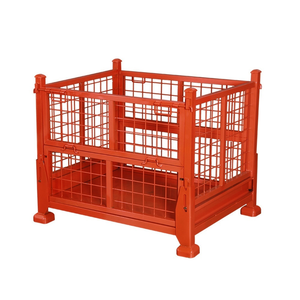
Heavy Duty Galvanized Collapsible Steel Wire Mesh Stillage Cage
Get a Quote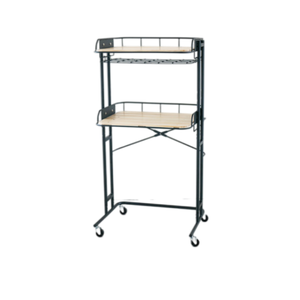
Multi-Tier Heavy-Duty Functional Commercial & Industrial Storage Shelf
Get a Quote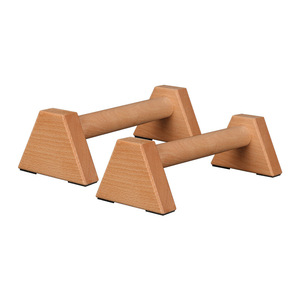
Specialized Structural Wooden & Composite Heavy Support Rack Framework
Get a Quote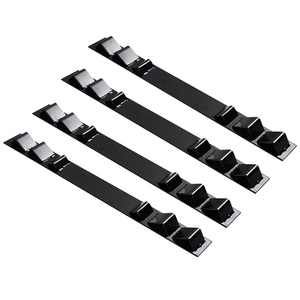
Heavy Duty Truck Coil Rack Double System for Steel Cargo Control
Get a Quote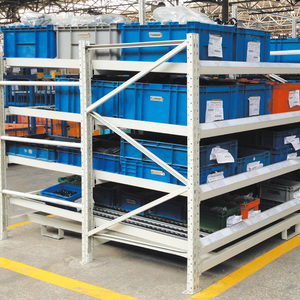
High Density Cold Rolled Steel Powder Coated Gravity Flow Rack
Get a Quote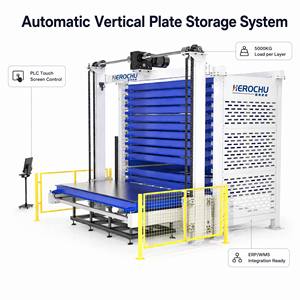
Automatic Vertical Plate Storage System Motorized ASRS (5000KG/Layer)
Get a Quote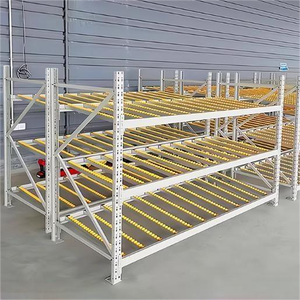
Industrial 5-Layer Carton Flow Rack System with Anti-Corrosion Finish
Get a Quote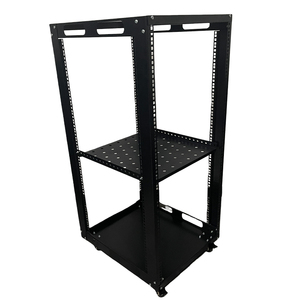
Heavy-Duty Vertical Electrostatic Sprayed Metal Enclosure Rack System
Get a QuoteEngineering Fundamentals of Drive-In Pallet Racking
An in-depth analysis of structural integrity, load-bearing dynamics, and high-density space efficiency for industrial procurement managers.
Elimination of Operating Aisles
Unlike conventional selective pallet racking which requires an operating aisle for every two rack rows, Drive-In Racking creates a continuous block of storage lanes. Forklifts drive directly into the racking structure framework to deposit or retrieve pallets resting on continuous cantilevered side rails. This design eliminates up to 65% of unnecessary floor space dedicated to forklift corridors, converting passive traffic zones into active revenue-generating pallet capacity.
LIFO vs. Drive-Through FIFO Dynamics
Drive-In racking systems operate predominantly on a LIFO (Last-In, First-Out) principle, where the last pallet loaded into a lane is the first to be retrieved. This makes it exceptionally suited for uniform, non-perishable merchandise or large batch manufacturing lines with few SKUs. For time-sensitive inventories, our engineering team manufactures Drive-Through (FIFO) configurations, which feature separate entry and exit faces to guarantee strict First-In, First-Out stock rotation.
Heavy-Duty Column Profiling
Due to the risk of vehicle impact from forklifts entering the storage bay, structural stability is paramount. We engineer upright columns using high-tensile Q355B cold-rolled steel (yielding 355 MPa strength minimum). Posts feature heavy multi-flange profiles with a thickness up to 2.5mm–3.0mm, complemented by floor-anchored heavy-gauge ground guide rails and tapered entry beam deflectors to shield the structural frame.
Engineering Insight: Minimum Forklift Clearance Formula
To ensure safe operation without frame collision, our design engineers apply the standard minimum clearance calculation for drive-in lanes according to FEM 10.2.07 regulations:
Pallet Rail Gap (G_rail) = Pallet Width (W_pallet) - 100 mm (Support Overhang Allowance)
*Note: Guide rail systems (floored angle irons) reduce required operator clearance margins to 75mm on each side, speeding up cycle times by 22%.
High-Density Racking System Comparison Matrix
A multi-variable engineering evaluation to help procurement directors match pallet rotation needs, floor space cost, and capital expenditure (CapEx).
| Racking Technology | Volume Utilization | SKU Diversity Handling | Access Principle | CapEx Index (Per Pallet) | Cold Storage Suitability |
|---|---|---|---|---|---|
| Drive-In Racking (LIFO) | Very High (75% - 85%) | Low (Homogeneous SKUs) | LIFO (Last-In, First-Out) | Low to Moderate ($) | Excellent (Industry Standard) |
| Selective Pallet Racking | Standard (35% - 45%) | Maximum (100% Selective) | Random / Any Access | Low ($) | Moderate (High Energy Cost/Pallet) |
| Radio Shuttle Racking | Maximum (80% - 90%) | Moderate (Per Lane SKU) | FIFO / LIFO (Automated) | High ($$$) | Excellent (Automated) |
| Push-Back Racking | High (60% - 70%) | Moderate (2-6 Deep/SKU) | LIFO (Gravity Cart) | Moderate to High ($$) | Good |
| Pallet Flow (Gravity) Rack | Very High (70% - 80%) | Moderate to High | Strict FIFO (Roller Beds) | High ($$$) | Excellent |
Future Procurement & Racking Trends (2025–2030)
How technological advances, green logistics, and automation integration are transforming China-sourced drive-in racking production.
1. Hybrid Shuttle-Ready Upgrades
Global warehouse operators are increasingly demanding future-proof infrastructure. Modern drive-in racking frames are now manufactured with dual-purpose structural punching. This allows enterprise operations to initially deploy low-cost manual drive-in racking and later transition seamlessly into automated Radio Shuttle car systems without replacing the primary upright frames or structural anchor grids.
2. Cold-Chain Energy Cost Optimization
With global industrial energy prices escalating, cold storage facility operators prioritize maximum cubic utilization. Drive-In racking reduces refrigerated air volume overhead by 50% compared to selective racking setups. Future-focused exporters are utilizing advanced zero-VOC electrostatic epoxy powder coatings designed specifically to prevent micro-cracking and rust in sub-zero environments down to -30°C.
3. Automated Structural Stress Monitoring
Integrating IoT telemetry directly into warehouse uprights is moving from prototype to commercial deployment. Embedded strain gauges and optical collision sensors installed on bottom column guards provide facility directors with real-time structural health monitoring, instantly flagging frame deformation or forklift impact forces exceeding ISO threshold limits.
Why Partner With Our Nanjing Manufacturing Facility
Two decades of precision structural steel engineering, international code compliance, and reliable global export handling.
20+ Years Continuous Manufacturing (Since 2004)
Operating out of the Guli Industry Zone in Nanjing, China, our specialized racking facility spans automated continuous roll-forming lines, robotic welding stations, and automated Swiss-Gema powder coating tunnels. We maintain total quality trace-ability from prime steel coil procurement to container sealing.
Compliant with FEM, EN 15512 & AS4084 Standards
Our structural design software calculates load capacities backed by real physical destruction testing. Every rack delivery can be supplied with mill test certificates (MTC), static load calculations, dynamic seismic safety factors, and third-party compliance verification for European, American, and Australian markets.
Free 3D CAD & BIM Structural Layout Engineering
We eliminate spatial guesswork prior to production. Send us your architectural floor plan, clear building height, forklift specs, and pallet load profiles. Our Senior Structural Engineers deliver complete 2D/3D CAD layouts and bill of materials (BOM) within 24 to 48 hours at zero cost.
Global Container-Optimized Export Packaging
Exporting structural steel requires rigorous protection against oceanic moisture and transit vibration. All upright frames, support arms, and pallet rails are bundled using heavy-gauge plastic film, steel strapping, cardboard edge protectors, and custom wooden cradles to ensure damage-free unloading.
Frequently Asked Questions by International Buyers
Clear engineering and commercial answers to simplify your high-density racking procurement process.
What is the maximum practical lane depth for a Drive-In Racking system?
While drive-in lanes can technically be built 10 to 15 pallets deep, engineering safety standards recommend a depth of 6 to 8 pallets per side for standard forklift operations. Lanes deeper than 10 pallets increase forklift travel time inside the rack structure and elevate the risk of column impact. For storage depths exceeding 10 pallets, we advise integrating a Radio Shuttle Racking system.
How do you protect Drive-In racking uprights from forklift collision damage?
Forklift impact mitigation is integral to our system architecture. We supply three levels of physical protection: 1) Heavy-Duty Floor Guide Rails (50x50mm or 75x75mm structural angle iron) that physically steer forklift tires inside the lane; 2) Tapered Entry Deflectors at the front of every support rail; and 3) Wrap-Around Column Guards anchored directly to the concrete floor slab independently of the rack uprights.
Can your Drive-In Racking be customized for non-standard pallet sizes?
Yes. Every drive-in system manufactured in our Nanjing facility is tailored to the exact width, depth, height, and weight profile of your unit loads. Whether you handle Euro pallets (800x1200mm), Industrial pallets (1000x1200mm), GMA pallets (48x40in), or customized heavy-duty steel stillage crates, our engineering team custom-spaces the cantilever support arms and rail profiles accordingly.
What floor slab specification is required for high-density drive-in storage?
Due to concentrated point loads transmitted through the frame upright columns, we recommend a reinforced concrete slab with a minimum thickness of 150mm to 200mm and a compressive strength rating of C25/C30 (25-30 MPa). Floor levelness must adhere to FM2 or VNA standards (DIN 15185 or EN 15620) to prevent forklift tilt inside deep lanes.
What is the typical production and delivery lead time for an export container?
Standard engineering layout approval and manufacturing lead time takes 15 to 25 business days for standard 40ft High Cube container orders. Shipments to major European, North American, Australian, or Middle Eastern ports typically range from 14 to 35 transit days depending on ocean freight routes.
Transform Your Warehouse Storage Capacity Today
Contact our senior structural engineers for a free layout optimization review, technical consultation, and factory-direct quotation within 24 hours.
Get a Quote