Engineered Storage & Material Handling Systems
Direct Factory Sourcing for High-Load Industrial Logistics, Heavy-Duty Tubing, and Warehouse Platform Rack Systems
Whitepaper: Engineering Fundamentals of Industrial Pipe & Long-Material Storage Racks
Storing long, heavy, and irregularly shaped items—such as steel pipes, PVC conduits, copper tubing, aluminium extrusions, and structural timber—presents unique material handling challenges. Standard selective pallet racking is structurally unsuited for continuous long loads due to front upright obstructions. Therefore, evaluating China pipe storage rack suppliers requires an in-depth understanding of structural mechanics, steel grade selection, moment connection engineering, and roll-off protection systems.
1. Structural Mechanics of Cantilever Pipe Racks
The core structural design for pipe storage relies heavily on Cantilever Racking Systems (offered in light-duty roll-formed steel and heavy-duty structural H-beam profiles). Unlike traditional 4-post racking, cantilever racks feature a central vertical column with horizontal arms extending outward, leaving the front entirely open for crane overhead loading or side-loading specialized forklifts (combi-lifts or multi-directional trucks).
2. Steel Selection: Q235B Cold-Rolled vs. Q355B Hot-Rolled Structural Steel
When sourcing pipe storage racks from Chinese manufacturers, specifying the correct raw steel grade is critical to operational safety:
- Cold-Rolled C-Profile / Roll-Formed Steel (Q235B): Ideal for light-to-medium duty applications, such as plastic conduit, thin-walled tubing, or retail storage. Yield strength is certified around 235 MPa.
- Hot-Rolled Structural Steel H-Beams (Q355B / ASTM A572 Grade 50): Engineered for high-density heavy industrial yards, steel pipe manufacturing facilities, and oil & gas tube storage. Yield strength exceeds 355 MPa, allowing single arm load ratings from 1,000 kg up to 5,000 kg per arm.
Technical Comparison Matrix: Pipe Storage System Configurations
| Racking Type | Ideal Material Profile | Load Capacity Range | Access & Handling Method | Space Efficiency |
|---|---|---|---|---|
| Heavy-Duty Structural Cantilever | Steel pipes, oil tubes, heavy beams, timber | 500 kg – 5,000 kg per arm | Side-loaders, Combi-lifts, Overhead Cranes | High (Vertical space optimization) |
| Light-Duty Roll-Formed Cantilever | PVC pipes, electrical conduit, light copper tubes | 150 kg – 600 kg per arm | Manual hand-loading, standard forklifts | Moderate |
| Stacking Pipe Cages & Racks | Short pipe segments, fittings, bundled tubes | 1,000 kg – 2,000 kg per cage | Standard counterbalance forklift | High (Stackable 4–6 tiers high) |
| Automated Cantilever AS/RS | High-volume steel tube production & 3PL distribution | Up to 10,000 kg per cassette | Fully Automated Stacker Crane / Crane Manipulator | Maximum (High-bay density up to 25m) |
Key Sourcing Criteria for Global Buyers
Why Enterprise Logistics Managers Partner with Leading Chinese Heavy-Duty Racking Factories
AS4084, FEM & RMI Compliance
Ensuring structural engineering meets international design standards (European FEM 10.2.09, Australian AS4084-2023, and American RMI specifications) guarantees third-party safety pass rates for global warehouse audits.
In-House Automated Production
Leading Chinese factories utilize continuous automated cold-roll forming, robotic laser welding, and automated thermosetting powder coating lines to achieve consistent dimensional tolerances.
Custom Anti-Roll Safety Devices
Pipe storage requires removable roll-off protection pins, welded pipe saddles, or inclined arm tips ($2^\circ$ to $5^\circ$ uplift angle) to prevent cylindrical items from rolling off during forklift operations.
Strategic Racking Product Recommendations for Pipe Material Warehousing
To maximize cubic space utilization and streamline throughput, warehouse procurement heads must align specific pipe SKUs with appropriate structural storage systems. Below are the primary engineered recommendations:
1. Structural H-Beam Cantilever Racks (Single-Sided & Double-Sided)
The definitive industry choice for heavy steel pipes and long bundles. Columns are fabricated from heavy section I-beams (IPE or HEA profiles), anchored securely to concrete foundations via heavy-duty expansion bolts or chemical anchors. Arms feature pitch adjustability (typically 75mm or 100mm increments) secured by high-tensile locking pins.
2. Pipe Stacking Cages & Nestable Steel Pallets
For operations requiring rapid floor-to-floor relocation, transportability, or seasonal yard adjustments, modular steel stacking racks provide a highly flexible alternative. When empty, these frames can be collapsed or nested, saving up to 75% of return logistics space.
3. Flow Roller Track & Placon Systems for Light Tubing
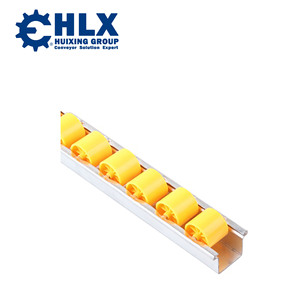
In lean manufacturing work cells (such as automotive assembly or electronics assembly lines), small-diameter plastic or aluminum tubes are stored using gravity-fed flow tracks (Placon systems). These systems enforce strict FIFO (First-In, First-Out) inventory rotation and integrate smoothly with lean pipe racking structures.
4. Automated Radio Shuttle & Four-Way Shuttle Systems
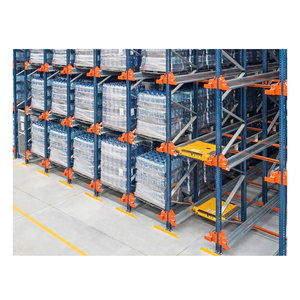
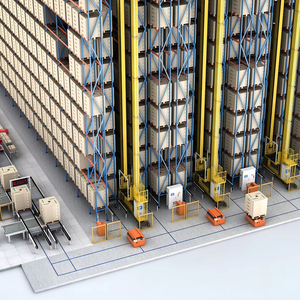
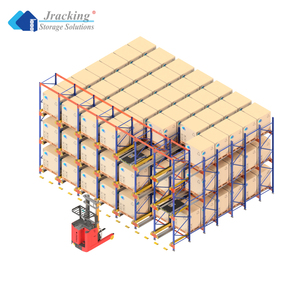
For high-volume bundled pipe distribution centers, high-density shuttle racking systems automate material positioning within deep storage channels. Wireless radio shuttles carry bundled materials on specialized cradles, dramatically reducing forklift aisle requirements and eliminating operator collision risks inside racking aisles.
Future Sourcing & Procurement Trends for Industrial Storage (2025–2030)
The global industrial warehousing landscape is undergoing rapid digital and material transformation. Sourcing directors looking to future-proof their supply chains when negotiating with Chinese pipe storage rack manufacturers must monitor four macro trends:
1. Shift Toward AS/RS Automation & Smart WMS Integration
Traditional manual handling of heavy pipe bundles poses high occupational safety risks and low retrieval speeds. Modern greenfield warehouses are adopting Automated Storage and Retrieval Systems (AS/RS) tailored for long goods. Automated stacker cranes equipped with double-deep magnetic or fork extractors interact with Warehouse Management Software (WMS) to track pipe heat numbers, batch numbers, and exact linear dimensions automatically.
2. Advanced Anti-Corrosion Surface Coatings (Outdoor Yard Storage)
Because pipe storage often spills into outdoor industrial yards, standard indoor powder coatings quickly deteriorate under UV exposure and rain. Sourcing trends show a massive increase in demand for Hot-Dip Galvanizing (HDG) according to ISO 1461 standards. HDG coatings deliver a 50+ year maintenance-free zinc alloy barrier capable of withstanding aggressive coastal and industrial atmospheres.
3. Finite Element Analysis (FEA) & Seismic Engineering
Global logistics hubs situated in active seismic zones (such as Western USA, New Zealand, Japan, and parts of South America) require custom structural engineering calculations. Leading Chinese suppliers now utilize advanced ANSYS FEA modeling to simulate static loads, dynamic forklift impacts, and seismic spectral accelerations before steel fabrication commences.
4. Modular Boltless Assembly & Reduced Carbon Footprint
With ocean freight costs fluctuating, optimizing shipping container cubing is vital. Modern racking designs emphasize fully knocked-down (KD) boltless structures. KD systems pack flat into 40ft High Cube containers, significantly cutting transport emissions and ocean freight expenses per metric ton of steel delivered.
Enterprise Manufacturing Capabilities & Engineering Edge
Founded in 2004 and headquartered in the Guli Industry Zone, Jiangning District, Nanjing, Jiangsu, China, Random Racks Storage Equipment Co., Ltd. has established itself over two decades as a premier manufacturer of heavy-duty warehouse racking systems, steel mezzanines, automated shuttles, and industrial material handling equipment.
Why Global Procurement Officers Choose Our Manufacturing Facilities:
- 20+ Years of Manufacturing Excellence: Over two decades of specialized structural steel fabrication expertise, exporting high-load racking solutions to over 90 countries worldwide.
- Full-Cycle Engineering & Free 3D/CAD Layouts: Our internal engineering department provides zero-cost CAD layout planning, structural load calculations, and 3D BIM modeling based on your exact warehouse clear height, floor slab strength, and material dimensions.
- Certified Quality & Third-Party Testing: All raw materials are accompanied by mill test certificates. Finished racking systems comply strictly with AS4084, FEM, and RMI standards, backed by third-party load test verification reports.
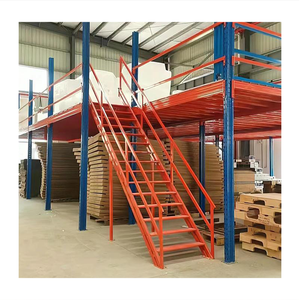
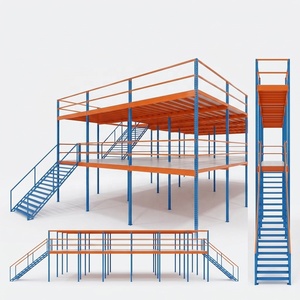
- Comprehensive Product Ecosystem: From heavy-duty structural cantilever pipe racks to multi-tier mezzanine floors, radio shuttle systems, carton flow tracks, and automated smart AS/RS warehouses—we deliver complete end-to-end industrial logistics infrastructure.
- OEM / ODM Customization: Full OEM/ODM manufacturing capability, supporting custom color matching (RAL powder coating system), custom steel gauges, private labeling, and custom structural attachment engineering.
Frequently Asked Sourcing & Engineering Questions (FAQ)
Direct Answers from Our Chief Structural Engineers & International Logistics Team
How do you calculate the required arm capacity for storing heavy steel pipe bundles?
Arm load capacity is calculated by dividing the total weight of the stored pipe bundle by the number of supporting arms beneath it. For example, if a steel pipe bundle weighs 6,000 kg and is supported by 3 cantilever arms, each arm must be rated for a minimum of 2,000 kg. However, structural engineers must also factor in uneven loading scenarios where 2 arms temporarily carry 100% of the load during forklift placement. Therefore, a safety factor (typically 1.5 to 2.0) is applied based on FEM and RMI guidelines.
What design standards do your warehouse racking and pipe storage systems comply with?
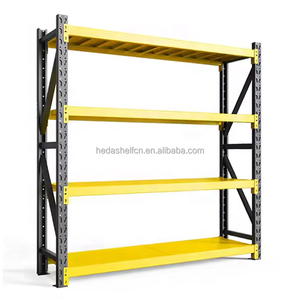
Our longspan shelving and light-duty systems are designed to AS4084 guidelines. Heavy-duty pallet racks and structural cantilever pipe racks are engineered with reference to EN 15512, FEM 10.2.09, and RMI (Rack Manufacturers Institute) standards depending on the destination region. Third-party mill certificates and load test reports are supplied with every major export batch.
How do I choose between roll-formed and structural H-beam cantilever racks for pipe storage?
Choose Roll-Formed Cantilever if your pipe materials are relatively light (e.g., plastic PVC pipes, thin copper tubes, light aluminum extrusions under 600 kg per arm) and require frequent vertical arm adjustments. Choose Structural H-Beam Cantilever for heavy industrial steel pipes, oil well casings, structural timber, or outdoor pipe yards where individual arm loads exceed 1,000 kg up to 5,000 kg per arm.
Can you design custom racking layouts directly from my building's architectural drawings?
Yes. Simply send us your warehouse floor plan (DWG, DXF, or PDF), indicating clear height below sprinkler systems/trusses, door locations, floor slab load limits, pallet or pipe dimensions, and forklift specifications (turning radius and lift height). Our engineering team will return a complete 2D/3D CAD layout with structural load capacity calculations and a detailed bill of materials free of charge.
What anti-corrosion protection is recommended for outdoor pipe storage yards?
For outdoor pipe yards exposed to rain, snow, UV radiation, or salt air, we strongly recommend Hot-Dip Galvanizing (HDG) per ISO 1461. Unlike standard indoor powder coating, HDG submerges the fabricated steel parts into molten zinc, forming a metallurgical bond that provides self-healing, long-term corrosion resistance for decades.
What is the standard production lead time for export orders?
Standard racking projects typically complete production within 15 to 30 business days following final engineering drawing approval. Large-scale automated projects (such as four-way shuttle AS/RS or multi-tier mezzanine floors) are scheduled individually according to project milestone charts.
Do you provide OEM/ODM services and installation guidance for overseas projects?
Yes. We offer complete OEM/ODM customization including custom color painting, branded labels, tailored steel profiles, and specialized packaging. Additionally, every shipment includes step-by-step assembly drawings, installation manuals, and video tutorials. For major turnkey projects, on-site installation supervisors can be dispatched to oversee assembly.
Ready to Optimize Your Industrial Pipe Storage Capacity?
Contact our engineering specialists today for a free 3D CAD layout, load capacity analysis, and direct factory pricing on heavy-duty pipe storage racks.
Get a Quote