Factory-Direct Solutions
High-Density Storage Systems & Industrial Equipment
Explore our core heavy-duty warehouse storage racking series engineered to FEM, EN 15512, RMI, and AS4084 international structural standards.
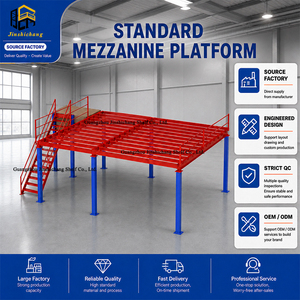
OEM Customized Steel Mezzanine Floor Manufacturer for Warehouse Storage
Send an Inquiry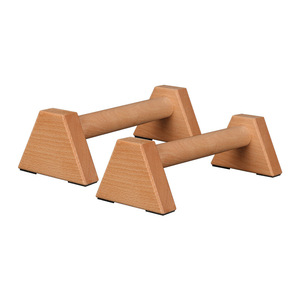
Push-up Stand Wooden Push-up Rack Inversion Rack Solid Wood Equipment
Send an Inquiry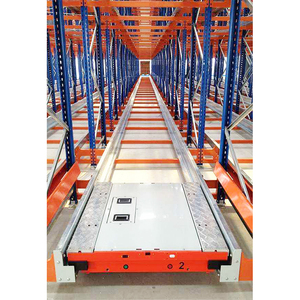
High-Density Shuttle Rack System 4-Way Radio Shuttle Racking ASRS
Send an Inquiry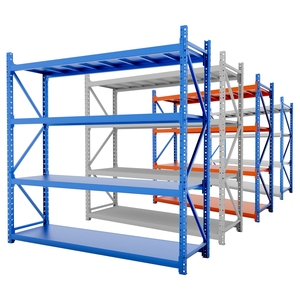
Factory Direct Steel 4-Layer 500kg Heavy Duty Pallet Rack & Shelving
Send an Inquiry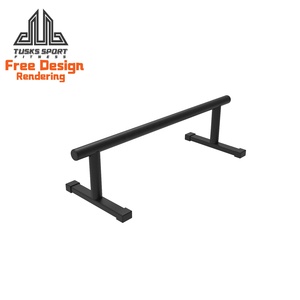
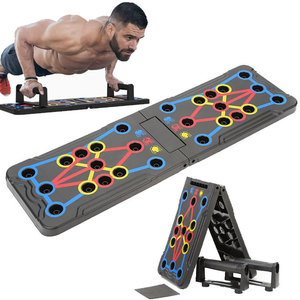
Unisex Metal Push-Up Rack Indoor Fitness Equipment Adjustable & Sturdy
Send an Inquiry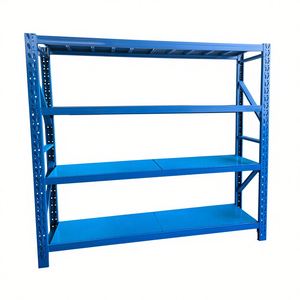
Customized Steel Medium Duty Mezzanine Floor Rack Multi-Level Platform
Send an Inquiry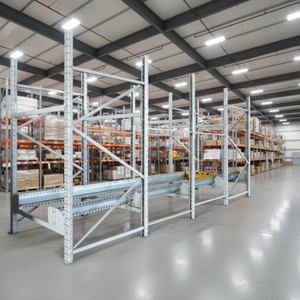
Smart Automated Warehouse Pallet Radio Shuttle Racking System
Send an Inquiry2004
Established Year
20+
Years Manufacturing
100%
Free 3D/CAD Layout
AS4084
Certified Standards
Enterprise Authority & Architectural Precision: China's Leading High-Density Storage Manufacturer
In modern industrial logistics, static floor storage represents a massive underutilization of expensive commercial real estate. As global supply chains face escalating warehousing costs and tighter delivery windows, upgrading to high-density structural racking systems has become a board-level imperative. Operating from Nanjing, Jiangsu Province, China, Random Racks Storage Equipment Co., Ltd. has established itself as an authoritative global manufacturer of high-density storage racks, steel mezzanines, and automated warehousing systems since 2004.
Spanning over two decades of engineering continuous improvement, our manufacturing facility merges heavy-duty roll-forming production lines with advanced robotic welding and automated powder coating technology. We design and build structural storage solutions in strict alignment with international building codes and steel racking standards, including European EN 15512 and FEM 10.2.02, American RMI (Rack Manufacturers Institute) specifications, and Australian AS4084 standards. Every structural upright, box beam, and radio shuttle rail is produced using certified high-tensile cold-rolled steel coils, backed by raw material mill certificates and rigorous third-party load capacity testing.
Why Partner With Us
Engineering Superiority & Manufacturing Virtues
We eliminate sourcing risk for international buyers through end-to-end quality control, direct factory pricing, and complimentary structural engineering services.
Free 3D & CAD Engineering Layouts
Our structural engineering team processes floor plan drawings, forklift turning radii, clear heights, and unit load metrics to deliver comprehensive 3D layouts and finite element analysis (FEA) models free of charge prior to contract confirmation.
3rd-Party Load Certification & Rigorous QC
Every beam-to-upright connection profile undergoes dynamic tensile and compression stress testing. We offer third-party load testing documentation and strict material traceability from raw steel coils to surface coating thickness.
Custom OEM/ODM Manufacturing
Tailor racking pitch, upright profiling thickness, beam connectors, structural powder colors, and galvanized finishes to meet specific operational climates, cold-chain environments, and proprietary brand aesthetics.
Export-Grade Protection & Logistics
Components are bundle-wrapped with corner guards, heavy-duty steel strapping, and sea-freight plastic film protection. Engineered pallet packaging ensures dense container loading and scratch-free delivery to worldwide ports.
Turnkey Project & Assembly Guidance
From detailed CAD assembly manuals and step-by-step video installation packages to on-site engineering supervision, we support global contractors and facility managers through seamless final commissioning.
Optimized Cost-to-Performance Ratio
Direct manufacturer sourcing eliminates intermediary markups. By optimizing section profiles without compromising load safety factors, we deliver up to 25% steel weight efficiency savings compared to traditional designs.
Architectural Decision Matrix
High-Density Storage Systems Performance Comparison
Selecting the optimal racking technology requires balancing volumetric space utilization against selectivity, SKU diversity, and operational throughput.
| Storage System Type | Volumetric Space Density | Pallet Selectivity | Inventory Rotation | Ideal Industry Application | Relative Capital Investment |
|---|---|---|---|---|---|
| 4-Way Radio Shuttle Racking | Ultra High (85%+) | Batch / System Controlled | FIFO or LIFO | Cold Storage, Food & Beverage, 3PL Bulk | High (Automated) |
| Drive-In / Drive-Thru Racking | High (65% - 75%) | Low (Per Lane) | LIFO (Drive-In) / FIFO (Thru) | Homogeneous Goods, Seasonal Raw Stock | Moderate |
| Very Narrow Aisle (VNA) | Medium-High (60%) | 100% Direct Access | FIFO / LIFO | E-commerce, High-Bay Distribution, Spare Parts | Moderate-High |
| FILO Push Back Racking | High (70%) | Medium (2-6 Pallets Deep) | Strict FILO / LIFO | Medium SKU Volume, Staging Area Storage | Moderate |
| Gravity Pallet Flow Racking | High (75% - 80%) | Medium (Per Lane) | Strict Automatic FIFO | Perishables, Pharmaceuticals, High-Turnover Goods | High (Mechanical Rollers) |
| Rack-Supported Steel Mezzanine | Multiplies Floor Footprint | 100% Hand-Pick / Carton | Flexible | Order Fulfillment, Automotive Parts, Archive Storage | Moderate |
Structural Engineering Insights: Maximizing Cubic Utilization
Standard selective pallet racking setups dedicate over 60% of floor surface area to forklift travel aisles. To counter soaring cost-per-square-foot metrics in regional logistics hubs, structural high-density engineering shifts the equation from floor area to **cubic volume optimization**.
By integrating system architectures like **4-Way Radio Shuttle Racks** or **Push-Back Cart Systems**, facility engineers can collapse multiple operational aisles into deep-lane storage matrixes. A 4-Way Radio Shuttle installation utilizes battery-powered self-guided shuttles to traverse interior rack channels, elevating volumetric occupancy to over 85% while completely eliminating forklift rack collisions inside the storage block. When strict First-In, First-Out (FIFO) batch compliance is mandated by regulatory guidelines—such as in pharmaceutical and cold-chain food processing—**Gravity Flow Systems** with embedded dynamic speed controllers and safety brakes provide passive dynamic rotation powered entirely by gravity.
Strategic Procurement Trends
Future Procurement Trends in High-Density Storage (2025–2030)
Analysis of macro supply chain shifts, automation integration, and sustainable engineering shaping global enterprise purchasing.
1. Convergence of Static Racking & Autonomous Mobile Robotics (AMRs / AGVs)
The boundary between traditional structural steel racking and warehouse automation is dissolving rapidly. B2B purchasers are moving away from stand-alone static pallet racks toward **AMR-compatible and AGV-guided racking structures**. Modern high-density procurement mandates tighter manufacturing tolerances—specifically micro-tolerances on beam deflection, rail straightness, and floor-level anchor baseplates. Automated Guided Vehicles require precision structural alignment to guarantee seamless robotic pallet placement and retrieval without human intervention.
2. Cold-Chain Energy Efficiency & Thermal Optimization Racking
With global cold-chain operations expanding to meet fresh food and biopharmaceutical demand, electricity consumption in refrigerated and sub-zero freeze warehouses (down to -30°C) represents a major operating expenditure. Sourcing high-density shuttle racking and drive-in systems allows cold-room operators to concentrate thermal mass within a smaller refrigerated envelope. Compacting storage volume cuts cold-room air space by up to 50%, directly driving down compressor energy loads and operational carbon footprints.
3. Modular Multi-Tier Steel Platforms Over Physical Facility Expansion
High interest rates and industrial real estate shortages have made building new warehouse extensions cost-prohibitive. Consequently, enterprise procurement trend reports highlight a surge in demand for **Upright-Supported Multi-Layer Mezzanine Platforms**. By converting unused vertical overhead space into structural intermediate floors—complete with integrated handrails, staircases, cargo lifts, and steel grating—warehouses effectively double or triple their usable floor space at a fraction of the cost of new real estate development.
4. Sustainable High-Grade Steel Sourcing & Circular Lifecycle Traceability
Institutional procurement guidelines, particularly in Western Europe and North America, increasingly demand Environmental Product Declarations (EPDs) and carbon transparency from Asian steel fabricators. Global buyers prioritize manufacturers utilizing recyclable high-tensile steel (such as Q355B and Q235B grades) and low-VOC electrostatically applied powder coatings. Facilities equipped with automated, closed-loop powder recovery lines ensure zero hazardous chemical runoff while delivering durable anti-corrosive finishes built to last 20+ years.
Manufacturing Tech Frontiers
Product & Technology Development Trends in Storage Systems
How metallurgical advancements, intelligent IoT sensors, and robotic roll-forming redefine modern storage reliability.
Ultra High-Strength Cold-Formed Steel Profiles
Advanced cold roll-forming lines allow manufacturers to form intricate multi-stiffener upright profiles using thinner, ultra-high-yield steel. This structural engineering technique increases load-bearing capacity per kilogram of steel while reducing transportation container weights.
IoT-Enabled Structural Strain & Impact Monitoring
Smart rack installations are beginning to incorporate embedded piezoelectric strain sensors and telemetry modules along critical beam connectors and upright bases. These IoT sensors alert warehouse managers in real time if a forklift strike compromises structural integrity or if a bay exceeds rated load limits.
Automated Robotic Laser Welding & Precision Punching
Transitioning from manual arc welding to 6-axis robotic laser welding stations eliminates human error in beam hook welding and frame bracing assembly. Continuous inline laser punching guarantees exact hole pitch accuracy across 12-meter upright columns.
Buyer Knowledge Base
Frequently Asked Questions for Sourcing High-Density Racks
Direct technical answers to common questions asked by global procurement officers, logistics consultants, and warehouse operators.
Can you design a custom racking system based on our building CAD floor plan?
Yes. Our in-house structural engineering department analyzes your architectural CAD floor plan, building clear heights, concrete slab load capacities, fire sprinkler clearance levels, pallet dimensions, and forklift turning radius data. We generate a complete 3D layout, structural section drawings, load capacity calculations, and a bill of materials (BOM) free of charge prior to order placement.
Which international engineering and safety standards do your racking products follow?
Our racking systems are structural steel assemblies engineered in reference to key destination market standards: AS4084-2012 / AS4084-2023 (Australia), EN 15512 / FEM 10.2.02 (European Union), and RMI Specification (United States). We provide certified material test reports (MTRs) and third-party load test documentation upon request.
How do I choose between Drive-In, Push-Back, Pallet Flow, and Radio Shuttle systems?
Selection depends on your SKU count, batch sizes, and required rotation:
- Drive-In Racking: Best for high-volume, low-SKU count items with LIFO (Last-In, First-Out) rotation where capital budget is limited.
- Push-Back Racking: Ideal for 2 to 6 pallets deep per lane with faster forklift selectivity than drive-in.
- Pallet Flow Racking: Recommended when strict FIFO (First-In, First-Out) compliance is required for perishable food or date-coded inventory.
- Radio Shuttle Racking: The ultimate automated high-density solution for maximum volume utilization, low labor costs, and reduced rack damage.
What is the standard production lead time for sea-freight export orders?
Standard manufacturing lead time is typically 15 to 25 days from final CAD drawing sign-off and deposit receipt. For complex, large-scale projects or custom automated radio shuttle orders, timelines are scheduled according to phased project delivery plans.
Do you offer OEM/ODM customization for specialized colors, branding, and sizes?
Yes. As a direct manufacturer, we offer full OEM/ODM capabilities. We can match custom corporate RAL powder coating colors, roll custom section profiles, stamp proprietary component logos, and package products under private brand labels for overseas distributors.
How are components protected during long-distance ocean transport?
All upright frames, beams, and shelf panels undergo heavy-duty export packaging. Steel components are strapped into rigid bundles with protective plastic corner guards, wrapped in moisture-resistant polyethylene stretch film, and placed on timber or steel skids for safe forklift loading and unloading at destination ports.
Ready to Double Your Warehouse Storage Capacity?
Contact our structural engineering team today for a free warehouse space analysis, 3D CAD layout, and direct factory price quotation.