Enterprise Automated Storage & Retrieval Solutions
Directly engineered and manufactured by China's leading logistics equipment supplier. Fully customizable to international standards including AS4084, FEM, EN 15512, and RMI.
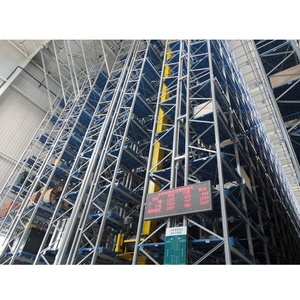
High Density Automated Retrieval Warehouse Rack Shelves ASRS Warehouse Storage Rack
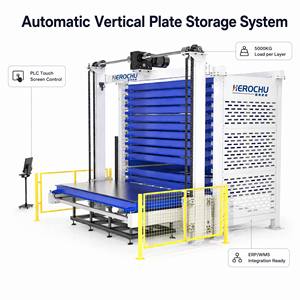
Automatic Vertical Plate Storage System Motorized Drawer Type ASRS Carbon Steel PLC Touch Screen 5000KG Per Layer ERP WMS Ready
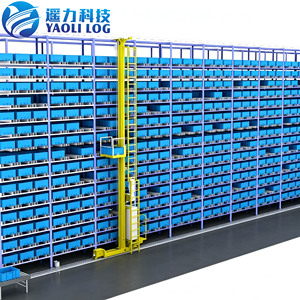
MiniLoad Automated Storage and Retrieval System ASRS for High Density Warehouse of Cartons Boxes with Stacker Crane Racking
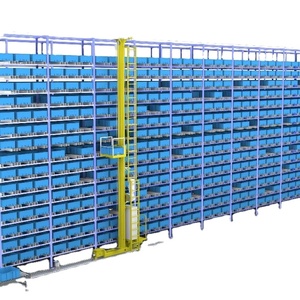
Pharmacy Miniload Asrs Electronic Miniload Automated Warehouse System Shelving Rack
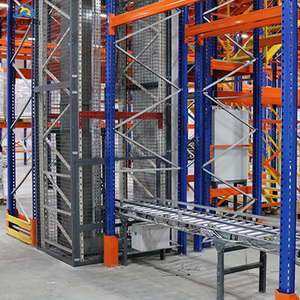
Customizable Steel Automatic Warehouse ASRS Retrieval Rack System Corrosion Protection Modern Logistics Four Way Shuttle Powder
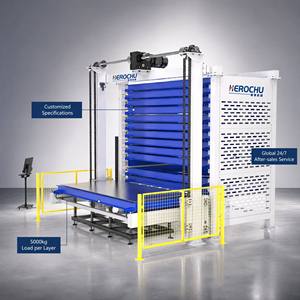
Customizable 5000kg Capacity Multi Tower Smart ASRS Vertical Steel Plate Sheet Metal Material Warehouse Automatic Storage System
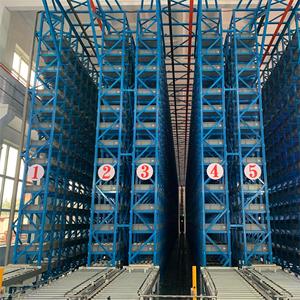
CE Certified Industrial Grade Automatic Storage System ASRS High Efficiency for Auto Parts Manufacturing & Warehouse Logistics
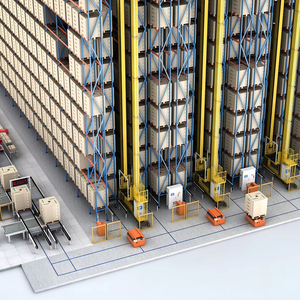
China Factory Directly Four-Way Shuttle Automated Warehouse and Digital & Intelligent Warehouse Management System Smart AS/RS
Architectural Precision & Engineering Standards in Modern ASRS Manufacturing
Navigating structural integrity, load capacities, software protocols, and Chinese export economics for enterprise warehouse automation.
The global intralogistics environment is undergoing a paradigm shift driven by rising industrial land costs, labor shortages, and demanding omnichannel fulfillment SLAs. Automated Storage and Retrieval Systems (ASRS) have transitioned from luxury automation assets to mission-critical infrastructure for modern enterprises. As global supply chain architects look to China for high-density racking and turnkey automated storage manufacturing, selecting qualified factories requires rigorous engineering evaluation beyond basic unit pricing.
Chinese OEM/ODM manufacturers, led by industry pioneers such as Random Racks Storage Equipment Co., Ltd. (operating from Nanjing's Guli Industrial Zone since 2004), have advanced cold-rolled steel profiling, robotic welding, and automated powder coating technology to meet stringently enforced international engineering standards. Designing an enterprise-grade ASRS involves complex structural dynamics: deflection tolerance under dynamic braking, seismic coefficient calculations, rack-supported building wind loading, and precise interfacing with Warehouse Control Systems (WCS).
Key Procurement Insight: A high-bay ASRS rack frame acts not merely as static shelving, but as a dynamic machine element. Structural uprights must sustain vertical dead loads combined with localized impact forces from high-speed stacker cranes traveling up to 240 m/min with positioning tolerances under ±3mm.
1. Structural Engineering Standards: AS4084, FEM, EN 15512, and RMI Compliance
When sourcing ASRS structural racking from Chinese factories, engineering compliance represents the single greatest risk mitigation barrier. Reputable Chinese exporters design and manufacture racking components adhering strictly to international regulatory frameworks:
- AS4084-2012 / AS4084-2023 (Australia): Mandates strict testing protocols for beam-to-upright connector stiffness, baseplate anchor shear stress, and post-yield structural stability.
- EN 15512 & FEM 10.2.09 (Europe): Specifies Finite Element Analysis (FEA) modeling to determine localized buckling, sway movement, and limit state design criteria for tall rack structures exceeding 30 meters.
- RMI (MH16.1 - USA): Focuses on cold-formed steel structural design, perforation reduction factors, and seismic performance criteria under severe localized ground acceleration.
Q235B & Q355B Grade Steel
High-tensile structural steel coils sourced from premier mills with full material traceability certificates, guaranteeing consistent yield strength and fatigue resistance.
±0.5mm Beam Tolerance
Continuous automated roll-forming lines ensure ultra-precise pitch tolerances, preventing cumulative vertical rack misalignment across 40-meter tall structures.
Epoxy Powder Coating
Electrostatic thermosetting powder coating line delivers uniform film thickness (60-90μm) providing superior impact resistance, salt-spray durability, and anti-corrosion.
ASRS System Architectures: Performance & Application Comparison
Choosing the correct automated storage technology based on payload mass, SKU diversity, throughput velocity, and vertical spatial constraints.
| ASRS Technology Type | Typical Unit Load | Max Payload / Level | Travel Speed (m/min) | Optimal Industry Application |
|---|---|---|---|---|
| Unit-Load Stacker Crane | Pallets / Wire Cages | 1,000 kg - 3,000 kg | 160 - 240 m/min | Heavy manufacturing, FMCG distribution, raw material stores |
| Mini-Load ASRS System | Cartons / Totes / Trays | 30 kg - 300 kg | 240 - 300 m/min | Pharmaceuticals, e-commerce picking, electronics spare parts |
| Four-Way Pallet Shuttle | Standard / Euro Pallets | 1,000 kg - 1,500 kg | 60 - 120 m/min | Cold chain logistics, deep-lane storage, high-density buffer |
| Vertical Plate Drawer ASRS | Steel Sheet / Heavy Dies | 3,000 kg - 5,000 kg | 15 - 30 m/min | CNC metal fabrication, mold storage, automotive tooling |
| Multi-Tower Sheet Metal ASRS | Raw Metal Sheets / Plates | Up to 5,000 kg / Tower | 20 - 45 m/min | Heavy machine tools, aerospace sheet storage, structural steel |
Emerging Trends Reshaping ASRS Sourcing & Global Supply Chains
Key technological innovations that enterprise buyers must evaluate when locking in 10 to 20-year infrastructure capital investments.
1. Modular & Flexible 4-Way Shuttle Systems
Traditional fixed-aisle stacker cranes are increasingly giving way to 4-Way Radio Shuttle ASRS matrixes. Shuttles can dynamically switch aisles via vertical lifts, allowing procurement managers to scale throughput independently from storage capacity simply by adding vehicles rather than rack infrastructure.
2. AI-Driven WCS & Predictive Maintenance Integration
Modern Chinese ASRS exporters provide native IoT sensor arrays coupled with AI-powered Warehouse Control Systems (WCS). Real-time vibration telemetry, thermal monitoring of drive motors, and load-cell weight distribution check points detect mechanical wear before catastrophic component failure occurs.
3. Energy Regeneration & Eco-Driven Dynamics
With global sustainability mandates tightening, next-generation stacker crane hoists feature regenerative braking units that feed kinetic electrical energy back into the facility grid during lowering cycles, cutting system operational power consumption by 18% to 26%.
4. Extreme Cold Chain Optimization (-28°C to -40°C)
Biomedical and frozen food logistics demand specialized low-temperature alloy steels, synthetic lubricants, and IP67-rated control enclosures. Automated high-density ASRS reduces cold-room volume by 60% compared to traditional reach-truck aisles, dramatically slashing refrigeration energy expenditure.
5. Digital Twin Layout Simulation
Leading Chinese factory engineering teams now leverage digital twin technology during the pre-bid 3D/CAD layout design phase. Buyers can visually model bottle-neck scenarios, simulated picking cycles per hour, and dynamic stress heatmaps prior to steel cutting and fabrication.
6. Dark Warehousing Capabilities
Fully automated ASRS systems operate without requirement for ambient lighting or human environmental heating. Eliminating operational personnel within the high-density storage matrix enables total lights-out fulfillment, zeroing out workplace injury liability.
Why Global Buyers Sourcing ASRS Partner With Our Engineering Team
Over two decades of precision manufacturing excellence, export compliance, and total lifecycle project engineering.
Founded in 2004 (20+ Years Excellence)
Based in Nanjing's Guli Industrial Zone, operating state-of-the-art cold-roll forming, robotic welding, and automated powder coating plants serving global markets.
Free Engineering 3D / CAD Design
Every proposal includes complete CAD spatial drawings, structural FEA calculation reports, and bill of materials tailored to your specific pallet dimensions and forklift specs.
Third-Party Load Tested & Certified
All structural beam profiles and upright frames undergo rigorous destructive load testing verified by international third-party inspection agencies (SGS, TUV, Intertek).
Turnkey OEM & ODM Customization
Custom colors, specialized pitch dimensions, seismic bracing, and white-label manufacturing engineered precisely to distributor and integrator specifications.
Full Software Interoperability
Our WCS controllers natively communicate via Modbus TCP/IP, OPC UA, or REST API with major global ERP and WMS platforms including SAP, Oracle, and Manhattan Associates.
Robust Export Packaging & Installation
Seaworthy bundle wrapping, color-coded component tagging, container loading optimization, and on-site expert installation supervision provided globally.
Frequently Asked Questions for ASRS Sourcing & Installation
Engineered answers addressing technical specifications, installation prerequisites, financial lead times, and factory standards.
Can you design a custom ASRS layout based on our architectural warehouse drawings?
Yes. Our engineering division utilizes advanced CAD and BIM modeling software to generate complete layout proposals. You simply provide your building floor plan, clear ceiling height, slab load ratings, pallet/carton unit dimensions, target SKU count, and required hourly pallet movement velocity. We deliver a comprehensive 3D design, structural calculation dossier, and component quote free of charge.
What specific design codes and structural standards do your ASRS racking systems comply with?
Our structural designs strictly observe destination-market engineering codes. For European and UK buyers, systems are calculated to EN 15512 and FEM 10.2.09. For North American buyers, racks conform to RMI MH16.1 standards. For Australia and New Zealand, racking complies with AS4084-2012 / AS4084-2023. Material test certificates (MTC) and third-party destructive load test reports are provided with every contract.
What concrete floor tolerances (FF/FL) are required for installing high-bay ASRS stacker crane systems?
High-bay ASRS stacker crane rails demand high-flatness concrete slabs conforming to VDMA guidelines or Superflat tolerances (ASTM E1155 FF 50 / FL 50 minimum; for heights above 18 meters, FF 80 / FL 60 is recommended). For 4-Way shuttle systems, standard industrial F-number floors are usually sufficient, as localized shuttle rails absorb minor floor deviations.
How do I determine whether my facility needs a Stacker Crane ASRS, Mini-Load, or 4-Way Shuttle system?
System selection depends on payload mass and throughput profile. Single/Double-deep Stacker Cranes excel in high-bay pallet storage (>15m height) with heavy loads (1,000–3,000 kg). Mini-Load systems are optimized for fast-moving small parts in totes/cartons (<300 kg). Four-Way Shuttle systems are best suited for medium-to-high throughput cold storage or deep-lane matrix storage where maximum volumetric utilization is needed.
What is the typical manufacturing lead time for an enterprise ASRS export project?
Standard fabrication lead times range from 30 to 45 calendar days following final CAD drawing approval and engineering lock-in. Complex multi-tower heavy plate ASRS or large-scale projects exceeding 15,000 pallet positions are scheduled according to a staged phased-delivery timeline specified in the contract.
How is commissioning, software setup, and installation managed for overseas buyers?
We provide full structural assembly documentation, step-by-step installation videos, and electrical schematics. For complex projects, our factory dispatches certified field engineers and PLC software specialists to your facility to supervise mechanical erection, alignment, WCS integration, and final load-testing commissioning.
Can your ASRS hardware interface directly with our existing enterprise WMS/ERP system?
Yes. Our Warehouse Control System (WCS) is built upon open industrial communication standards (OPC UA, Modbus TCP/IP, RESTful Web APIs). It serves as the middleware connecting physical stacker cranes, shuttles, and conveyors directly with enterprise software solutions such as SAP EWM, Oracle WMS, Manhattan, or custom proprietary databases.
What anti-corrosion finishes are available for harsh industrial or high-humidity environments?
In addition to our standard electrostatic epoxy powder coating, we offer hot-dip galvanizing (HDG) conforming to ISO 1461 for cold storage, chemical processing plants, or outdoor applications. HDG provides a zinc coating thickness of 65-85μm, preventing rust formation even under extreme condensation cycles.
Request a Free Engineering Consultation & 3D ASRS Layout
Partner with a direct Chinese manufacturer with over 20 years of proven export expertise. Send us your warehouse floor plan and load specifications for a custom engineered proposal within 24 hours.