Factory-Direct Electric Mobile Racking & Heavy-Duty Storage Systems
Precision-engineered, heavy-load structural systems tested according to AS4084, FEM 10.2.07, and EN 15512 international standards.
1. Executive Summary & Structural Architecture of Electric Mobile Racking
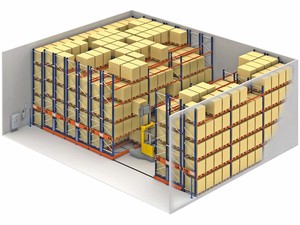
In the contemporary landscape of global logistics, industrial real estate costs and cold-chain energy expenditures continue to climb exponentially. Warehouse operators and procurement directors face a dual challenge: maximizing total pallet density without sacrificing immediate stock-keeping unit (SKU) selectivity. Traditional static selective pallet racking provides 100% accessibility but consumes over 50% of available floor area in operating aisles. Conversely, block stacking, drive-in racking, and push-back systems drastically increase volume density but constrain inventory flow to Last-In, First-Out (LIFO) matrices while increasing the risk of forklift collision.
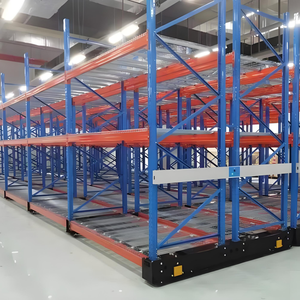
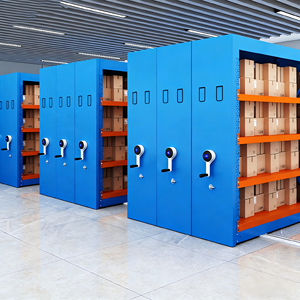
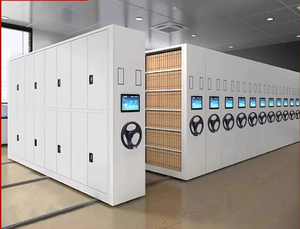
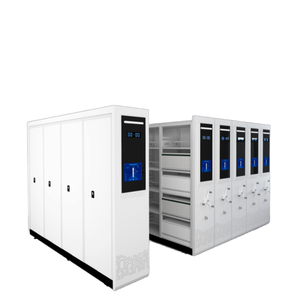
As a leading China wholesale electric mobile racking factory & supplier, Random Racks Storage Equipment Co., Ltd. resolves this fundamental logistics tradeoff through engineered Electric Mobile Pallet Racking (EMPR) and compact mobile shelving systems. Electric mobile racking consists of conventional selective pallet racking superstructures mounted onto heavy-duty steel bases equipped with electric gear-motor drives, precision-machined steel wheels, and guided floor rails. By mounting entire racking blocks onto motorized mobile chassis, static operational aisles are replaced with a single, dynamically allocated working aisle governed by Programmable Logic Controllers (PLCs) and integrated Warehouse Management Systems (WMS).
Key Performance Metric: Converting standard selective racking to an automated electric mobile racking system boosts storage volume capacity by 85% to 100% within the exact same building footprint, while reducing cold store refrigeration cubic area energy overhead by up to 50%.
2. Engineering Specifications & Kinematics Breakdown
The mechanical integrity of electric mobile storage depends on structural steel stress parameters, drive torque synchronization, and safety loop responsiveness. Random Racks designs and fabricates mobile bases using high-tensile structural steel profiles (Q235B / Q355B grades) subjected to finite element analysis (FEA) testing under maximum static and dynamic bending moments.
| Technical Parameter | Industrial Heavy-Duty EMPR | Light / Medium Compact Mobile Shelving |
|---|---|---|
| Maximum Base Load Capacity | Up to 24,000 kg (24 Tons) per carriage block | Up to 3,500 kg per shelf unit |
| Frame Height Range | 3,000 mm to 12,000 mm (12 Meters) | 1,800 mm to 3,500 mm |
| Drive Motor Mechanics | Dual SEW/Nord electro-magnetic gear motors | Direct Current (DC) micro-drives / Hybrid manual override |
| Traversing Speed | 4.0 to 5.5 meters / minute (Variable Frequency Drive) | 3.0 to 4.5 meters / minute smooth start/stop |
| Operating Temperature | -30°C Cold Storage to +45°C Dry Ambient | -10°C to +40°C Office / Archive / Garage |
| Guidance System Options | Floor-embedded steel rails / Flush trackless induction | Surface mounted low-profile tracks / Inlaid PVC tracks |
Synchronized Drive Systems & Variable Frequency Control
Unsynchronized movement across long mobile bases causes structural racking racking twist, wheel derailment, and accelerated rail wear. Our factory solves this by integrating Siemens PLCs with Variable Frequency Drives (VFD) and multi-axis photoelectric shaft encoders. When a mobile bank movement command is initiated via remote control or touch screen interface, the VFD ramps motor torque smoothly, eliminating abrupt inertial jerks that could dislodge un-palletized loads. Soft-start and soft-stop braking algorithms guarantee that pallet loads up to 1,200 kg per bay remain completely stable throughout displacement cycles.
4-Layer Integrated Safety System Matrix
Safety is non-negotiable in automated high-density warehouse environments. Random Racks mobile racking systems adhere strictly to European EN 15095 safety standard guidelines for power-operated mobile racks and shelving, incorporating a quad-layer protective network:
- Full-Length Access Light Curtains: Infrared photoelectric barriers positioned across the entry face of the open aisle instantly lock out movement if a forklift or operator enters during operation.
- Optical & Mechanical Proximity Bumpers: Continuous tactile safety bars installed along the lower chassis edges trigger emergency cut-off switches within milliseconds of physical contact.
- Distance Photo-Sensors: Anti-collision laser sensors installed between parallel mobile bases prevent mechanical crunching caused by debris accumulation inside tracks.
- Acoustic & Visual Beacon Indicators: Flashing LED towers and multi-tone audible horns provide clear operational status warnings prior to and during base movement.
3. Future Procurement Trends in Electric Mobile Storage (2025–2030)
As global supply chains shift toward automated micro-fulfillment centers, dark distribution hubs, and ESG-conscious cold storage logistics, the procurement criteria for electric mobile racking are undergoing a fundamental transformation. B2B buyers and logistics consultants should align their long-term supply chain strategies with these major technological trends:
IoT Diagnostics & Predictive Maintenance
Next-generation mobile carriages feature IoT sensor nodes tracking motor thermal signatures, vibration profiles, and rail alignment. Real-time telemetry alerts maintenance teams before bearing failure or wheel binding causes un-scheduled downtime.
WMS & AGV / AMR Synchronous Interfacing
Modern procurement demands seamless integration between mobile base PLCs, automated guided vehicles (AGVs), autonomous mobile robots (AMRs), and enterprise WMS software. Moving aisles auto-open in sequence based on optimized pick path algorithms.
Ultra-Low Energy Cold Room Optimizations
By pairing mobile racking with intelligent "night-parking" modes—where mobile bases automatically space out evenly during off-hours—air flow circulation increases, eliminating thermal pockets and lowering chiller compressor load by up to 20%.
4. Technology Evolution: From Manual Roll-Shelving to Smart Automated Base Systems
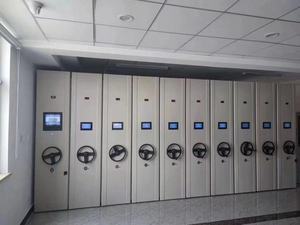
The industrial history of mobile storage spans decades of mechanical evolution. Early mobile storage relied entirely on manual hand-crank capstan wheels connected via chain drives to steel axles. While effective for lightweight office document archives, manual units faced strict load limits (typically max 1,000 kg per carriage) and exposed operators to physical strain.
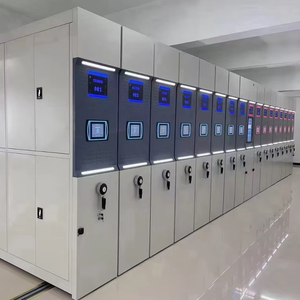
The transition to electro-mechanical drives introduced push-button control, but early systems suffered from relay failures, harsh start-stop inertia, and cumbersome floor track profiles that interfered with forklift tires. Today's fourth-generation Smart Electric Mobile Racks utilize fully recessed floor guide rails laid flush with polished concrete slabs. Modern systems feature wireless RF remote controls, touchscreen HMIs, optical distance metering, humidity/temperature integration for sensitive archive and pharmaceutical storage, and low-voltage DC drive options for residential, school, and workshop uses.
5. Comparative Matrix: Evaluating High-Density Warehouse Racking
Selecting the optimal warehouse storage architecture requires weighing key operational variables against capital expenditure (CapEx) and operational expenditure (OpEx). The table below outlines how Electric Mobile Racking compares with major competing storage concepts:
| Storage System Type | Floor Space Utilization | SKU Selectivity | Forklift Aisle Requirement | Relative CapEx Index |
|---|---|---|---|---|
| Selective Pallet Racking | 40% – 50% (Low) | 100% (Direct) | 3.0m – 3.8m (Broad) | 1.0 (Baseline) |
| Very Narrow Aisle (VNA) | 60% – 65% (Medium) | 100% (Direct) | 1.6m – 1.9m (Narrow) | 1.4 (Requires special VNA truck) |
| Drive-In Racking | 70% – 75% (High) | 15% – 20% (LIFO Only) | Driven inside channels | 1.3 (Risk of frame damage) |
| Radio Shuttle Racking | 75% – 85% (Very High) | 30% – 40% (Batch Access) | Main transfer aisle only | 2.2 (Automated cart maintenance) |
| Electric Mobile Racking (EMPR) | 85% – 95% (Maximum) | 100% (Direct Access) | 1 Single Dynamic Aisle | 2.0 (Fastest payback in cold rooms) |
6. Strategic Enterprise Edge: Why Partner with Random Racks Storage Equipment Co., Ltd.
Founded in 2004 and headquartered in Nanjing, Jiangsu, China, Random Racks Storage Equipment Co., Ltd. has established itself over two decades as an authoritative global manufacturer of warehouse racking and logistics storage equipment. Operating from our specialized industrial zone facility, our factory integrates advanced automated roll-forming lines, robotic welding stations, and an environmentally compliant automatic powder-coating system.
20+ Years Production Mastery
In-house manufacturing since 2004 guaranteeing total quality control from structural steel coil selection to finished product.
Third-Party Tested & Certified
Structures engineered with reference to AS4084, FEM 10.2.07, EN 15512, and RMI standards with full mill certificates.
Free 3D / CAD Engineering Layout
Our structural engineering team produces comprehensive floor plan layouts, load stress reports, and bill of materials free of charge.
Professional OEM / ODM Customization
Custom beam profiles, custom upright colors, client private-labeling, and custom electric control system programming.
Export Packaging Protection
Heavy-duty steel banding, corner protectors, waterproof plastic wrapping, and timber dunnage engineered for containerized ocean shipping.
Global On-Site Installation Support
Complete assembly drawings, video installation guides, online commissioning, and overseas technical supervisor dispatch for qualified projects.
Frequently Asked Questions (FAQ)
Expert answers from our structural engineering and international trade department.
What warehouse slab specifications are required for electric mobile pallet racking?
How does an electric mobile racking system operate during a power outage?
Can electric mobile racks be installed in existing sub-zero cold storage facilities?
What is the typical production lead time and ocean shipping turnaround?
How do safety light curtains prevent accidents if a worker is inside an open aisle?
Which design standards do your structural racking beams and uprights follow?
Ready to Double Your Warehouse Storage Density?
Send your warehouse floor plan, clear ceiling height, pallet dimensions, and unit load weights to our engineering team today. Receive a free 3D CAD layout, load capacity calculation, and factory-direct quote within 24 hours.
Send an Inquiry