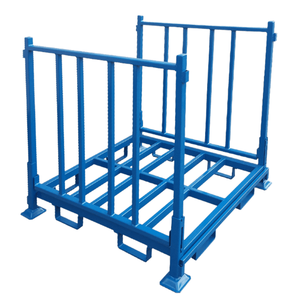
Engineered Warehouse Tire Rack Catalog
Heavy-duty, stackable, and collapsible steel racking systems engineered for wholesale automotive distributors, tire manufacturers, and 3PL logistics hubs.
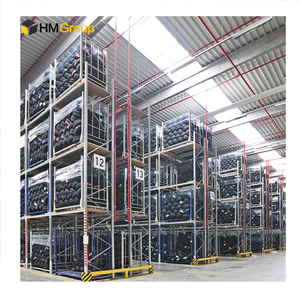
Customized Heavy Duty Transport Warehouse Metal Steel Stacking Folding Tire Storage Rack
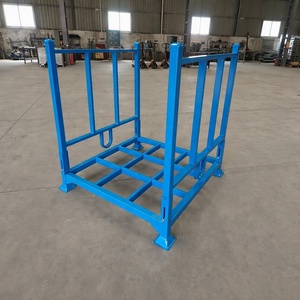
Stackable Industrial Warehouse Storage Rack System Wire Mesh Pallet Foldable Stacking Rack Storage Tire Rack
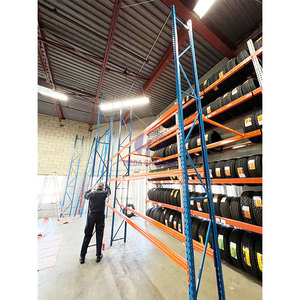
Heavy Duty Racking System Warehouse Storage Tire Pallet Rack Tire Rack For Garage Pallet Shelves
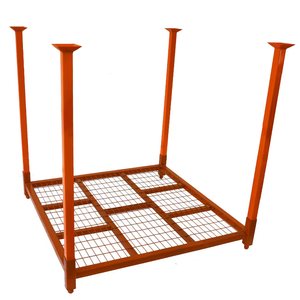
Customizable Cost-Effective Steel Truck Tire Stacking Rack for Distribution Center Warehouse Storage
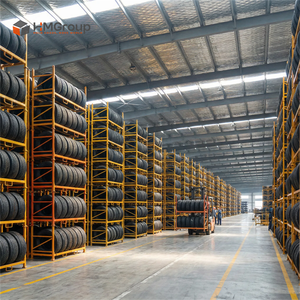
Factory Professional Auto Industry Warehouse Stacking 4 High Collapsible Portable Metal Steel Tire Storage Rack
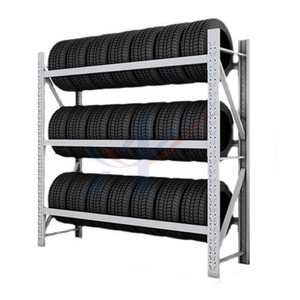
Chinese Factories Customize Tire Racks for Stores and Warehouses
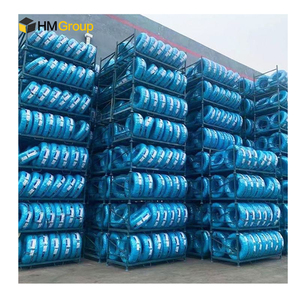
Customized Warehouse Storage Collapsible Stack Powder Coating Tyre Racking System
2004
Factory Established
20+ Years
Global Export Expertise
100% Free
3D CAD / FEA Layout Service
ISO & AS4084
Strict Quality Compliance
Architectural Engineering & Strategic Sourcing of Industrial Tire Storage Racks
Modern automotive distribution centers, tire manufacturing facilities, and regional 3PL hubs face unprecedented spatial challenges. Unlike rigid boxed goods or standard wooden pallet loads, pneumatic tires present complex physical storage variables: non-rigid cylindrical geometry, elastomeric memory degradation under point pressure, dynamic center-of-gravity displacement, and severe spatial inefficiencies when stored flat. Partnering with a specialized China wholesale warehouse tire rack supplier and exporter provides international buyers with structurally validated, highly scalable storage architecture designed to resolve these specific physical dynamics.
At Random Racks Storage Equipment Co., Ltd. (manufacturing since 2004 in Nanjing, China), we treat tire racking not merely as steel fabrications, but as dynamic material handling systems. Whether managing Passenger Car Radial (PCR), Commercial Truck and Bus Radial (TBR), or massive Off-The-Road (OTR) inventory, implementing optimized modular tire racks unlocks up to 300% greater vertical warehouse volume while preserving rubber tread integrity and expediting warehouse management system (WMS) pick speed.
1. Structural Physics & Mechanical Integrity of Tire Racking
Selecting an industrial tire rack requires rigorous structural analysis to prevent catastrophic frame deflection, weld fatigue, and post-stack collapse. Unlike static pallet racking where loads rest uniformly over horizontal step beams, tires rest on dual parallel beams or structural wire decking, creating concentrated line-contact loads.
- Structural Material Selection: We utilize high-yield structural steel grades—specifically Cold Rolled Q235B and Q355B (equivalent to EN10025 S235JR and S355JR). Premium Q355B steel yields superior tensile strength (up to 510 MPa), allowing lighter tare weight per rack without compromising the overall working load limit (WLL).
- Finite Element Analysis (FEA): Every modular tire rack design undergoes simulated static and dynamic stress loading via FEA software. We simulate 4-high to 6-high loaded stacking conditions, accounting for seismic load factors, asymmetric forklift impacts, and dynamic forces during freight container transit.
- Interlocking Post Caps & Nesting Alignment: Stackable tire racks rely on precision-cast male-female steel post guides. Our heavy-duty target feet allow rapid forklift alignment, ensuring vertical axial load alignment even when stacked up to four units high while fully loaded (carrying up to 1,500 kg per tier).
- Corrosion Control & Surface Treatment: Raw structural steel undergoes a 7-stage automated chemical pre-treatment (degreasing, phosphating, and deionized water rinsing) followed by thermosetting electrostatic polyester powder coating (60–90 microns Dry Film Thickness). This ensures maximum rust resistance in high-humidity regional distribution centers or unconditioned automotive storage yards.
2. Technical Specification Matrix: Passenger Car (PCR) vs. Truck/Bus (TBR) Racks
Understanding the exact structural differences between PCR and TBR storage systems is paramount for procurement engineers. Below is an engineering comparison matrix of our standard industrial export tire racking models:
| Engineering Parameter | Modular Collapsible PCR Rack | Heavy-Duty Stackable TBR Rack | Multi-Tier Selective Tire Racking | Wire Mesh Foldable Stacking Rack |
|---|---|---|---|---|
| Primary Application | Passenger Car Radial (PCR) / SUV | Commercial Truck & Bus (TBR) | High-Bay Distribution Centers | Tire Retreading & Retail Hubs |
| Payload Capacity (WLL) | 1,000 kg (2,200 lbs) / Tier | 1,500 kg (3,300 lbs) / Tier | 800–2,500 kg / Beam Level | 1,200 kg (2,640 lbs) / Tier |
| Stacking Capability | 4-High Loaded / 20-High Empty | 4-High Loaded / 16-High Empty | Fixed Structure (Up to 12m) | 4-High Loaded / 12-High Empty |
| Steel Tubing Profile | 60x60x2.5mm Square Tube | 80x80x3.0mm Structural Tube | 90x70x2.0mm Upright Profile | 50x50x2.0mm + 50x50 Wire Mesh |
| Tire Orientation | Tread-On-Bar or Interlaced | Vertical Tread-On-Bar Storage | Horizontal / Vertical Selective | Bulk Loose / Basket Stacking |
| Foldability & Nesting | Collapsible Post Sides (80% Space Saving) | Removable Posts / Folding Base | Non-Collapsible Fixed Grid | 4-Side Foldable Wire Mesh Walls |
| Compliance Standards | ISO 9001, AS4084-2012 | FEM 10.2.02, RMI Standards | EN 15512, ANSI MH16.1 | CE, ISO 9001:2015 |
3. Strategic Operational Advantages of Stackable & Collapsible Tire Racks
Traditional fixed pallet racking commits valuable floor footprint permanently to specific aisles. In contrast, portable, stackable, and collapsible steel tire racks offer high-density operational flexibility:
A. Cube Utilization & Floor Footprint Optimization: By stacking racks four high using standard sit-down forklifts, warehouse managers turn overhead air space into revenue-generating storage space. When seasonal inventory fluctuates, empty racks fold flat or nest compactly, freeing up floor space for alternative operations.
B. Damage Elimination (Elimination of Tread Crush): Stacking loose tires directly on top of one another ("barrel stacking" or "lacing") past a certain height crushes the sidewalls and beads of lower tires, leading to structural failures and balance issues. Modular steel tire racks transfer all vertical weights directly through the steel corner posts onto the concrete slab, guaranteeing zero pressure on the stored tires.
C. Streamlined Return Logistics & Freight Density: International freight costs dictate supply chain profitability. Our collapsible tire racks feature removable or hinged corner posts that fold completely flat inside the base frame. A standard 40-foot High Cube (40HQ) shipping container can transport up to 280 to 320 empty collapsed tire racks, drastically reducing ocean freight costs per unit during initial shipment or inter-warehouse transport.
Why Partner with Random Racks Storage Equipment Co., Ltd.?
Two decades of dedicated manufacturing authority, engineering precision, and direct B2B export leadership from Nanjing, China.
20+ Years Factory Experience
Established in 2004, our specialized 35,000 m² Nanjing production facility houses automated cold-roll forming mills, robotic welding cells, and eco-friendly powder coating lines.
Third-Party Load Tested
All load ratings are verified through rigorous structural testing. Complete raw material mill test certificates (MTC) and third-party load test reports are provided with every order batch.
Free 3D CAD & FEA Layout
Send us your warehouse floor plan, clear ceiling height, forklift specs, and tire dimensions. Our engineering team delivers full 3D CAD layouts and structural calculations free of charge.
Global Engineering Standards
Engineered to comply with international logistics standards including Australian AS4084-2012, European FEM 10.2.02, EN 15512, and American RMI specification codes.
Full OEM / ODM Customization
Custom dimensions, colors (RAL match), brand logo plates, surface finishes (hot-dip galvanizing or powder coating), and customized fork pocket spacings to fit your exact fleet.
Export-Grade Protective Packaging
Components are bundle-wrapped in heavy-duty stretch film, steel strapping, and wooden corner protectors to eliminate transit scratch damage and maximize container fill rates.
Future Industry Trends in Warehouse Tire Racking (2025–2030)
As global automotive supply chains shift toward electrification, automated material handling, and green manufacturing, tire storage infrastructure is undergoing a rapid evolution. Overseas procurement managers must align their purchasing strategy with these key industry shifts:
Trend 1: AGV and Autonomous Forklift Compatibility
Modern distribution centers are rapidly adopting Autonomous Guided Vehicles (AGVs) and Automated Guided Forklifts (AGFs) for tire movement. Traditional stackable racks with wide manufacturing tolerances can cause guidance errors for robotic optical sensors. Next-generation tire racks require high-precision laser-cut alignment target plates, standardized bottom clearance pockets, and tight manufacturing tolerances (±1.5mm) to ensure seamless robotic picking and stacking.
Trend 2: Heavy Payload Capacity for Electric Vehicle (EV) Tires
Electric vehicles (EVs) are substantially heavier than internal combustion engine (ICE) vehicles due to battery pack mass. Consequently, EV tires are manufactured with reinforced sidewalls, thicker tread compounds, and sound-dampening foam inserts—increasing individual tire weight by 15% to 25%. Procurement managers are upgrading from traditional 800 kg capacity racks to certified 1,200 kg – 1,500 kg heavy-duty stacking frames to handle EV tire weight growth.
Trend 3: High-Density Autonomous Shuttle & AS/RS Tire Systems
In regions where industrial land costs are soaring, mega distribution centers are moving away from manual stack racks toward fully Automated Storage and Retrieval Systems (AS/RS) tailored for tires. These high-bay installations feature rack-supported building structures up to 30 meters tall, operating with high-speed automated shuttles that move individual tires or whole tire pallets with absolute inventory tracking precision.
Trend 4: Sustainable Eco-Coatings & Circular Supply Chains
ESG compliance is becoming a non-negotiable metric for major automotive brands (e.g., Michelin, Bridgestone, Continental). Leading China exporters are replacing solvent-based paints with zero-VOC, heavy-metal-free thermosetting powder coatings. Additionally, hot-dip galvanized (HDG) stackable racks are gaining traction for outdoor tire yards due to their 25+ year zero-maintenance life cycle in harsh environments.
Frequently Asked Questions (FAQ)
Expert engineering insights for international buyers procuring warehouse tire racks from China.
Can you design a tire racking system based on my warehouse CAD drawing? +
Yes, absolutely. Send us your architectural floor plan, clear height under joists, forklift turning radius specifications, and target SKU inventory count. Our engineering department will generate a full 3D CAD layout, structural FEA report, bill of materials (BOM), and cost breakdown completely free of charge before production commences.
Which international engineering standards do your tire racks comply with? +
Our racking systems are engineered to meet or exceed major international structural standards: Australian AS4084-2012 (Steel Storage Racking), European FEM 10.2.02 and EN 15512 standards, and American RMI (Rack Manufacturers Institute) specifications. We maintain ISO 9001:2015 quality management system certification and supply third-party load test reports upon request.
How do I determine whether to buy modular stack racks vs. fixed selective racking? +
Modular Stack Racks: Ideal for high volume, seasonal stock variations, 3PL warehouses with changing inventory contracts, and facilities wanting to stack 4 to 5 levels high without committing permanent floor space. They fold flat when empty.
Fixed Selective Racking: Best for retail backrooms or distribution centers requiring 100% immediate selectivity to thousands of unique individual tire SKUs, utilized with order picker trucks.
What is the typical production lead time and ocean container shipping capacity? +
Standard order lead time is 20 to 30 days after drawing approval and deposit receipt. For shipping efficiency, a standard 40ft High Cube (40HQ) container typically holds approximately 90 to 110 fully assembled/uncollapsed units or up to 280–320 collapsible/demountable units depending on the exact dimensions.
Do you offer OEM/ODM services for custom tire sizes and corporate branding? +
Yes. We regularly manufacture custom racks designed around unique passenger, truck, agricultural, or aircraft tire dimensions. We offer custom powder coating color matching to your brand's RAL codes, laser-cut steel logo plates, custom fork guide spacing, and barcode label plates for automated warehouse scanning.
How is tire tread integrity maintained during long-term storage? +
Our racks are designed with round-tubing horizontal crossbars or angled support beams featuring smooth radius edges. This spreads the resting contact area across the tire tread pattern, eliminating sharp pinch points, sidewall bulges, or bead deformation during extended storage cycles.
Optimize Your Warehouse Density with Direct Factory Pricing
Connect directly with our senior racking design engineers. Receive a customized 3D layout drawing, finite element load analysis, and factory-direct price quotation within 24 hours.