The global industrial storage and material handling sector is undergoing a profound structural transformation driven by e-commerce fulfillment pressures, automated warehouse integration, supply chain volatility, and ESG (Environmental, Social, and Governance) mandates. Industrial buyers, supply chain executives, and warehouse engineering directors must re-evaluate their capital equipment procurement strategies to align with these emerging realities.
1. Transition Toward Smart, AGV-Guided Metal Storage Bins
Traditional passive storage containers are rapidly being replaced by standardized, high-precision OEM metal bins designed specifically for integration with Autonomous Mobile Robots (AMRs) and Automated Guided Vehicles (AGVs). Modern automated warehouses demand dimensional tolerances within millimeter accuracy to ensure zero-jam performance during high-speed robotic picking and shuttle transport. Custom OEM metal storage bin suppliers are now required to embed optical sensor target zones, barcode/RFID plate recesses, and reinforced robotic gripper points directly into the steel stamping dies.
2. Lifecycle Total Cost of Ownership (TCO) vs. Initial Purchase Price
Procurement departments are shifting focus from initial purchase costs toward long-term Total Cost of Ownership. While wooden pallets and low-gauge plastic bins offer cheaper initial acquisition costs, their high damage frequency, fire safety hazards, and environmental disposal costs make them economically inefficient over a 10-year facility lifecycle. Heavy-duty Q235B custom metal bins provide superior fire resistance (reducing insurance premiums), complete recyclability, and zero structural degradation over decades of intensive industrial usage.
3. Modular Standardization Paired with Hyper-Customization
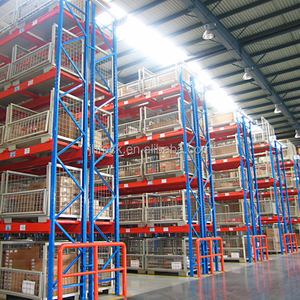
Warehouse footprints are increasingly constrained by rising industrial real estate costs per square meter. Consequently, enterprise buyers require modular storage architecture that allows rapid reconfiguration. Modern metal bin designs feature stackable interlocking corners, foldable mesh walls, and drop-down access gates that collapse flat during return transport, saving up to 75% of empty freight volume in closed-loop supply chains.