Featured Double Deep & Heavy Duty Storage Systems
Engineered to maximum structural integrity standards (AS4084, FEM, EN 15512, RMI) for high-bay global distribution centers.
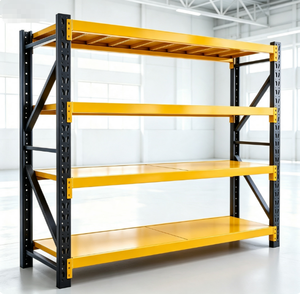
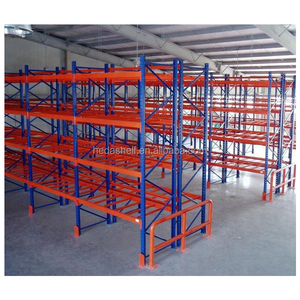
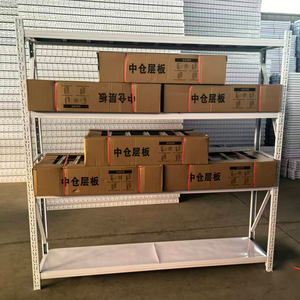
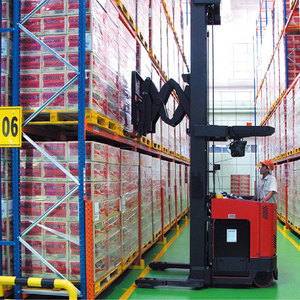
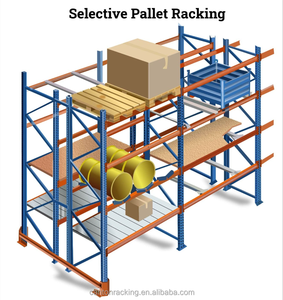
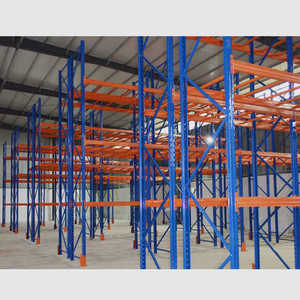
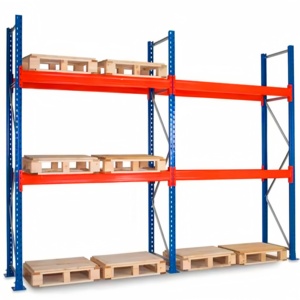
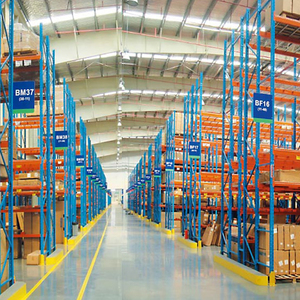
Architectural Foundations & Structural Mechanics of Double Deep Racking
A granular technical analysis of floor space optimization, moment-resisting upright frames, and reach mechanics for enterprise procurement buyers.
Double Deep Pallet Racking represents a strategic evolutionary bridge between standard selective racking systems and ultra-dense storage configurations such as Drive-In or Automated Storage and Retrieval Systems (AS/RS). By positioning two rows of heavy-duty selective pallet racking back-to-back, a Double Deep configuration eliminates 50% of the access aisles required in a standard selective pallet rack layout. This architectural approach delivers a immediate storage density increase of 30% to 40% within the exact same building footprint.
From an engineering perspective, Double Deep storage operates on a Last-In, First-Out (LIFO) inventory management principle per lane, making it uniquely suited for operations managing multiple pallets of identical Stock Keeping Units (SKUs). Accessing the second-deep pallet position requires a specialized pantograph (double-reach) forklift or a deep-reach pantograph attachment. Understanding the structural dynamics, deflection limitations, structural steel grade selection, and floor slab load distribution is critical for supply chain directors, procurement managers, and logistics engineering teams selecting an OEM/ODM manufacturing partner.
1.1 Structural Mechanics & Physics of Double Deep Frames
Because the extended reach of a pantograph forklift transfers dynamic load moments further away from the forklift chassis, the structural integrity of the racking upright columns, horizontal bracing, and beam-to-column connectors must be calculated with heightened safety margins. Standard selective rack formulas must be adjusted for extended load centers.
- Bending Moment & Deflection: Beam calculations follow strict structural steel codes (EN 15512 and RMI specifications). Deflection limits under full nominal design load are governed strictly to maximum $L/200$ (where $L$ is beam length), ensuring pantograph forks do not snag bottom deck boards during insertion.
- Upright Column Gauge & Steel Chemistry: Premium OEM manufacturers utilize high-tensile cold-rolled steel (Q235B to Q355B structural grade). Upright profiles are roll-formed into multi-bend open or closed box profiles featuring 9 to 13 structural bends to maximize section modulus and torsional rigidity.
- Baseplate & Anchor Shear Dynamics: Due to higher concentrated post loads resulting from double-tier storage density, baseplates are engineered with expanded surface areas, utilizing chemical or mechanical expansion anchors engineered to resist uplift and horizontal shear induced by seismic forces or forklift impact.
1.2 Technical Comparison Matrix: Warehouse Racking Architectures
To provide factual information gain for procurement decision-makers, the following matrix compares core engineering metrics across major industrial storage architectures:
| Racking Architecture | Storage Density | Pallet Selectivity | Inventory Flow | Forklift Requirement | Capital Cost / Pallet |
|---|---|---|---|---|---|
| Selective Pallet Racking | Baseline (100%) | 100% Direct Access | FIFO / LIFO | Standard Counterbalance / Reach | Low (Baseline) |
| Double Deep Racking | High (+30% to +40%) | 50% Immediate Access | LIFO per Lane | Double-Reach Pantograph Forklift | Moderate (High ROI) |
| Narrow Aisle (VNA) | Very High (+45%) | 100% Direct Access | FIFO / LIFO | Specialized VNA Turret Truck | High (Guidance System) |
| Drive-In Racking | Maximum (+60% to +75%) | Low (<15%) | Strict LIFO | Standard Reach (Drives inside) | Moderate-High |
| Radio Shuttle Racking | Ultra-High (+80%) | Low to Medium | FIFO / LIFO Automated | Standard Forklift + AGV Shuttle | High (Automated) |
OEM/ODM Customization Protocols & Precision Manufacturing
How Random Racks / OTS Storage Equipment transforms raw steel coil into certified high-density racking systems.
Selecting a direct factory for OEM (Original Equipment Manufacturer) or ODM (Original Design Manufacturer) double deep racking production requires total transparency in metalworking, quality control, and engineering standards. A standard rack off the shelf rarely fits the unique slab capacity, clear height, pallet dimensions, and seismic zone requirements of a modern enterprise distribution center.
Primary OEM/ODM Engineering Parameters Customized by Factory
Our Nanjing manufacturing facility delivers full bespoke engineering across six core architectural vectors:
- Beam Profile Geometry: Step beams, box beams, and interlocking tube beams tailored from 80mm to 160mm profile depths depending on exact level load requirements (from 500kg up to 4000kg per beam level).
- Upright Pitch & Punching Pattern: 50mm, 75mm, 76.2mm (3 inches) teardrop or diamond punching patterns allowing seamless integration with legacy warehouse systems across North America, Europe, and Australasia.
- Pallet Support Bars & Guide Rails: Custom-welded top-hat or heavy-duty angle pallet supports designed specifically for double-deep insertion, preventing pallet sagging or misplaced loads at high elevations (over 10 meters).
- Seismic Dynamic Calculation: Finite Element Analysis (FEA) modeling customized to local seismic hazard coefficients (PGA values), specifying extra bracing bays and heavy-duty frame ties.
- Extreme Environment Finishes: Epoxy-polyester powder coating applied via multi-stage continuous automated lines (60-80 micron thickness), or Hot-Dip Galvanizing (HDG) conforming to ISO 1461 for sub-zero cold chain facilities (-30°C).
Continuous Cold Roll-Forming
Utilizing high-precision multi-stage automated roll-forming lines ensures exact profile dimensions, minimal internal stress in structural bends, and zero tolerance variance across 12-meter single-piece uprights.
Automated Robotic Welding
Beam end-connectors and structural baseplates are welded using automated pulse-MIG robotic cells, ensuring 100% penetration, zero slag inclusions, and uniform bead profiles that withstand high impact loads.
Rigorous Quality Assurance
Every steel batch undergoes tensile testing, paint thickness gauge checks, salt spray corrosion testing (500+ hours), and non-destructive ultrasonic testing on critical weld joints.
Future Procurement & Product Development Trends (2025–2030)
Strategic foresight into industrial automation, cold chain growth, green steel sourcing, and structural IoT integrations.
The global warehousing and logistics sector is experiencing rapid transformation driven by labor shortages, soaring industrial land costs, strict ESG (Environmental, Social, and Governance) targets, and the fast adoption of automated equipment. Procurement directors evaluating OEM/ODM double deep racking factories must align their capital expenditure with key structural trends shaping the next decade.
Trend 1: Automated Reach Forklifts, AGVs & AMR Integration
While double deep racking historically relied strictly on manually operated pantograph reach trucks, the market is shifting rapidly toward Autonomous Mobile Robots (AMRs) and Automated Guided Vehicles (AGVs) fitted with laser-guided double-deep reach mechanisms. This shift requires tighter manufacturing tolerances from racking factories. Upright verticality, beam deflection consistency, and floor anchor tolerances must be held within millimeter-level precision to allow optical sensors on AGVs to seamlessly deposit and retrieve deep-lane pallets without human intervention.
Trend 2: Cold Chain Expansion & High-Density Thermal Optimization
Cold chain logistics for fresh food, pharmaceuticals, and biologics requires maximum volumetric storage efficiency to lower per-pallet refrigeration power costs. Operating a cold storage facility is up to 5 times more energy-intensive than a ambient warehouse. Double Deep Racking is becoming the preferred infrastructure for cold chain operators because it offers significantly higher density than standard selective racks without the complex mechanical breakdowns or high capital costs associated with fully automated sub-zero AS/RS systems. OEM factories are increasingly tasked with supplying specialized cold-resistant powder formulations and hot-dip galvanized finishes that prevent hydrogen embrittlement in sub-zero steel structures.
Trend 3: Decarbonized Steel Sourcing & ESG-Compliant Supply Chains
International enterprise buyers in Europe and North America are prioritizing suppliers capable of verifying their carbon footprint. Procurement guidelines now demand Scope 1, 2, and 3 emissions tracking. Future racking manufacturing relies heavily on "Green Steel"—produced via Electric Arc Furnaces (EAF) utilizing high scrap metal ratios or direct reduced iron (DRI) powered by hydrogen energy. OEM factories located in advanced manufacturing hubs are investing in energy-efficient powder curing ovens, water-recycling pre-treatment lines, and zero-VOC chemical washes to help global clients achieve LEED and BREEAM building certifications.
Trend 4: Structural IoT Sensors & Real-Time Load Health Monitoring
Future high-bay double deep installations are evolving from static steel frames into intelligent logistics assets. Micro-strain sensors, tilt switches, and optical impact sensors are beginning to be integrated directly into rack uprights and frame ties. These IoT nodes feed real-time structural health data to Warehouse Management Systems (WMS), alerting facility managers to accidental forklift strikes, frame overload deflections, or foundation settling before structural failure occurs.
Random Racks / OTS Storage Equipment Co., Ltd.
Two decades of precision engineering, international compliance, and direct factory manufacturing excellence.
Founded in 2004 and headquartered in the Guli Industry Zone, Jiangning District, Nanjing, Jiangsu, China, Random Racks (OTS Racking) has established itself as an authoritative global manufacturer of warehouse racking systems, steel mezzanine platforms, and logistics handling equipment. Over 20 years of dedicated metalworking experience allows us to provide end-to-end OEM/ODM solutions to buyers across Europe, the Americas, Oceania, the Middle East, and Southeast Asia.
In-House Production Facilities
Over 20,000 square meters of modern manufacturing space equipped with automated roll-forming lines, robotic welding stations, laser cutting centers, and continuous electrostatic powder coating chambers.
Free 3D / CAD Engineering Layouts
Our structural engineering team produces fully verified 2D CAD floor plans, 3D BIM models, and precise load calculation reports free of charge prior to contract signing, guaranteeing absolute design accuracy.
Global Standard Compliance
Engineered strictly to Australian standard AS4084-2012, European code EN 15512, FEM 10.2.02 guidelines, and American RMI structural specifications. Third-party load testing available upon request.
Frequently Asked Questions (FAQ) for Global Buyers
Direct answers from our senior engineering team regarding double deep racking specification, logistics, and factory capabilities.
Can you design a custom double deep racking system based on our warehouse CAD drawing?
Yes, absolutely. Our structural engineering team provides free comprehensive design services. Simply provide your warehouse floor plan (DWG or PDF format), clear height under sprinklers/joists, floor slab concrete specification, pallet dimensions (W x D x H), unit load weight, operating temperature, and forklift model. We will calculate beam deflection, upright section modules, and deliver a zero-cost 3D/CAD layout complete with a full Bill of Materials (BOM) within 24 to 48 hours.
What design and structural safety standards do your double deep racks conform to?
Our longspan shelving and heavy-duty pallet racking systems are engineered in strict compliance with international structural codes depending on your destination market. For Australia and New Zealand, we design to AS4084:2012 / AS4084:2023. For Europe and the UK, we follow EN 15512 and FEM 10.2.02 design rules. For North and South America, structures refer to RMI (Rack Manufacturers Institute) and ANSI MH16.1 specifications. Third-party destructive load test reports from independent bodies (SGS, TUV) are routinely supplied.
How do I choose between Double Deep Racking, Push Back Racking, and Drive-In Racking?
The choice depends on SKU diversity, access speed, and inventory rotation rules:
- Double Deep Racking: Best when you have 2 to 4 pallets per SKU, require fast forklift access cycles, and want 50% immediate pallet selectivity using double-reach forklifts.
- Push Back Racking: Ideal for storing 2 to 6 pallets deep per lane on nested carts, using standard forklifts (no pantograph required), maintaining LIFO flow per lane.
- Drive-In Racking: Best for massive volumes of very few SKUs (e.g., beverage or cold storage bulk goods) where direct selectivity is traded for maximum raw storage density.
What is the typical production lead time and export packaging standard?
Standard OEM/ODM orders typically ship within 15 to 25 days following final CAD drawing approval and deposit confirmation. For heavy export shipping, components are bundled using automated steel strapping, wrapped in protective moisture-proof stretch film, and fitted with heavy timber or steel dunnage feet. Uprights and beams are bundled with plastic corner protectors to ensure zero powder coat scratching during sea freight transit. Container loading is fully optimized by our logistics team to maximize cubic capacity.
Do you support full OEM/ODM branding and custom powder coating colors?
Yes. As a direct factory manufacturer, we offer complete OEM/ODM options. We can customize beam profiles, upright punching styles, baseplate thicknesses, laser-cut logo branding plates, custom packaging labels, and provide any RAL powder coat color match (e.g., standard RAL 2004 Orange, RAL 5015 Blue, RAL 7035 Gray, or custom corporate branding colors).
What forklift equipment is required to operate a Double Deep Pallet Rack layout?
Double deep racking requires a specialized double-reach pantograph forklift, a deep-reach pantograph attachment fitted to a standard reach truck, or an automated double-deep AGV/AMR. When calculating aisle widths, allow for the extra chassis length and turning radius of reach trucks (typically requiring 3.0 to 3.4 meters clear aisle width, depending on forklift manufacturer specifications).
Can double deep racking be installed in cold storage facilities?
Yes. Double deep racking is highly recommended for cold storage and freezer rooms (-25°C to -30°C) due to its high volumetric efficiency. For cold storage environments, we recommend either hot-dip galvanized steel components or our specialized low-temperature epoxy powder coating formulations designed to prevent micro-cracking and spalling caused by thermal contraction.
What on-site installation guidance and support do you provide?
Every shipment is accompanied by detailed component marking lists, assembly CAD drawings, torque specification tables, and step-by-step installation manual guides. For large enterprise projects or turnkey installations, we can dispatch experienced installation supervisors or project engineers on-site to direct local assembly teams and ensure compliance with structural tolerances.
Request Your Free 3D CAD Warehouse Layout & Factory Direct Quote
Connect directly with our senior structural engineers in Nanjing. We will analyze your warehouse dimensions, load profiles, and forklift data to deliver an optimized double deep storage proposal with full FEA calculations.