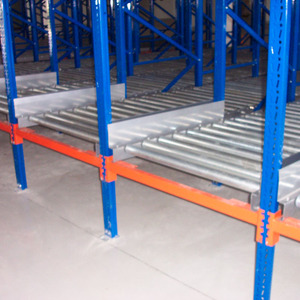
Industrial Racking & Vertical Storage Systems
Explore our export-grade storage racks engineered according to AS4084, FEM, and EN 15512 standards. Custom OEM/ODM structural designs available with turnkey CAD modeling.
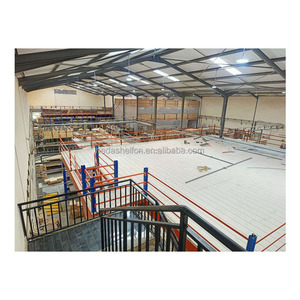
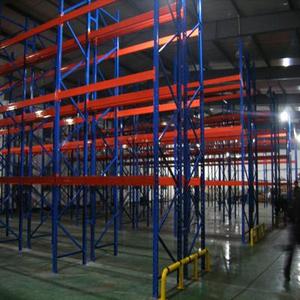
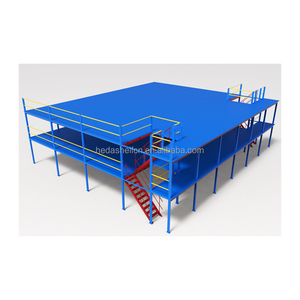
2004
Year Established
20+
Years Racking Production
18+
Proprietary Product Lines
100%
Free CAD & 3D Design Support
1. Comprehensive Engineering Analysis: The Evolution of OEM/ODM Vertical Growing & Industrial Storage Racks
As modern logistics, commercial horticulture, and industrial warehouse management face intense pressure from escalating real estate costs and supply chain volatility, spatial optimization has emerged as a core operational imperative. The structural integration of heavy-duty industrial storage racks and precision OEM/ODM vertical growing racks represents a pivotal milestone in spatial engineering. Modern vertical racks are no longer static steel frames; they have evolved into modular, load-engineered, and environment-resistant dynamic structures designed to withstand multi-ton vertical loads while accommodating integrated irrigation, automated lighting, HVAC ducting, and robotic retrieval pathways.
Custom OEM/ODM vertical growing racks and heavy-duty industrial storage platforms engineered by industry-certified manufacturers provide structural reliability, seismic resistance, and optimal weight distribution. By utilizing high-grade cold-rolled structural steel (Q235B and Q355 structural steel coils), advanced roll-forming technology, and automated electrostatic powder coating, top-tier global manufacturers guarantee operational safety, regulatory compliance, and maximum longevity across indoor vertical farms, cold-chain distribution centers, pharmaceutical warehouses, and third-party logistics (3PL) hubs worldwide.
Technical Information Gain: Yield strength calculation for structural uprights must account for dynamic sway stress, lateral hydroponic fluid displacement, and seismic vibration indexes. Standardized structural steel (Q355) manufactured under ISO 9001 protocols delivers up to 35% higher tensile elasticity compared to commercial-grade mild steel, mitigating long-term frame creep under full canopy or heavy pallet capacity.
1.1 Structural Material Science & Fabrication Standards
The foundational integrity of any heavy-duty storage or vertical growing system rests entirely on structural metal selection and precise manufacturing tolerances. High-density storage platforms and multi-tier mobile vertical growing racks utilize continuous cold-roll forming to create closed-profile or open-c-profile upright channels with precision punchings at 50mm, 52.07mm, or 75mm pitch intervals.
During the manufacturing process, structural steel undergoes rigorous stress-strain testing to ensure compliance with global design codes including:
- AS4084-2012 / AS4084-2023: Australian standard for steel storage racking, mandating strict deflection limits (L/200 for beams) and impact factor load safety coefficients.
- EN 15512 & FEM 10.2.02: European structural standards governing the design of adjustable pallet racking and high-bay warehouse systems under dynamic loading conditions.
- RMI (MH16.1): Specification for the Design, Testing and Utilization of Industrial Steel Storage Racks published by the Rack Manufacturers Institute in North America.
2. Enterprise Manufacturing Capabilities & OEM/ODM Engineering Supremacy
Operating out of an expansive industrial manufacturing base in Nanjing, Jiangsu, China, our manufacturing facilities have continuously advanced industrial racking innovation since 2004. Registered officially under our global enterprise brand in 2012, our facility integrates fully automated continuous cold-roll forming lines, robotic welding stations, laser cutting arrays, and a state-of-the-art 150-meter automated electrostatic powder coating tunnel.
Custom OEM/ODM Engineering
Full customization of beam profiles, upright gauges, tier spacings, and custom mounting points for hydroponic trays, LED light bars, and automated drive shafts.
Free 3D / CAD Spatial Modeling
Engineers analyze your floor plan, clear ceiling height, building column matrix, and forklift turning radius to return complete 3D models and structural engineering reports within 24 hours.
Third-Party Load Testing & QC
Every batch undergoes strict raw material spectro-analysis, salt spray corrosion testing (exceeding 500 hours), and destructive load testing certified by international third-party test bodies.
Anti-Corrosion Surface Finishing
Dual-action finishing features zinc phosphate pretreatment followed by heavy-duty thermosetting epoxy polyester powder coating (60–80 microns), safeguarding systems against humid vertical farming runoff.
Export Container Optimization
Custom component nesting, corner-bound steel strapping, and protective polyethylene wrapping ensure 100% space utilization inside 20GP/40HQ shipping containers without transit damage.
Turnkey Lifecycle Support
From initial design to rapid sample prototyping, batch manufacturing, customs documentation, and remote or on-site installation guidance, our global service team ensures uninterrupted project execution.
3. Technical Comparison Matrix: Structural Racking Systems vs. Storage Intent
Selecting the optimal vertical growing rack or industrial warehouse racking layout requires balancing spatial density, selectivity percentage, floor loading capacities, and capital expenditure. The technical matrix below outlines the critical structural parameters governing primary industrial rack configurations.
| Racking Architecture | Storage Density | Selectivity (%) | Floor Cube Utilization | Load Capacity (per level) | Target Industry / Application |
|---|---|---|---|---|---|
| Vertical Growing Rack (Mobile/Static) | Maximum (300%+) | 100% Per Tier | Up to 90% | 300 kg – 1,200 kg | Commercial Horticulture, Cannabis cultivation, Microgreens, Vertical Nurseries |
| VNA (Very Narrow Aisle) Rack | High (160%) | 100% Direct | Up to 75% | 1,000 kg – 4,000 kg | E-commerce fulfillment centers, High-bay logistics, High-SKU distribution |
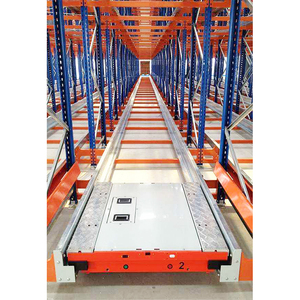
| Radio Shuttle Automation Rack | Ultra-High (250%) | Low (LIFO/FIFO) | Up to 85% | 500 kg – 1,500 kg | Cold storage facilities, Bulk beverage, High-volume homogeneous inventories |
| Multi-Tier Steel Mezzanine Platform | Very High (200%) | 100% Manual Access | Up to 80% | 300 kg – 1,000 kg/m² | Parts sorting centers, Automotive spare storage, Multi-level picking lofts |
| Gravity Pallet Flow / Carton Flow | High (180%) | Strict FIFO | Up to 70% | 500 kg – 2,500 kg | Pharmaceuticals, Perishable food distribution, Buffer stock lines |
| Heavy Duty Molders Rack | Medium | 100% Crane Access | Up to 50% | 1,000 kg – 5,000 kg | Injection molding plants, Stamping die storage, Heavy equipment maintenance |
4. Future Procurement Trends in Vertical Growing Racks & Warehouse Racking Systems (2025–2030)
As the global market for Controlled Environment Agriculture (CEA) and automated warehouse logistics accelerates, commercial buyers and EPC contractors must align their hardware procurement strategies with key technological trends. Understanding these macro shifts ensures that capital investments in steel rack infrastructure remain future-proof over a 15-to-25-year operational lifecycle.
4.1 High-Density Mobile Track Integration for Vertical Farming
Traditional static vertical farm racking leaves fixed service aisles between every bench, consuming up to 50% of costly climate-controlled floor space. The market is rapidly shifting toward mechanical-assist and motorized carriage-mounted Mobile Vertical Growing Racks. By mounting heavy-duty multi-tier rack frames onto subterranean steel guide rails, growers eliminate static aisles, creating a single movable aisle that expands growing canopy area by 80% to 120% within the exact same building footprint.
Future OEM/ODM specifications mandate dual-drive shafts, anti-tip structural safety locks, smooth-start electronic motors, and integrated seismic floor anchoring to prevent tray fluid sloshing during carriage movement.
4.2 Automation-Ready Architecture (AS/RS & Shuttle Compatibility)
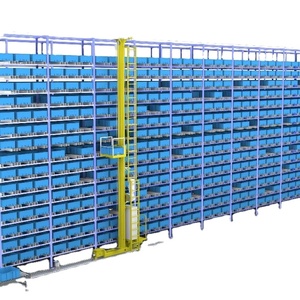
In industrial storage, the convergence of traditional pallet racking with Automated Storage and Retrieval Systems (AS/RS), 4-way radio shuttles, and Autonomous Mobile Robots (AMRs) is accelerating. Racking systems are no longer built solely for human-operated forklifts. Modern beams and uprights require tighter fabrication tolerances (down to ±0.5mm), precision sensor reflector cutouts, and integrated rack-top rail systems to accommodate automated shuttles traveling at speeds up to 1.5 m/s.
4.3 Sustainable Coatings & Circular Steel Procurement
With environmental compliance regulations tightening across North America, Europe, and Australia, global buyers are evaluating carbon intensity metrics for steel manufacturing. Future-proof racking suppliers are adopting zero-VOC thermosetting powder coatings, closed-loop water treatment systems during phosphating, and certified recycled-content steel billets without sacrificing tensile yield strengths.
5. Deep Intent Analysis: Technical Procurement & Customization Workflow
Navigating an OEM/ODM vertical rack or heavy-duty storage system purchase requires a structured, multi-phase engineering protocol to ensure site conditions match dynamic load requirements. Our factory-direct export workflow eliminates project delays and structural mismatches through a rigorous 5-stage engineering timeline:
- Phase 1: Spatial & Environmental Data Collection — Submission of architectural CAD drawings (.DWG format), clear height under beam measurements, concrete slab thickness/PSI strength, temperature/humidity ranges, and floor flatness indexes (FF/FL numbers).
- Phase 2: Structural Engineering & Load Calculation — Finite Element Analysis (FEA) computer modeling to simulate vertical loading, sway moment deflection, and seismic shear resistance. Generation of preliminary structural layout drawings.
- Phase 3: OEM Sample & Prototype Verification — Production of customized beam connector brackets, upright section samples, and tray support channels for physical mechanical loading and coating adhesion verification.
- Phase 4: Automated Batch Manufacturing & Quality Control — Continuous cold-roll forming, robotic laser cutting, dual-sided robotic seam welding, automated powder coating, and batch-level ultrasonic weld testing.
- Phase 5: Export Packaging & Technical Installation Support — Custom bundle packaging with steel strapping, waterproof wrapping, component mark tagging, and full 3D assembly manuals accompanied by remote video engineering support.
Procurement & Engineering FAQ
Expert answers to critical structural, logistical, and OEM customization questions frequently asked by overseas enterprise buyers.
Can you custom-design vertical growing racks and industrial storage systems according to our architectural drawings?
Yes, absolutely. Our structural engineering team specializes in custom OEM/ODM manufacturing. By providing your facility’s floor plan (.DWG or PDF), clear building height, target slab load rating, pallet or grow-tray dimensions, and operational equipment specs (forklift models or LED light weights), our engineers will generate a comprehensive 3D CAD layout, structural load calculation sheet, and exact bill of materials (BOM) completely free of charge before production commences.
Which structural design standards and safety codes do your racking systems comply with?
Our heavy-duty warehouse pallet racks, longspan shelving, and vertical grow systems are designed and engineered in strict compliance with international structural standards depending on your destination market. This includes AS4084-2023 / AS4084-2012 (Australia), EN 15512 / FEM 10.2.02 (Europe), and RMI MH16.1 specifications (North America). We routinely provide third-party structural load test reports issued by independent testing bodies upon project request.
How do I determine the correct rack surface coating for high-humidity vertical grow rooms vs. dry warehouses?
For standard dry warehouse environments, our electrostatic thermosetting epoxy polyester powder coating (60–80 microns thick) provides exceptional scratch resistance and durability. However, for indoor vertical farming, microgreen facilities, or cold-chain cold storage facilities with high relative humidity (RH 70%+) and liquid nutrient exposure, we recommend our specialized zinc-rich primer base combined with anti-bacterial moisture-resistant powder coating, or hot-dip galvanizing (HDG) conforming to ISO 1461, which prevents rust formation even under direct continuous moisture contact.
What is the typical production lead time for OEM bulk racking orders?
For standard high-density pallet racking, selective racks, or standardized vertical grow rack components, our standard factory manufacturing lead time is between 15 to 25 days following technical drawing sign-off and deposit receipt. For complex, large-scale automated AS/RS systems or highly customized multi-tier mezzanine platforms requiring custom tooling, lead times are tailored to the project schedule, usually ranging from 30 to 45 days.
How are vertical growing racks and warehouse storage racks packaged for ocean shipping?
All structural upright frames, heavy beams, and shelf panels are packed using industrial-grade export protocols. Uprights and beams are bundled with steel strapping, corrugated corner protection, and wrapped in heavy-duty polyethylene shrink film to block moisture ingress during ocean transit. Smaller hardware components, safety pins, footplates, and anchor bolts are securely packed in reinforced wooden crates or heavy corrugated master cartons labeled with clear component manifests for seamless site unloading and assembly.
Transform Your Vertical Canopy & Warehouse Storage Capacity
Connect directly with our senior racking structural engineers today. Receive factory-direct pricing, customized OEM/ODM options, and a complimentary 3D/CAD spatial layout within 24 hours.