Maximizing Cube Utilization in Modern Automated Logistics
As global supply chains navigate soaring real estate costs, supply volatility, and aggressive carbon-neutrality mandates, automated material handling infrastructure has shifted from a luxury to an operational imperative. Radio Shuttle Racking Systems—also engineered as Pallet Shuttle or Shuttle Car Storage Systems—represent the pinnacle of semi-automated, high-density warehouse storage. By replacing conventional forklift access aisles with autonomous, remote-controlled shuttle carts operating within deep-lane rack channels, enterprise operators achieve up to 80% higher storage density compared to standard selective pallet racking.
This comprehensive industry guide evaluates the world’s leading manufacturers, structural engineering principles, procurement trends, and technological evolutions governing radio shuttle equipment. Grounded in rigorous compliance with international standards—including EN 15512, FEM 10.2.02, RMI, and AS4084—this document delivers the decision-making intelligence necessary for supply chain directors, warehouse engineering leads, and logistics procurement executives seeking sustainable competitive advantages.
Featured Radio Shuttle Systems & Technical Specifications
Explore our enterprise-grade semi-automated shuttle systems, custom-manufactured to meet exact load profiles, temperature ranges, and throughput requirements across global logistics centers.
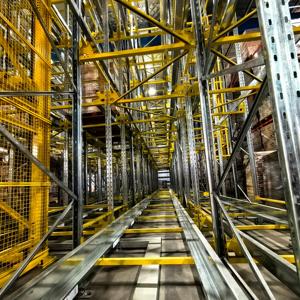
Jracking High-Load Warehouse Storage Rack CE Certified Four-Way Radio Shuttle Rack System for Cold Storage Warehouse Use
Inquire Now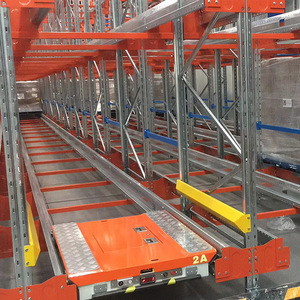
Jracking CE-Certified Radio Shuttle Rack System Space-Saving & Automated Storage Racking For Cold Storage Warehouses
Inquire Now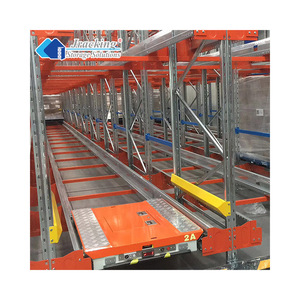
Jracking Heavy Duty CE Certified Warehouse Storage Shelves Rack Stable Two-way Radio Shuttle Rack for Automated Logistics Center
Inquire Now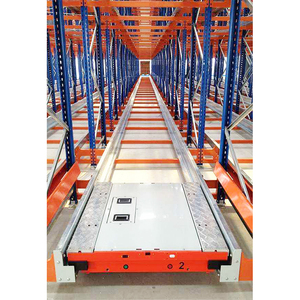
High-Density Shuttle Rack System 4-Way Shuttle Racking Asrs Rack Four Way Radio Shuttle Racking
Inquire Now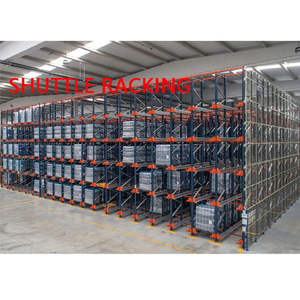
High-Density Ratio Shuttle Racks System Asrs 4 Way Shuttle Racking Radio Shuttle Pallet Rack
Inquire Now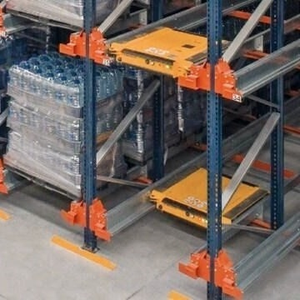
Fully Automated Radio Shuttle Racking Featuring High-Speed Shuttle Cart for Modern Logistics Distribution Centers
Inquire Now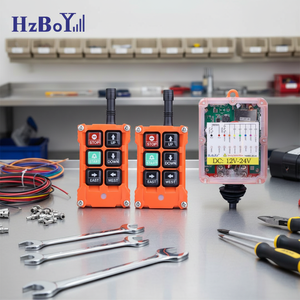
F21-4S+ 12V Industrial Smart Tail Lift Radio Transmitter Receiver Set Hydraulic Truck Trailer Radio Remote Control Plastic Crane
Inquire Now
Seamless Heat Pressed Felt Storage Box With Matching Lid Stackable Dust Cover Two Tone Sturdy Home
Inquire NowEvaluation Criteria for Top Global Exporters
Selecting an enterprise partner for high-density automated racking requires assessing technical capabilities far beyond basic structural steel fabrication. Because radio shuttle systems combine dynamic mechanical racking, specialized guidance rails, high-precision electronic vehicles, wireless communication protocols, and safety sensors, tier-1 suppliers must possess multidisciplinary engineering expertise.
1. Structural Integrity & Codes
Racks must be engineered to rigid structural deflection limits (FEM 10.2.02 / EN 15512) to prevent rail binding when loaded shuttle carts travel at speeds up to 1.5 m/s.
2. Autonomous Navigation
Advanced shuttles incorporate dual optical position sensors, laser rangefinders, and acceleration management algorithms to prevent product collision during rapid acceleration.
3. Cold-Chain Thermal Resilience
Sub-zero environments down to -30°C demand specialized LiFePO4 battery thermal management, anti-condensation PCB coatings, and low-temperature structural steel resilience.
| Exporter Benchmark Criteria | Tier-1 Global Manufacturers | Tier-2 Standard Fabricators | Impact on Warehouse ROI |
|---|---|---|---|
| Steel Grade & Forming | High-Tensile Q355B / Q460 Steel with continuous automated roll-forming | Standard Q235 Steel with manual press braking | Prevents channel distortion under high point-loads; extends rack lifespan by 15+ years. |
| Shuttle Battery Tech | Lithium Iron Phosphate (LiFePO4) with fast-charging (8-hr operation on 1-hr charge) | Standard Lead-Acid or Basic Li-Ion without thermal balance | Eliminates downtime, battery swapping shifts, and hazardous off-gassing. |
| System Integration | WMS / WCS API integration via Wi-Fi 6 or 5G private industrial networks | Standalone RF remote control only | Enables full dark-warehouse automation and real-time inventory tracking. |
| Safety Standard Compliance | CE Mark, EN 15512, FEM 10.2.02, RMI, ISO 9001 certified | Local non-standard compliance | Ensures facility safety audit passing and lowers commercial insurance premiums. |
Engineering Trends Shaping Next-Gen Shuttle Systems
The radio shuttle market is undergoing a seismic architectural transition. While traditional 2-way shuttle carts—which move forward and backward within a single channel—remain the workhorse for bulk inventory, the rapid rise of 4-Way Multi-Directional Shuttles is redefining high-density storage design.
2-Way Radio Shuttle Systems
In a 2-way system, a forklift lifts the shuttle vehicle into the designated channel. The cart then autonomously travels down the rail channel under instructions from a wireless remote or warehouse management software (WMS), lifting pallets and transporting them to the front face for picking.
- Best suited for high-volume, low-SKU count operations.
- Requires forklift transfer between racking lanes.
- Cost-effective initial capital expenditure (CapEx).
- Operational flow: LIFO (Last-In, First-Out) or FIFO (First-In, First-Out with dual aisles).
4-Way Multi-Directional Systems
4-Way shuttles feature dual wheel assemblies that allow the vehicle to shift directions at 90-degree angles across longitudinal rails and cross-aisles. Integrated with vertical reciprocating lifts (elevators), 4-way systems eliminate the need for forklift intervention within the rack structure entirely.
- Full 3D movement across rows, columns, and vertical levels.
- Enables true automated storage and retrieval system (AS/RS) functionality.
- Dramatically cuts labor requirements and forklift energy consumption.
- Optimal for e-commerce, pharmaceutical, and high-complexity distribution hubs.
Next-Generation Power & Communication Protocols
Modern shuttle architectures incorporate state-of-the-art power delivery and telemetry systems designed for 24/7 continuous duty cycles:
Integrated smart BMS protection prevents overcharging, deep discharge, and thermal runaway, while delivering real-time state-of-charge (SoC) telemetry to central WCS monitors.
Vibration sensors, thermal couplers, and wheel rotation encoders continuously transmit performance metrics, allowing AI-driven predictive maintenance before hardware failure occurs.
Cold-chain shuttle variants deploy internal resistance heating pads around sensitive electronics and optical lenses, enabling smooth startup in -30°C blast freezers.
Future Procurement Trends in Warehouse Automation
Global logistics planners are shifting their procurement strategies from reactive space-addition to proactive high-density automation. Key macroeconomic and technological drivers influencing radio shuttle procurement over the next decade include:
Modular Capital Expenditure
Unlike monolithic traditional AS/RS stacker crane systems that require enormous upfront investments, radio shuttle racking allows operators to scale throughput incrementally by simply adding more shuttle carts to existing rack channels as volume grows.
Dark Warehouse Capability
Rising labor overhead and safety liabilities drive the procurement of fully integrated shuttle fleets capable of operating in complete darkness and unconditioned environments, drastically cutting heating, cooling, and lighting costs.
Sustainability & Energy ROI
Because shuttle carts weigh significantly less than conventional forklifts and stacker cranes, energy consumption per pallet moved drops by over 60%. This directly supports corporate ESG goals and carbon tax reduction targets.
Engineering Excellence & Global Export Capabilities
Established in 2004, our manufacturing complex in Nanjing, China, has delivered custom structural storage solutions to Fortune 500 logistics hubs and regional cold-storage operators worldwide for over two decades.
Vertical Manufacturing Control
We operate fully integrated production lines—from certified structural coil slitting and automated cold roll-forming to robotic multi-axis welding and automated electrostatic epoxy powder coating. By maintaining complete internal control over component geometry and material quality, we guarantee structural tolerances that prevent rail alignment failures.
- Material Traceability: Mill test certificates provided for every steel batch (Q235B, Q355B, Q460).
- Coating Standards: Pre-treated 7-stage phosphating followed by tough epoxy powder coating compliant with ISO 9227 salt spray standards.
- Certified Quality: Certified compliance with AS4084, EN 15512, FEM 10.2.02, RMI, and CE safety directives.
Turnkey Technical & OEM/ODM Support
Every warehouse facility presents unique spatial constraints, floor slab load limitations, and pallet profiles. Our dedicated engineering office provides complete structural design and project execution support to overseas integration partners.
- Free 3D / CAD Layout Engineering: Finite Element Analysis (FEA) and structural drawings provided prior to contract commitment.
- Custom OEM/ODM Branding: Tailored color schemes, private-label shuttle cart chassis design, and custom control interfaces.
- Overseas Installation Supervision: Comprehensive assembly manuals, video instruction, and on-site engineering supervision available globally.
Purchasing & Engineering FAQ
1. How does Radio Shuttle Racking compare to Drive-In Racking in total return on investment (ROI)?
2. Can radio shuttle carts operate reliably in deep-freeze cold storage facilities?
3. What pallet specifications and tolerances are required for shuttle operations?
4. How is the radio shuttle system controlled and integrated into facility software?
5. What structural information is required to receive a free 3D/CAD engineering proposal?
6. What safety systems prevent shuttle carts from falling or colliding with obstacles?
Ready to Modernize Your Storage Infrastructure?
Consult with our senior structural engineers today. Receive a comprehensive warehouse feasibility analysis, load calculation report, and custom 3D/CAD layout—completely free of charge.
Inquire Now