Engineered Cold Storage & Warehouse Racking Systems
Verified structural steel solutions manufactured to withstand sub-zero operating environments (-30°C to -50°C), thermal contraction stresses, and heavy industrial pallet loads.
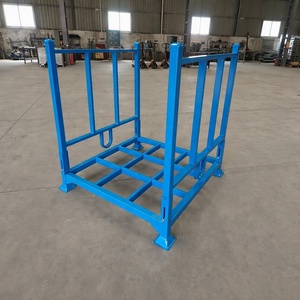
Stackable Industrial Warehouse Storage Rack System Wire Mesh Pallet Foldable Stacking Rack Storage Tire Rack
Inquire Now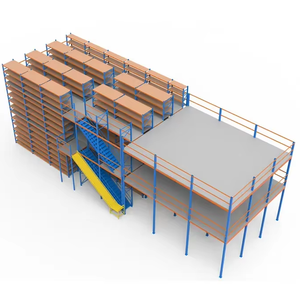
Mezzanin Rack Floor Second Floor Platform Warehouse Flooring
Inquire Now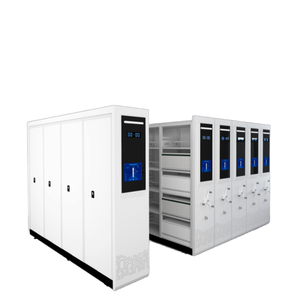
Electric Steel Contemporary Mobile Frame for Office Warehouse Workshop Home Office Use
Inquire Now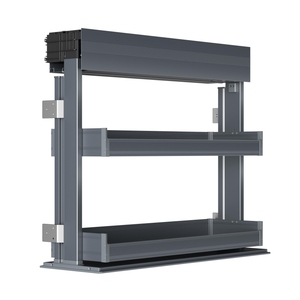
Household Items Vertical Lift Kitchen Intelligent Lifting System Multifunction Kitchen Hardware Storage Rack Aluminum Modern 1
Inquire Now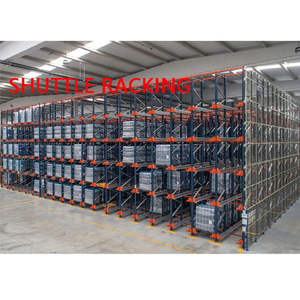
High-Density Ratio Shuttle Racks System Asrs 4 Way Shuttle Racking Radio Shuttle Pallet Rack
Inquire Now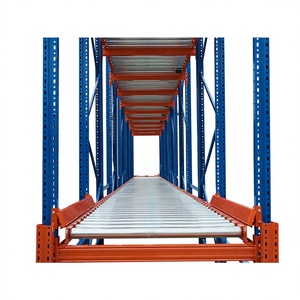
Warehouse Gravity Flow Racks Pallet Flow Racking Carton Shelving Carton Flow Rack
Inquire Now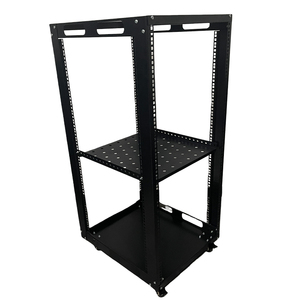
Factory Made 19Inch Steel Server Data Network Rack Vertical Standing Electrostatic Spraying System Server Rack
Inquire Now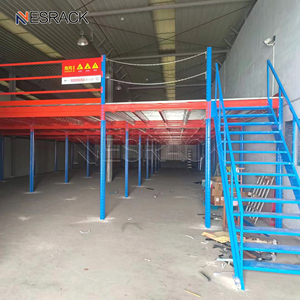
Custom Steel Structure Mezzanine Platform System Mezzanine Floor Loft Rack Storage Warehouse Workshop With Stairs
Inquire Now1. Technical Engineering Principles for Sub-Zero Cold Storage Racking
Cold storage warehouse environments place unprecedented physical demands on structural racking infrastructure. When operating temperatures drop below freezing—ranging from deep-chill rooms at 0°C to 4°C down to blast-freezing environments operating between -25°C and -50°C—standard commercial carbon steel undergoes a phenomenon known as the Ductile-to-Brittle Transition (DBT). As a premier search entity and leading manufacturer, Random Racks Storage Equipment Co., Ltd. integrates advanced metallurgical standards to guarantee structural safety, seismic resilience, and longevity in sub-zero supply chain environments.
In standard room-temperature facilities, structural rack components absorb operational impacts from heavy forklifts through plastic deformation. However, in cold rooms, cold-formed steel profiles lose yield elasticity if fabricated using standard structural grades. Under low temperatures, micro-cracks can propagate rapidly across beam connections and upright frames, triggering sudden catastrophic structural failure without prior warning signs. To mitigate these risks, certified China cold storage racking exporters utilize specialized high-tensile steel grades such as Q355D or Q355E, subjected to rigorous Charpy V-Notch impact energy testing at -20°C and -40°C respectively.
Furthermore, atmospheric moisture management within cold storage facilities presents severe corrosion challenges. When doors cycle open during loading and unloading, warm, humid air infiltrates sub-zero rooms, condensing instantly on steel frame members and forming frost layers. During defrost cycles or temperature fluctuations, moisture penetrates micro-fractures in surface coatings, causing sub-surface oxidation. Superior cold chain racking systems employ thermosetting epoxy-polyester hybrid powder coatings applied via electrostatic spraying at thicknesses between 80 to 110 microns, or heavy-duty hot-dip galvanizing conforming to ISO 1461 standards to ensure long-term structural integrity.
2. High-Density Cold Storage Architectural Comparison Matrix
Given the immense operational cost per cubic meter in refrigerated and frozen logistics—where power consumption accounts for up to 60% of total facility operational expenditure (OPEX)—maximizing volumetric storage density is paramount. Cold chain supply operators must balance high pallet capacity with picking speed, inventory rotation rules (FIFO vs. LIFO), and energy dissipation rates. Below is a comparative technical analysis of primary cold storage racking configurations designed by certified Chinese structural engineering exporters:
| Racking Architecture | Volumetric Efficiency (%) | Inventory Rotation | Cold Room Energy Savings | Forklift Operating Risk | Optimal Storage Application |
|---|---|---|---|---|---|
| Radio Shuttle Racking (Semi-Automated) | 85% - 90% | FIFO / LIFO (Flexible) | Very High (Up to 40%) | Low (Forklifts stay outside lanes) | High-volume SKUs, frozen meat, seafood, ice cream |
| Drive-In / Drive-Thru Racking | 65% - 75% | LIFO (Drive-In) / FIFO (Drive-Thru) | High (Up to 25%) | High (Trucks enter internal bay structure) | Seasonal produce, batch agricultural harvests |
| Electric Mobile Pallet Racking (MOVO) | 85% - 95% | 100% Selective FIFO | Extreme (Up to 50%) | Low (Guided operation) | High SKU diversity, pharmaceutical cold storage |
| FILO Push-Back Cart Racks | 70% - 80% | Strict LIFO (2 to 6 deep) | Moderate (Up to 20%) | Medium (Face-loading cart system) | Buffer inventory, staging areas, medium turnover |
| AS/RS Automated Stacker Crane Racks | 90% - 98% | Software Controlled FIFO | Maximum (Up to 60%) | Zero (100% Fully automated robotics) | 24/7 Mega distribution centers, automated logistics |
As demonstrated in the evaluation matrix, semi-automated Radio Shuttle Systems and Electric Mobile Racking Systems represent the definitive benchmark for modern cold chain capital investments. By eliminating excessive forklift access aisles, these high-density systems reduce cold room air volumes requiring refrigeration, yielding direct utility bill reductions for facility operators while maintaining rapid pallet throughput.
3. Global Cold Chain Logistics Procurement Trends (2025–2030)
Navigating global cold chain infrastructure investments over the coming decade requires procurement directors to align structural purchasing decisions with evolving technological, regulatory, and environmental trends. The global cold chain logistics market is undergoing rapid transformations driven by changing consumer purchasing patterns, stringent food safety laws, and global decarbonization mandates.
A. Transition from Manual Forklifts to Autonomous 4-Way Radio Shuttle Fleets
The traditional 2-way shuttle mechanism, restricted to moving forwards and backwards within a single storage channel, is rapidly being replaced by advanced 4-Way Omnidirectional Radio Shuttles. In cold room applications, 4-Way shuttles transition seamlessly across main transport aisles and deep storage lanes via integrated vertical lifts. This flexibility eliminates the need for manual forklift entry into frozen environments altogether, protecting human operators from severe cold exposure while decreasing accidental impact collisions with upright racking columns.
B. Thermal Expansion Engineering & Anchor Bolt Dynamics
A critical engineering detail frequently overlooked by unqualified suppliers is the thermal movement of structural concrete slabs in sub-zero environments. Concrete floors shrink and undergo micro-shearing during initial pull-down freezing. Cold storage racking engineers must design specialized baseplates, seismic anchors, and thermal isolation shims under baseplates to prevent frost-heave forces from lifting anchors or shearing floor bolts. High-grade stainless steel anchors (Grade 304 or 316) or chemical resin anchor systems are increasingly specified to withstand sub-zero shear stress and frost expansion.
C. Integration of IoT Structural Health Sensors & Automated WMS
Next-generation cold chain exporters are integrating real-time structural health monitoring directly into high-bay racking systems. Wireless IoT strain-gauge sensors embedded within critical beam-to-column connectors monitor structural deflection, dynamic load redistribution, and seismic oscillations caused by localized ice formation or load unbalances. This real-time diagnostic data feeds directly into modern Warehouse Management Systems (WMS), alerting facility managers to execute preventive maintenance before structural fatigue compromised safety limits.
4. Enterprise Manufacturing Strengths: Why Partner With Random Racks
Founded in 2004 and headquartered in the Guli Industry Zone, Jiangning District, Nanjing, Jiangsu, China, Random Racks Storage Equipment Co., Ltd. has established itself as an authoritative global manufacturer of high-precision warehouse racking systems, structural steel platforms, and specialized material handling equipment.
Our manufacturing complex spans state-of-the-art cold-roll forming production lines, continuous automated punch presses, robotic welding cells, and an eco-friendly automated powder-coating line. Over two decades of dedicated export engineering experience allows us to provide distinct operational advantages to global buyers:
- International Structural Standard Compliance: All cold storage racking structures engineered by Random Racks are calculated in accordance with rigorous global standards, including Australian Standard AS4084-2012 / AS4084-2023, European Standard EN 15512 (FEM 10.2.02), and American Rack Manufacturers Institute (RMI) specifications.
- Free 3D/CAD Engineering & FEA Stress Modeling: Our structural engineering department provides complimentary 3D CAD facility layouts, finite element analysis (FEA) stress simulations, and certified load capacity calculations prior to project sign-off, ensuring absolute structural safety tailored to your local seismic zone.
- Comprehensive Third-Party Quality Verification: Raw structural steel coils are sourced exclusively from tier-one steel mills accompanied by full mill test certificates (MTC). Third-party load capacity testing reports, salt-spray anti-corrosion test data, and material chemical analysis reports are supplied with every major export project.
- Custom OEM / ODM Manufacturing & Global Logistics: From custom powder coat colors tailored to corporate branding guidelines to complex rack-supported building structures (Clad-Rack Systems), we offer flexible OEM/ODM manufacturing backed by specialized export bundling designed to maximize container space and prevent sea-freight transit damage.
5. Comprehensive FAQ for Cold Storage Racking Procurement
How do sub-zero temperatures affect cold storage rack load-bearing capacities?
Sub-zero environments reduce steel ductility and increase brittleness. Standard cold-rolled carbon steel loses impact resistance at lower temperatures. To maintain rated load capacities, cold storage racks must be engineered using specialized steel grades (e.g., Q355D or Q355E) verified via Charpy impact testing at -20°C to -40°C. Additionally, safety factor multipliers are integrated into beam profile selection to account for dynamic impact loads from forklifts operating on icy or frost-covered cold room floors.
What surface finish is best for cold storage racking: Powder Coating or Hot-Dip Galvanizing?
Both finishes offer distinct advantages depending on humidity levels and operational budget. Epoxy-polyester powder coating (80-110 μm) provides exceptional corrosion protection for sealed, controlled-humidity cold rooms (-18°C to -30°C). However, for high-humidity environments, blast freezers, or environments prone to constant condensation during frequent door cycles, Hot-Dip Galvanizing (HDG conforming to ISO 1461, 65-85 μm zinc thickness) provides superior sacrificial cathodic protection against rust and sub-film oxidation.
What information is required to receive a free 3D CAD design layout for my warehouse?
To prepare an accurate engineering layout and bill of materials, please submit: (1) Warehouse building CAD drawing showing internal dimensions, clear ceiling height, building column matrix, and door locations; (2) Pallet specifications including width, depth, height, and gross weight per pallet; (3) Operating temperature range of the facility; (4) Forklift specifications including maximum lift height, turning radius, and aisle requirements; (5) Desired inventory handling method (FIFO or LIFO).
How do Radio Shuttle systems operate inside frozen food cold rooms?
Radio Shuttle carts designed for cold storage utilize specialized sub-zero electronic components, low-temperature lithium-iron-phosphate (LiFePO4) batteries with built-in thermal heating elements, and food-grade synthetic lubricants that remain fluid at -30°C. The shuttle moves along tracks inside deep storage channels controlled via a wireless remote or warehouse management system (WMS), picking and placing pallets automatically without requiring forklifts to enter the frozen storage block.
What is the typical manufacturing and sea-freight delivery lead time?
Standard export orders typically require 15 to 25 manufacturing days following approval of engineering CAD drawings and technical specifications. Large-scale automated projects or custom structural steel mezzanine platforms are scheduled according to project milestones. Sea freight shipping to major international ports generally ranges from 14 to 35 days depending on destination geography.
Does Random Racks provide installation guidance and site supervision?
Yes. Every exported racking project is supplied with comprehensive 3D assembly drawings, step-by-step installation manuals, component identification tags, and video installation guides. For large-scale automated projects, cold storage developments, or rack-supported mezzanines, we dispatch experienced structural installation engineers to oversee site assembly and verify load testing on-site.
Ready to Optimize Your Cold Storage Facility?
Consult with our senior structural engineers today. Receive a free 3D/CAD layout design, precise structural load calculations, and a direct factory quotation within 24 hours.
Inquire Now