Architectural Foundations of High Bay Racking: Technical Specification & Global Procurement Guide
In modern industrial warehousing, vertical cubic space optimization has transitioned from a structural advantage to an absolute operational necessity. As real estate acquisition costs, energy overheads, and inventory management complexities continue to escalate globally, procurement managers and logistics architects are turning toward advanced high bay racking systems manufactured in China. As a premier China High Bay Racking Manufacturer & Supplier, Random Racks Storage Equipment Co., Ltd. (founded in 2004 in Nanjing, Jiangsu) delivers structural steel solutions engineered to maximize storage density, ensure structural safety, and seamless integrate with modern automated material handling equipment.
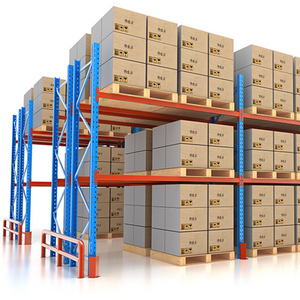
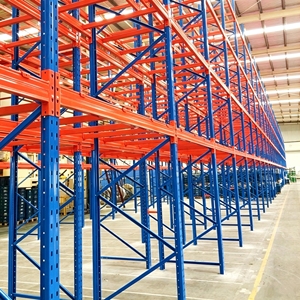
High bay racking structures—typically defined as free-standing structural racking assemblies exceeding 8 meters and reaching up to 40 meters in Automated Storage and Retrieval Systems (AS/RS)—require precise structural calculation, premium cold-rolled steel profiles (such as Q235B and high-strength Q355B structural grade steel), and exact fabrication tolerances. This white paper serves as a definitive guide for industrial engineers, supply chain directors, and warehouse managers seeking to evaluate high bay racking manufacturers, master procurement workflows, and understand upcoming technological transitions within the logistics infrastructure sector.
Key Information Gain Insight: Volumetric Efficiency Factor (VEF)
Transitioning from standard selective pallet racking (6-meter operational height) to a Very Narrow Aisle (VNA) or automated High Bay Racking System (12 to 24 meters) increases the vertical storage utilization coefficient by up to 300% per square meter of building slab footprint, reducing land acquisition requirements by over 45% for equivalent pallet position capacity.
Enterprise Technical Advantages: Why Partner with China's Premier Racking Manufacturer
Selecting an OEM/ODM racking partner requires verifying structural integrity, international code compliance, and manufacturing scalability. Operating out of the Guli Industry Zone, Jiangning District, Nanjing, Random Racks combines two decades of specialized structural steel fabrication experience with modern engineering technology.
AS4084 & EN 15512 Compliance
Every frame and beam profile undergoes finite element analysis (FEA) and physical testing according to Australian standard AS4084-2012, European EN 15512, and American RMI specification guidelines.
Free 3D / CAD Engineering Layouts
Our in-house structural engineers evaluate floor slab capacities, forklift turning radii, and seismic loading requirements to deliver free detailed 3D layouts, structural drawings, and load calculation certificates prior to production.
Full Traceability & Material Testing
We source structural steel coils strictly from premium tier-1 steel mills. Complete material test reports (MTR), yield stress verifications, and third-party destructive load test reports are systematically provided.
High-Precision Cold-Roll Forming
Utilizing continuous multi-station automated roll-forming lines, our high bay upright columns feature structural stiffness profiles designed to resist buckling under massive concentrated compressive loads.
Thermosetting Epoxy Powder Coating
Equipped with automated continuous pre-treatment and electrostatic powder-coating lines, our finishing delivers exceptional impact resistance, corrosion protection, and long operational lifespan in high-humidity or cold-chain environments.
Export-Grade Protective Packaging
Components are systematically bundled, corner-protected, and steel-strapped over heavy wood skids to ensure flawless container loading and zero transit damage across global sea-freight routes.
High Bay Racking Systems: Structural Engineering Matrix & Comparative Analysis
Modern warehouse logistics demand precise operational alignment between material handling equipment (MHE) and static structural racking. Below is a comparative technical evaluation of industrial high bay and high-density racking variants designed by our engineering team.
| Racking System Architecture | Maximum Height Range | Selectivity (%) | Floor Space Utilization | Inventory Handling (FIFO/LIFO) | Primary Industrial Applications |
|---|---|---|---|---|---|
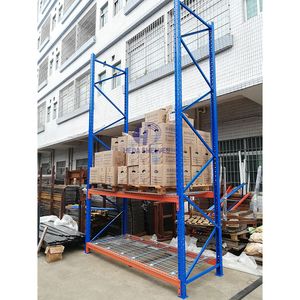
| Selective Pallet Racking | Up to 12 Meters | 100% | 35% - 40% | FIFO & LIFO Compatible | General Warehousing, FMCG, Distribution Centers |
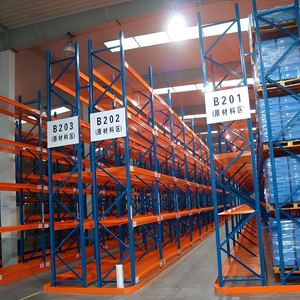
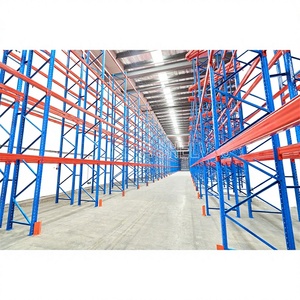
| Very Narrow Aisle (VNA) High Bay | 10 - 18 Meters | 100% | 55% - 65% | FIFO & LIFO Compatible | High-Density Hubs, E-Commerce, Pharmaceutical |
| Drive-In / Drive-Thru Racking | Up to 12 Meters | 20% - 30% | 65% - 75% | LIFO (Drive-In) / FIFO (Drive-Thru) | Cold Storage, Food & Beverage Bulk Batches |
| Radio Shuttle High Bay System | 12 - 22 Meters | 30% - 50% | 75% - 85% | Flexible FIFO / LIFO Automated | Cold Chain Logistics, Raw Materials Storage |
| Automated Storage & Retrieval (AS/RS) | 18 - 40+ Meters | 100% Automated | 85% - 95% | WMS Programmed FIFO/LIFO | 24/7 Smart Logistics, Automotive, Pharma Hubs |
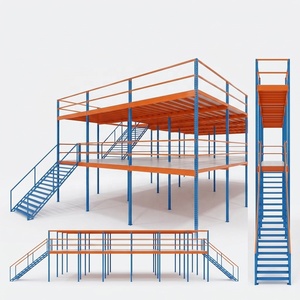
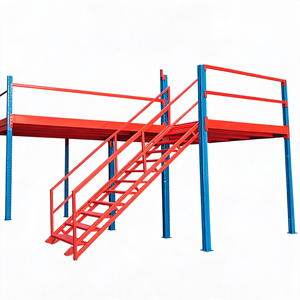
| Multi-Tier Steel Mezzanine Platform | 2 - 4 Tier Levels | 100% Manual/Carton | Up to 300% Floor Gain | Manual Order Picking (FIFO) | E-commerce Sorting, Apparel, Spare Parts |
Technical Deep Dive: Upright Column & Beam Deflection Engineering
The safety of a high bay racking installation relies heavily on structural column dynamics and elastic deflection performance under load. High bay racking uprights are subject to combination stress: severe axial compression caused by vertical gravity loads, combined with bending moments generated by pattern loading, frame shear, and forklift impact forces.
1. Column Profile Geometry and Torsional Rigidity
Standard low-tier shelving utilizes basic open channels, but high bay racking systems require multi-flange structural profiles with complex cold-roll formed stiffening ribs. The addition of return flanges along the open slots significantly shifts the centroidal axis, increasing the moment of inertia ($I_x$, $I_y$) and resisting torsional-flexural buckling. At Random Racks, our columns are engineered with up to 13-fold continuous bending profiles, ensuring maximum structural efficiency per kilogram of steel.
2. Beam Connector Engagements and Safety Lock Pins
The connection between horizontal beams and vertical columns dictates the overall frame stability. Our heavy-duty beam connectors feature multi-claw engineered hooks formed from high-strength forged plate steel. When engaged under beam deflection, a self-tightening wedge action occurs, creating a semi-rigid joint that drastically reduces sway in tall racking configurations. Every beam connection is equipped with a visual safety drop-lock pin that prevents accidental beam dislodgement from upward forklift forks.
3. Deflection Limits and Structural Tolerances
Under maximum rated safe working load (SWL), horizontal beam deflection is engineered not to exceed $L/200$ (where $L$ is clear span beam length), well within the rigorous constraints of EN 15512 standards. For high bay automated AS/RS applications, tolerances are tightened further to $L/300$ or even $L/400$ to prevent stacker crane sensors from detecting false obstruction readings during high-speed pallet deposition.
Product Development Trends in High Bay Storage Architecture
As global supply chains face volatile consumer demand, labor shortages, and rising land valuations, the high bay racking sector is undergoing major engineering shifts. Key product development trends include:
A. Ultra-High Tensile Steel Integration
Traditional racking relied primarily on standard structural steel grades like Q235. Modern high bay configurations increasingly utilize cold-rolled Q355B and high-yield micro-alloyed steels. Higher yield strengths ($f_y \ge 355\text{ MPa}$) allow engineers to manufacture thinner, lighter upright sections that retain equivalent load capacity—reducing raw material consumption and international container freight costs without compromising structural safety margins.
B. Sensorized & IoT-Monitored Smart Racking Frameworks
The convergence of structural engineering and digital telematics has enabled smart racking systems. Fiber-optic strain sensors, wireless tilt sensors, and micro-electromechanical impact sensors can now be embedded directly into high bay racking upright columns. These IoT devices monitor structural health in real time, alerting facility operators to invisible structural damage, column out-of-plumbness caused by forklift impacts, or localized structural overload condition before catastrophic failure occurs.
C. Hybrid Mezzanine-Supported High Bay Structures
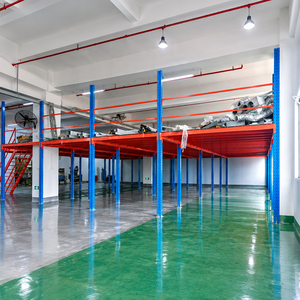
Rather than erecting standalone buildings, modern industrial space designs integrate rack-supported mezzanine floors directly with VNA high bay racking systems. The racking uprights act as the main structural support columns for upper-level catwalk floors, steel grating, office modules, or automated parcel sorting conveyors—maximizing volumetric warehouse utilization while drastically cutting structural building steel costs.
Global Procurement Trends: Strategic Considerations for 2025–2030
For international buyers, procuring racking systems directly from China has evolved beyond simple price arbitrage. It is now a strategic partnership focused on speed, customization, and engineering rigors. Key procurement trends shaping the industry include:
1. Total Cost of Ownership (TCO) Procurement Models
Overseas procurement managers are evaluating high bay racking suppliers based on holistic TCO metrics rather than initial FOB container prices. TCO analysis incorporates steel grade durability, protective powder coating thickness ($\ge 60\text{--}80\,\mu\text{m}$), modular adaptability for future warehouse expansions, container packing optimization factor (cubic meter capacity utilization per 40ft HQ), and ease of field assembly.
2. Modular OEM/ODM Flexibility & Customization
Off-the-shelf racking configurations rarely satisfy the complex SKU profiles and hybrid material handling equipment of modern distribution hubs. Leading procurement teams require customized beam span engineering, customized upright punching patterns (such as 50mm, 75mm, or 76.2mm pitch adjustments), specialized palette support bars, wire mesh decking configurations, and custom brand-matched powder coat finishes.
3. Carbon Footprint and Sustainable Steel Manufacturing
Environmental compliance and ESG metrics are driving global procurement policies. Procurement teams favor Chinese manufacturers utilizing green electric arc furnace (EAF) steel coils, zero-VOC electrostatic powder coatings, continuous water recycling in metal pickling pre-treatment stages, and eco-friendly pallet packaging options.
Comprehensive Global Procurement FAQ
Can you engineer customized racking layouts directly from building CAD floor plans?
Yes, absolutely. Our structural engineering team accepts architectural CAD drawings, floor plans, or site measurements. We evaluate clear building height, sprinkler line locations, column grid spacing, floor slab thickness, forklift turning requirements, and pallet unit specifications to generate free complete 3D/CAD storage layouts, structural load calculations, and bill of materials (BOM) prior to contract signing.
Which international design standards and structural codes do your high bay racks conform to?
Random Racks systems are designed, calculated, and manufactured in compliance with major international standards depending on destination markets. This includes European EN 15512 / FEM 10.2.02 standards, Australian Standard AS4084-2012, and American RMI (Rack Manufacturers Institute) specification guidelines. Third-party material test reports (MTR) and certified load test documents are available upon request.
How do I determine whether Selective, VNA, or Radio Shuttle high bay racking is best for my warehouse?
Selection depends on your balance of SKU diversity, required access speed, and inventory flow strategy:
• Selective Racking: Best for high SKU diversity requiring 100% immediate pallet accessibility.
• VNA High Bay: Ideal for high ceiling buildings where 100% selectivity is required alongside high floor space utilization.
• Radio Shuttle / Drive-In: Best for high volume, low SKU count applications (e.g., cold chain storage) where dense storage and automated pallet shuttling maximize cubic storage efficiency.
What is your typical production lead time and export delivery schedule?
Standard project orders typically complete production within 15 to 25 days following drawing confirmation and deposit receipt. For massive high bay projects or complex AS/RS installations, production schedules are staged across container shipments to align with your site construction and installation timelines.
What support is provided for international assembly and structural installation?
Every shipment includes comprehensive 3D assembly drawings, component tagging lists, structural installation manuals, and step-by-step video guidance. For major international logistics projects, Random Racks can dispatch senior installation engineers or supervisory teams on-site to direct your local installation crews.
How do you protect high bay racking components against corrosion and shipping damage?
All structural steel components undergo a multi-stage chemical washing and phosphate pre-treatment process before receiving an automated electrostatic thermosetting powder coat ($\ge 60\text{--}80\,\mu\text{m}$ dry film thickness). For ocean export, uprights and beams are bundled with plastic wrapping, edge guards, heavy-duty steel strapping, and wood block skids engineered for damage-free container loading and unloading.
Strategic Project Initiation & Engineering Consultation
Partnering with an experienced China High Bay Racking Manufacturer guarantees your warehouse installation strikes the perfect balance between structural safety, spatial capacity, operational throughput, and capital cost efficiency. Whether planning a greenfield automated high-bay distribution hub or expanding floor capacity with multi-tier rack mezzanines, our engineering team is ready to optimize your space.
Submit your floor plan, pallet dimensions, and operational requirements to receive a comprehensive, complimentary structural design proposal and factory-direct pricing breakdown.