Featured Industrial Storage & Racking Systems
Engineered for high structural integrity, optimized warehouse cubic volume utilization, and heavy load capacities up to 5,000 kg per level.
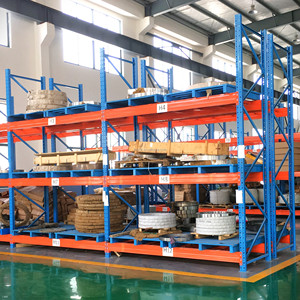
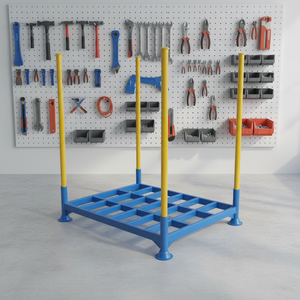
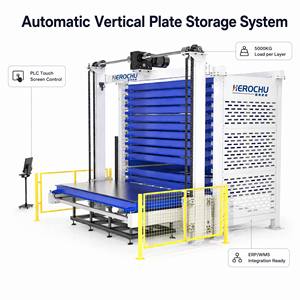
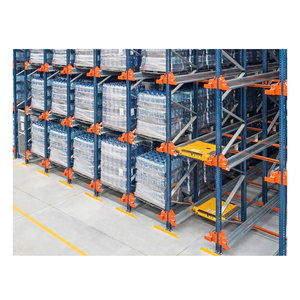
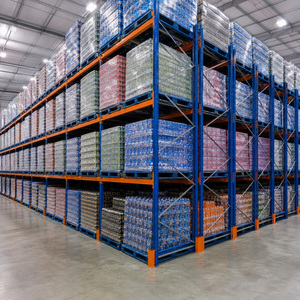
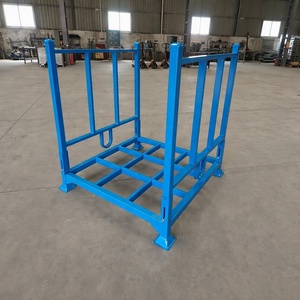
Enterprise Overview & Technical Engineering Excellence
Founded in 2004, Random Racks Storage Equipment Co., Ltd. (also globally recognized through its manufacturing legacy as OTS Racking) has grown into a premier tier-one direct manufacturer and exporter of heavy-duty industrial warehouse steel shelving and automated racking systems. Headquartered in Nanjing, China, our 50,000 square-meter production complex houses automated continuous roll-forming lines, robotic welding stations, laser plate cutting machinery, and fully automatic electrostatic powder-coating channels.
We provide full-spectrum OEM and ODM services to multinational procurement officers, supply chain managers, warehouse developers, and commercial racking distributors across Europe, North America, Australia, South America, and the Middle East. Every racking system engineered by our structural team strictly complies with recognized international structural codes including AS4084-2012 (Australian Standard for Steel Storage Racking), FEM 10.2.02 (European Federation of Materials Handling), EN 15512, and RMI (Rack Manufacturers Institute) guidelines.
Certified Structural Raw Steels
We source prime certified cold-rolled coil steels (Q235B, Q355B grades) from China's leading state-owned steel mills (BaoSteel, AnSteel). Mill Test Certificates (MTC) detailing yield strength ($\sigma_y \ge 235 \text{ MPa}$ to $355 \text{ MPa}$) and tensile stress are supplied with every order.
Free CAD & 3D Engineering Layouts
Our in-house team of 15 structural engineers utilizes advanced AutoCAD and Finite Element Analysis (FEA) software to provide complimentary layout blueprints, seismic load calculations, frame buckling simulations, and precise bill of materials (BOM) prior to contract signing.
Rigorous Load Testing & QC
Every beam profile, connectors hook, and upright punching pitch undergoes destructive deflection testing ($L/200$ deflection limits) and salt-spray corrosion tests for powder coating thickness ($60\mu m - 90\mu m$), guaranteeing 10 to 15 years of maintenance-free service life.
Future Trends in Industrial Steel Shelving & Storage Procurement
As global supply chains navigate volatile demand patterns, nearshoring initiatives, rising land acquisition costs, and escalating labor wages, warehouse design is transitioning from passive static storage to high-density, smart, modular vertical architecture. Procurement heads and logistics directors must align their capital expenditure (CapEx) with structural and technological advancements that yield maximum cubic utilization and lower total cost of ownership (TCO).
1. The Shift Toward High-Density Automated Systems (AS/RS & Radio Shuttle)
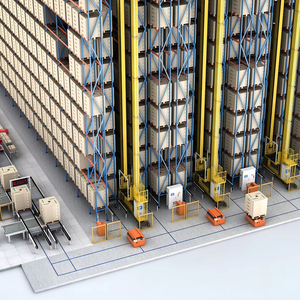
Traditional selective pallet racking, while offering 100% pallet accessibility, requires extensive aisle space—often assigning up to 60% of total warehouse floor footprint solely to forklift operation lanes. Future-ready logistics centers are increasingly adopting Four-Way Radio Shuttle Systems and Automated Storage and Retrieval Systems (AS/RS). These solutions reduce aisle requirements by over 70%, doubling total pallet capacity within the identical floor footprint while integrating seamless ERP/WMS digital tracking.
2. Material Science Evolution: High-Tensile Steel Profiles & Seismic Resiliency
Modern steel manufacturing allows the cold-roll forming of thinner, high-yield-strength micro-alloyed steels (such as Q355B and high-grade galvanized coils). By utilizing advanced profile ribbing and multi-bend upright geometry, modern industrial shelving maintains elevated frame load capacities (up to 24,000 kg per bay) while lowering overall steel tonnage. Furthermore, structural design for high seismic risk zones (calculating spectral acceleration coefficients and floor acceleration parameters) has become a compulsory procurement mandate across worldwide markets.
3. Sustainable Finishing & Corrosion Resistance in Cold Chain Logistics
Cold storage facilities operate under extreme temperature differentials (-25°C to -30°C) and high humidity levels during defrost cycles. Standard paint finishes crack and micro-flake under thermal contraction. Modern industrial steel shelving trends emphasize eco-friendly, lead-free epoxy powder coatings thermoset at 200°C, as well as continuous hot-dip galvanizing (HDG) delivering minimum $65\mu m$ zinc coverage for perpetual protection in harsh chemical or sub-zero food storage environments.
Engineering Selection Matrix: Industrial Storage Systems Comparison
Selecting the optimal steel shelving or pallet racking configuration requires balancing access requirements, inventory turnover speed, floor load capacities, and financial metrics. The comparative matrix below outlines key engineering metrics across primary warehouse racking categories:
| Storage Racking System | Space Utilization | Pallet Accessibility | Load Capacity per Level | Inventory Management | Recommended Application |
|---|---|---|---|---|---|
| Selective Pallet Racking | 40% – 50% | 100% Direct Access | 1,000 kg – 4,500 kg | FIFO / LIFO | General 3PL Warehouses, High SKU Diversity |
| Drive-In / Drive-Thru Rack | 75% – 85% | Low (Block Access) | 1,000 kg – 1,800 kg | LIFO (Drive-In) / FIFO (Drive-Thru) | Cold Storage, Seasonal Bulk FMCG Items |
| Radio Shuttle System | 80% – 90% | Medium-High (Automated) | 1,000 kg – 2,000 kg | Flexible FIFO / LIFO via Remote | High-Volume Distribution, Food & Beverage |
| Automated AS/RS Towers | 85% – 95% | 100% Computer Controlled | 500 kg – 5,000 kg | Fully Integrated Real-Time WMS | Smart Manufacturing, High-Bay Warehousing |
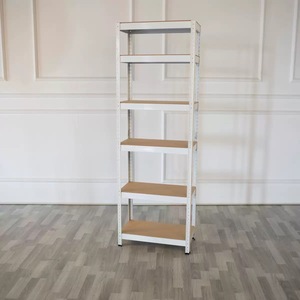
| Boltless Rivet & MDF Shelving | 60% – 70% | 100% Hand-Loaded | 150 kg – 800 kg | Manual Pick Face | Automotive Parts, E-Commerce Pick Modules |
| Heavy-Duty Mold & Drawer Rack | 65% – 75% | 100% Overhead Crane Access | 2,000 kg – 5,000 kg | Individual Drawer Pull-Out | Plastic Injection Molding, Heavy Tooling Dies |
* Note: Final load engineering calculations are dictated by upright column section height, beam profile thickness, connector lock configuration, and slab anchor bolt specifications.
Frequently Asked Questions (FAQ) for Global Buyers
Answers to crucial structural engineering, export logistics, safety certification, and custom manufacturing queries raised by global industrial procurement executives.
Optimize Your Warehouse Cubic Capacity Today
Partner directly with China's trusted industrial steel shelving factory. Contact our engineering team now to receive a customized 3D spatial layout, structural load analysis, and competitive factory-direct pricing tailored to your project timeline.