Industrial Cold Room & Warehouse Racking Portfolio
High-density, low-temperature certified racking equipment manufactured for Australian structural compliance and optimized for deep-freeze environments (-30°C to +4°C).
1. White Paper: Cold Storage Racking Architecture for Greater Melbourne
Melbourne stands as Australia’s undisputed logistics capital, with key industrial precincts such as Truganina, Laverton North, Dandenong South, Campbellfield, and Epping driving the nation's fresh produce, dairy, meat export, and pharmaceutical cold chain network. However, operating a temperature-controlled storage facility in Victoria presents severe economic and structural engineering challenges. Power tariffs, stringent WorkSafe Victoria compliance, and the structural dynamics of sub-zero thermal stress demand warehouse racking systems that maximize cubic utilization (m³) while offering unfailing structural resilience.
As a global OEM manufacturer and direct exporter since 2004, our storage engineering division designs, calculates, and manufactures industrial pallet racking specifically customized for Melbourne’s climate, soil conditions, and regulatory mandates under AS4084:2023 (Steel Storage Racking).
Sub-Zero Structural Metallurgy & Low-Temperature Toughness
Inside deep-freeze distribution centers operating between -18°C and -30°C, standard structural carbon steel suffers from cold embrittlement—a phenomenon where ductile steel undergoes a transition toward brittle failure under heavy dynamic loads. Our cold storage racking systems utilize certified high-tensile steel grades (such as Q355B/Q420B structural steel) subjected to rigorous Charpy V-Notch impact testing at low temperatures.
Furthermore, to prevent micro-fissures and surface degradation caused by continuous condensation cycles during defrosting periods, our upright frames and load beams feature specialized thermal-cure epoxy powder coating systems or hot-dip galvanizing complying with AS/NZS 4680 standards. This guarantees superior corrosion resistance, ensuring long-term structural integrity without peeling or flaking.
AS4084:2023 Structural Compliance
Full limit state design accounting for seismic acceleration, rack displacement, and asymmetric load combinations specific to Victorian building codes.
Low-Temp Surface Treatments
Multi-stage electro-galvanized and thermo-set polyester powder coatings tested to withstand constant thermal cycling without micro-cracking.
Thermal Bridge Mitigation
Engineered HDPE isolation pads under baseplates to eliminate direct heat transfer between structural uprights and sub-slab cooling pipes.
2. High-Density Racking Systems Comparison for Cold Stores
Because refrigerated air is expensive to generate and retain, maximizing storage density per cubic meter directly reduces operational overheads. Below is an engineering evaluation of high-density cold storage systems exported directly to Melbourne logistics operators:
| Storage System Type | Cubic Volume Utilization | Inventory Rotation | Forklift Aisle Requirement | Cold Room Efficiency Rating |
|---|---|---|---|---|
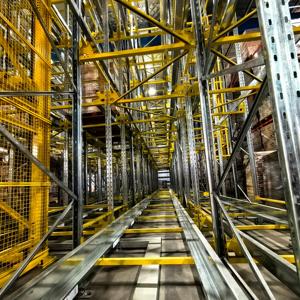
| Four-Way Radio Shuttle Racking | Up to 85% | FIFO / LIFO Automated | Minimal (Outer Loading Bay Only) | Optimal (Maximum ROI) |
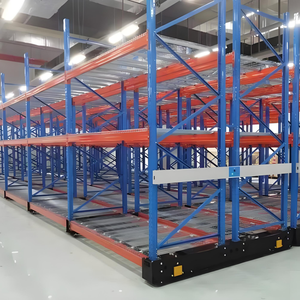
| Electric Mobile Pallet Racking | Up to 90% | 100% Selective (FIFO) | Single Moving Aisle | Exceptional for High-SKU Cold Stores |
| Drive-In / Drive-Thru Racking | Up to 75% | LIFO (Drive-In) / FIFO (Drive-Thru) | Internal Drive Lanes | High (Low Initial Capital) |
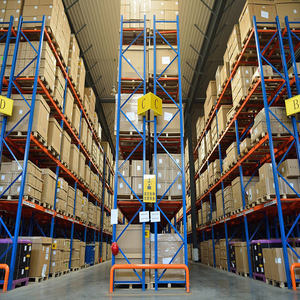
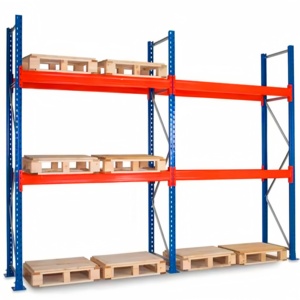
| Double-Deep Selective Racking | Up to 60% | LIFO | Standard Reach Truck | Moderate (Flexible Operations) |
| Gravity Pallet Flow Racking | Up to 80% | Strict FIFO | Separate Loading/Unloading Aisles | High (Perishable Goods focus) |
3. Localized Application Scenarios Across Greater Melbourne
Every industrial zone in Victoria has unique operational demands, warehouse layouts, and supply chain constraints. Our direct export and localized engineering assistance cater to specific regional profiles:
West Melbourne Logistics Hub (Truganina, Laverton North, Altona)
As the primary node for cross-docking and intermodal freight coming off the Port of Melbourne, warehouses in Truganina require massive throughput capabilities. Our Radio Shuttle Racking Systems are heavily deployed here for bulk pallet storage of frozen meat and processed dairy. By eliminating forklift access aisles within the rack block, operators reduce cold room volume by up to 50% while operating 24/7 automated palleted inventory movement.
South-East Food & Manufacturing Corridor (Dandenong South, Keysborough, Pakenham)
Home to Victoria's primary food processing plants, fresh milk bottlers, and pharmaceutical logistics facilities, this sector demands strict compliance with Hazard Analysis Critical Control Point (HACCP) principles and Therapeutic Goods Administration (TGA) cold storage protocols. We supply stainless steel clad shelving, automated carton flow systems, and heavy-duty double-deep selective racking equipped with wire mesh decking to maintain unrestricted airflow and sprinkler penetration in ambient chillers (+2°C to +4°C).
North Melbourne Distribution Hubs (Campbellfield, Somerton, Epping)
Positioned along the Hume Freeway corridor connecting Melbourne to Sydney, facilities here serve rapid-turnaround FMCG grocery distribution. Here, Electric Mobile Pallet Racking provides 100% selectivity across thousands of frozen SKUs while preserving maximum thermal mass inside compact freezer envelopes.
4. Strategic Trends Shaping Victoria's Cold Chain Infrastructure
The Victorian cold chain sector is undergoing a massive transformation driven by three core macro-economic factors:
- Rising Commercial Energy Costs: Wholesale electricity rates in Victoria make traditional wide-aisle warehouse layouts financially unviable. Modern developers are building "High-Cube" cold storage facilities reaching 15m to 28m in clear height, requiring specialized VNA or AS/RS racking profiles.
- Adoption of Automation & IoT: Automation is transitioning from a luxury to an operational necessity. Radio shuttle systems integrated with Warehouse Management Systems (WMS) ensure real-time pallet tracking and automated inventory rotation without exposing workers to sub-zero freezer fatigue.
- Commitment to Net Zero & ESG Standards: Energy-efficient pallet arrangements reduce the refrigeration compressor load, directly lowering a facility’s carbon footprint. High-density racking is now recognized as a key contributor to achieving Green Star ratings for modern industrial developments across Victoria.
Why Melbourne Procurement Officers & Engineers Partner With Us
Since 2004, Random Racks Storage Equipment Co., Ltd. has established itself as a premier OEM/ODM manufacturer of industrial pallet racking and automated warehouse systems. By eliminating middleman markups, we deliver factory-direct pricing alongside full structural engineering accountability for Australian importers and logistics providers.
- Full compliance design according to AS4084:2023 & FEM 10.2.02
- Free 3D CAD & BIM Layout Drawings with structural load calculations
- Third-party certified steel mill certificates & independent tensile reports
- Factory-direct container shipping directly to Melbourne Port (FCL freight)
- Custom color powder coating & hot-dip galvanized finishes available
- Comprehensive installation drawings & technical video guidance
5. Frequently Asked Questions (FAQ) for Melbourne Procurement
Do your racking systems meet Australian Standard AS4084:2023?
Yes. All pallet racking systems exported to the Australian market are engineered in strict compliance with AS4084:2023 (Steel Storage Racking). We perform finite element analysis (FEA) and limit state structural calculations to ensure uprights, beams, frames, and beam-to-upright connectors handle rated safe working loads (SWL), impact factors, and seismic forces specified in AS 1170.4 for Victorian soil classes.
How do you prevent frost heave and thermal bridging under upright baseplates?
In deep-freeze applications (-20°C to -30°C), steel baseplates resting directly on concrete slabs can act as thermal bridges, drawing heat out of the slab sub-grade and causing frost heave (ice lens growth under the concrete). We supply heavy-duty, high-density polyethylene (HDPE) thermal isolation shim pads that sit between the steel baseplate and the floor slab, effectively breaking the thermal pathway while preserving full structural load transmission.
What surface coating is recommended for cold storage in humid coastal areas like Melbourne?
For ambient chillers (+2°C to +4°C) with high humidity, or facilities subject to frequent washdowns, we recommend Hot-Dip Galvanizing (HDG) compliant with AS/NZS 4680, which offers a sacrificial zinc layer. For deep-freeze spaces (-25°C) with dry air, our low-temperature cured electrostatic polyester powder coating provides outstanding impact protection and corrosion resistance at a lower cost point.
Can your Radio Shuttle Racks operate continuously at -25°C?
Absolutely. Our 2-Way and 4-Way Radio Shuttles engineered for cold storage feature sealed sub-zero lithium battery packs with internal thermal management heaters, IP65 water/frost resistant electronic enclosures, and low-viscosity synthetic lubricants rated down to -30°C. This ensures continuous 10-12 hour operating shifts between battery charges.
What is the typical shipping lead time from factory to Melbourne Port?
Production lead time for standard projects is typically 15 to 25 days following CAD drawing approval. Direct ocean freight from our manufacturing facility to the Port of Melbourne takes approximately 14 to 18 days. In total, Melbourne buyers can expect site delivery within 5 to 7 weeks from project deposit.
How do I request a custom warehouse layout and quotation?
Simply click the "Get Catalog" button to connect with our structural engineering desk. Provide your warehouse architectural CAD plan (or dimensions), clear ceiling height, operating temperature, pallet dimension specs (L x W x H including load), maximum unit weight, and preferred forklift model. Our engineers will provide a comprehensive 3D CAD layout design, structural load chart, and itemized bill of materials completely free of charge.
Ready to Optimize Your Melbourne Cold Storage Facility?
Get factory-direct pricing, certified AS4084 structural designs, and free 3D CAD layout planning from our senior engineering team today.
Get Catalog