High-Density Storage Equipment Systems
Engineered to maximize volumetric floor utilization, cut storage cost per pallet, and comply with rigorous Australian safety standards.
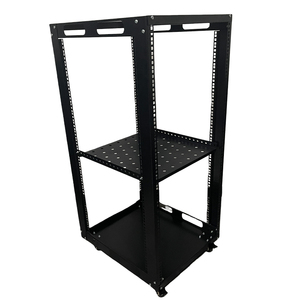
Factory Made 19Inch Steel Server Data Network Rack Vertical Standing System
Contact Us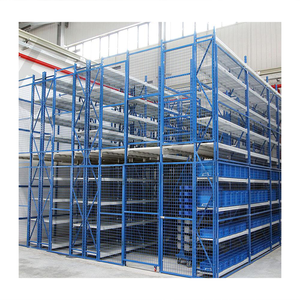
Steel Structure Workshop Mezzanine Multi-Level Corrosion Resistant 500kg Platform
Contact Us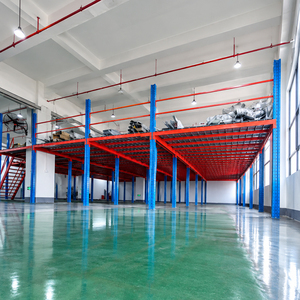
Industrial Heavy Duty Mezzanine Rack With Shelving Steel Warehouse Storage Platform
Contact Us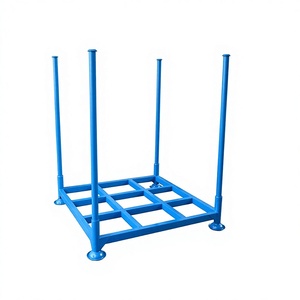
Blue Metal Powder Coated Folding Smart Heavy Duty Detachable Mobile Stacking Rack
Contact Us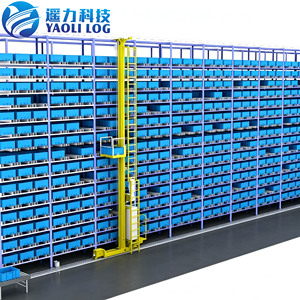
MiniLoad Automated Storage and Retrieval System ASRS for Cartons & Boxes
Contact Us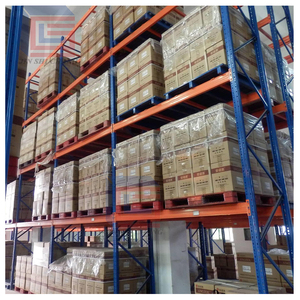
Industrial Heavy Duty Steel Pallet Rack Warehouse Shelving System
Contact Us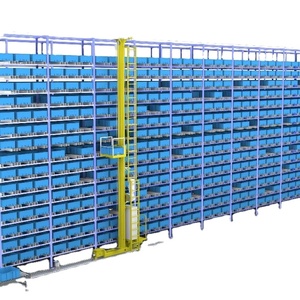
Pharmacy Miniload ASRS Electronic Automated Warehouse System Shelving Rack
Contact Us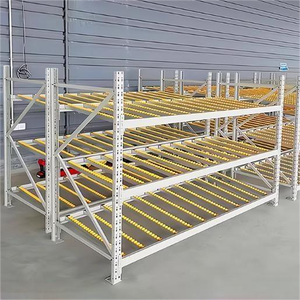
Carton Shelving 5 Layer Flow Rack System with Corrosion Protection
Contact UsHigh Density Very Narrow Aisle (VNA) Racking in Australia
A comprehensive analysis of floor space economics, AS4084:2023 structural standards, and mechanical guidance engineering for Australian logistics hubs.
Australian Land Economics & Industrial Rent Realities
With prime industrial real estate rents in Western Sydney, Melbourne’s outer west, and Brisbane’s trade coast reaching historic peaks ($180 to $350+ per square metre net), warehouse operators face immense pressure to optimize floor cube utilization. Traditional selective racking systems require aisle widths ranging from 3.5 to 4.2 metres to accommodate standard counterbalanced forklifts. This operational overhead consumes up to 60% of total facility floor space purely for material transport.
High Density Narrow Aisle (VNA) pallet racking contracts aisle dimensions down to 1.5 to 1.8 metres. By taking vertical bay heights up to 17+ metres, VNA racking empowers Australian supply chain operations to boost overall pallet storage capacity by 40% to 50% within the exact same building footprint, bypassing costly facility relocations or greenfield expansion capital expenditures.
AS4084:2023 Structural Compliance & Seismic Design
Racking structures installed across Australia must strictly adhere to the updated AS4084:2023 (Steel Storage Racking) specification. Unlike generic global racking standards, AS4084 mandates rigorous structural integrity verifications, including post-buckling behavior analysis, rack frame sway limitations under dynamic forklift loading, and localized seismic zone factors (AS 1170.4 design earthquake loads).
As an experienced high-density racking manufacturer, our VNA engineering utilizes high-tensile structural steel grades (Q355B/Q235B certified), heavy-duty cold-formed upright profiles with multi-claws beam connectors, and precision floor anchoring. Every installation undergoes structural deflection analysis (limiting maximum beam deflection to L/200) to ensure absolute workplace safety and compliance with WorkSafe Australia regulations.
Information Gain Engineering: Volumetric Storage Density Formula
To evaluate the spatial efficiency gain when converting a conventional selective layout into an AS4084-compliant VNA system, structural engineers apply the Cube Utilization Efficiency ratio ($CUE$):
Where N_pallets is total stored units, V_pallet is standard Australian pallet volume ($1.168\text{m} \times 1.168\text{m} \times 1.2\text{m}$), and denominator represents gross warehouse volume. VNA configurations typically elevate CUE from 32% (conventional selective) to over 58%.
VNA System Architecture & Technical Specifications
Comparing guidance mechanism integration, aisle width metrics, and forklift operational specs.
| Racking Architecture | Aisle Width Requirement | Max Stacking Height | Floor Flatness Requirement | Guidance Mechanism Options | Selectivity Rate |
|---|---|---|---|---|---|
| High Density VNA Pallet Racking | 1.5m – 1.8m | Up to 17.5 Metres | Superflat / VDMA / Class 1 (TR34) | Wire-Guided (Inductive) or Steel Profile Guide Rails | 100% Direct Access |
| Conventional Selective Racking | 3.5m – 4.2m | Up to 10.5 Metres | Standard Industrial Slab | Free-steering (No Guidance Required) | 100% Direct Access |
| Double-Deep Pallet Racking | 3.0m – 3.3m | Up to 11.5 Metres | Standard Flat Slab | Panting Reach Truck Camera Guidance | 50% Immediate Access |
| Drive-In Storage Systems | Standard Forklift Track | Up to 12.0 Metres | Standard Industrial Slab | Internal Floor Channel Rails | Low (LIFO Batch Access) |
Wire-Guided Inductive Systems
Wire-guidance buries a low-frequency signal cable inside a 10mm floor slot within the rack aisle. Sensor coils mounted on VNA turret trucks track the signal, steering the machine automatically down the aisle center. This eliminates physical bottom guide rails, simplifying floor maintenance and order-picking access.
Mechanical Steel Guide Rails
Constructed from heavy-duty structural angle steel (e.g., $100\times75\times10\text{mm}$ or custom heavy channel profiles), mechanical guide rails are floor-anchored along aisle bases. Standard side guide rollers on VNA trucks push against these solid steel rails, ensuring physical stability during high-bay vertical lifting.
Concrete Slab Flatness (TR34 & F-Numbers)
High-bay VNA racking amplifies floor slab unevenness exponentially. A 2mm slab deviation at floor level translates to a 30mm dynamic mast sway at 14 metres vertical height. We partner with local Australian civil engineering contractors to specify floor flatness under TR34 Class 1 or F-Min 85 requirements.
VNA Applications Across Australian Logistics Sectors
Customized high-density storage configurations engineered for Australian operating conditions.
Cold Storage & Frozen Food DCs
Operating refrigerated facilities in Melbourne, Brisbane, and Adelaide incurs high energy costs ($/cubic metre). Implementing our hot-dip galvanized VNA racking maximizes pallet count per cubic metre of cooled space, drastically reducing power consumption per pallet position.
Pharmaceutical & Medical Distribution
Australian TGA-regulated pharmaceutical hubs (such as Sydney’s Western Logistics Hubs) require strict 100% SKU batch tracing and zero floor-level contamination. VNA systems combined with high-bay man-up order pickers enable rapid, error-free stock access and full inventory visibility.
3PL Multi-Tenant Fulfillment Hubs
Third-Party Logistics providers managing changing client inventories demand flexible, rapidly reconfigurable upright frames and step-beams. Our boltless safety connector designs allow Australian 3PL operators to adjust beam levels in 50mm increments without structural compromise.
Why Direct Manufacturing Advantage Matters
Combining two decades of precision steel fabrication with direct international export capabilities.
Integrated Manufacturing Capabilities Since 2004
Founded in 2004, our manufacturing facility operates advanced continuous roll-forming lines, robotic welding cells, and automated electrostatic powder coating systems. By controlling the entire manufacturing workflow—from structural steel coil slitting to final surface treatment—we deliver high-density storage components with microscopic dimensional tolerances required for VNA alignment.
- In-house steel coil quality inspection & yield strength verification.
- Thermosetting epoxy powder coating (60-80 microns thickness) resistant to wear and humidity.
- Custom color matching (RAL classic palette: RAL5015 Blue, RAL2004 Orange, etc.).
- Free customized 3D/CAD layout engineering & dynamic structural load modeling.
Full OEM/ODM Customization & Export Quality Control
We provide comprehensive OEM and ODM structural rack production tailored to Australian distributor and contractor specifications. Every project includes mill test certificates, certified weld inspections, and third-party load performance validation reports.
- Heavy-duty bundle export packaging optimized for container shipping to Fremantle, Melbourne, Sydney, and Brisbane ports.
- Pre-punched uprights compatible with international beam connectors.
- Full installation support, structural assembly drawings, and remote video guidance.
- Complimentary structural sample components provided for local engineering review.
Australian Buyer Procurement FAQ
Essential guidance for warehouse managers, project engineers, and supply chain procurement officers.
Are your narrow aisle racking systems certified under Australian Standard AS4084:2023?
Yes. Our structural racking designs and cold-formed steel profiles are engineered to meet or exceed AS4084:2023 design requirements. We supply structural engineering calculations, steel grade mill certificates (Q235B/Q355B), and load rating charts for local Australian structural engineering sign-off.
What are the precise aisle dimension requirements for VNA turret trucks?
VNA aisle widths typically range between 1,500mm and 1,850mm depending on pallet dimensions ($1200\text{mm} \times 1200\text{mm}$ CHEP/Loscam pallets standard in Australia) and the selected turret truck model (e.g., Crown, Linde, Raymond, or Jungheinrich). Our engineering team prepares free CAD layouts confirming exact clear aisle tolerances.
Can mechanical steel guide rails or wire-guidance channels be retrofitted to existing concrete slabs?
Yes. Mechanical guide rails ($100\times75\times10\text{mm}$ angle steel or custom channel profiles) are anchored directly into existing reinforced concrete slabs using heavy-duty chemical expansion anchors. Wire guidance requires a clean 10mm saw-cut slot into the slab, sealed after wire insertion.
What is the manufacturing lead time and container shipping timeline to Australian main ports?
Standard manufacturing lead time at our plant is 15 to 25 days following engineering layout approval. Direct ocean freight transit times are approximately 12–16 days to Port Botany (Sydney) and Melbourne, and 14–18 days to Brisbane and Fremantle ports.
Do you provide structural OEM custom beam profiles and column protection accessories?
We manufacture a complete range of protective accessories including heavy-duty corner frame guards, upright steel protectors, aisle-end barrier rails, mesh rack backing, and drop-in wire decking customized to your load capacities.
How do I obtain a certified 3D warehouse layout and pricing quote?
Simply provide your facility CAD drawing (or floor dimensions), clear building height, target pallet specifications, and unit load weights. Our engineering desk will deliver a complete 3D layout, bill of materials, and landed cost quote within 24 hours.
Transform Your Australian Warehouse Footprint Today
Consult with our structural racking engineers to receive a complimentary AS4084-compliant 3D/CAD layout, load capacity calculation, and direct factory pricing quote.
Contact Us