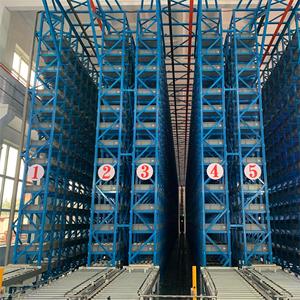
Featured Catalog
High-Density Storage Equipment Portfolio
Explore our engineering capabilities spanning fully automated storage, heavy-duty racking, and customized structural mezzanines for high-throughput operational demands.
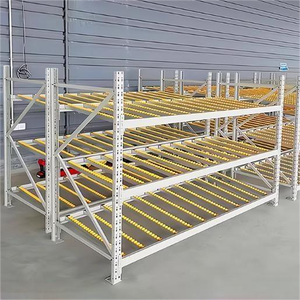
Mracking Carton Shelving 5 Layer Flow Rack System with Corrosion Protection Adjustable & Durable
12 Layer Steel Automated Storage System Drive-In Pallet Rack Warehouse Retrieval Shelving Powder Coated 2.5-6m
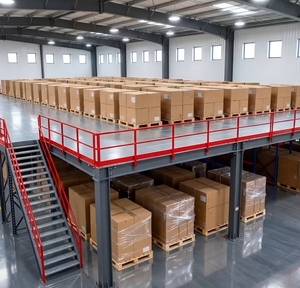
All Our Mezzanine Floors Are Custom-made and Based on Your Wishes and Requirements. We Can Realize Loads up to 2,000 Kg/m2
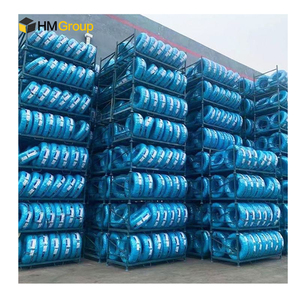
Customized Warehouse Storage Collapsible Stack Powder Coating Tyre Racking System
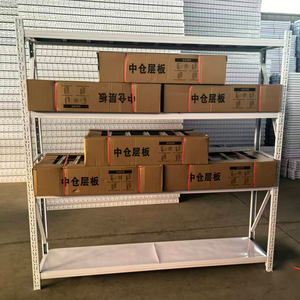
Factory Double Deep Pallet Racking Warehouse Storage System Light Duty Large Capacity Steel Industrial Warehouse Racks
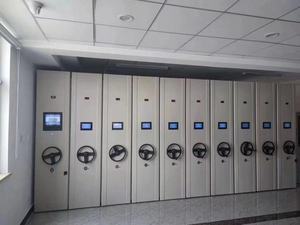
Modern Design Electric & Hand-Operated Mobile Shelf Intelligent File Rack for Archive Room with Moving Track & Voucher Cabinet
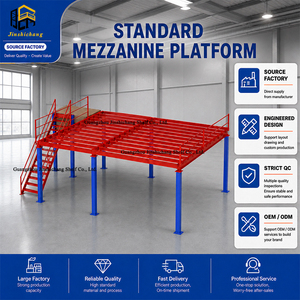
OEM Customized Steel Mezzanine Floor Manufacturer for Warehouse Storage and Factory Projects
2004
Established Year
+180%
Density Gain vs Selective
1.5 Tonnes
Max Shuttle Payload
JIS / FEM
Seismic Standards
Industry Whitepaper
Optimizing Warehouse Cube Utilization in Greater Tokyo's High-Cost Logistics Landscape
An engineering analysis of automated semi-robotic pallet storage solutions under Japanese structural safety codes, labor constraints, and urban industrial zoning.
The Greater Tokyo Metropolitan Area—encompassing primary logistics corridors across Koto-ku, Ota-ku, Shinagawa, as well as prime distribution hubs along the Tokyo Bay (Yokohama, Kawasaki, Ichikawa, and Funabashi)—represents one of the most space-constrained, high-cost warehousing environments in the world. Industrial real estate lease rates in Tokyo’s primary logistics centers routinely exceed ¥7,000 to ¥10,000 per tsubo (approx. 3.3 m²) monthly. Consequently, traditional floor stacking or conventional selective pallet racking setups incur unsustainable overhead costs due to excessive aisle space consumption.
Furthermore, Japan's logistics industry faces structural pressures driven by strict national overtime caps ("2024 Labor Reform Laws" / 働き方改革). Warehouse operators can no longer rely on manual forklift labor to buffer operational bottlenecks. Procurement directors and supply chain engineers serving the Tokyo market are rapidly shifting toward semi-automated Radio Shuttle Racking Systems (pallet runners) to maximize vertical storage density, reduce forklift aisle requirements by up to 60%, and elevate throughput speeds without increasing workforce headcount.
Why Tokyo Logistics Facilities Demand Radio Shuttle Automation
Radio Shuttle Systems utilize an autonomous battery-powered shuttle carriage that travels along specialized guide rails within high-density racking channels. Managed via wireless radio frequency (RF) remote control or integrated Warehouse Management System (WMS) software, the shuttle retrieves and deposits pallets directly at the picking face. This eliminates the necessity for forklifts to enter deep storage channels—a crucial distinction when evaluating risk factors in Japan:
- Maximum Volumetric Efficiency (Cube Utilization): By eliminating inner forklift aisles, Radio Shuttle systems utilize up to 85% to 90% of available warehouse volume, effectively doubling pallet capacity within the existing building footprint compared to standard selective racks.
- Mitigation of Structural Damage & Safety Risks: In standard Drive-In racking, forklifts continuously drive inside the steel upright matrix, increasing collision risks. Radio Shuttle systems maintain forklifts strictly at the perimeter aisle, preventing costly rack upright collisions and protecting operators.
- Flexible Inventory Management (FIFO & LIFO): Configurable for First-In, First-Out (FIFO) when picking channels are open at both ends, or Last-In, First-Out (LIFO) for single-access deep channels, making it ideal for Tokyo’s fast-moving consumer goods (FMCG), cold chain food storage, and automotive supply chains.
Engineering Excellence
High-Performance Features of Our Tokyo-Spec Radio Shuttle
Built with heavy-gauge structural steel, advanced sensor logic, and long-life Lithium Iron Phosphate (LiFePO4) power cells for 24/7 continuous operation.
Seismic Stress Dampening Design
Engineered to withstand Tokyo's seismic activity. Featuring heavy-duty anchor footplates, high-tensile Q355B structural steel, and customized anti-dislodgement top rails compliant with Japanese Building Standard Law and JIS safety codes.
LiFePO4 Rapid-Charge Battery
Powered by industrial-grade Lithium Iron Phosphate cells providing 8 to 10 hours of uninterrupted operational cycle time per charge, with rapid 3-hour recharge capabilities and integrated thermal management systems.
Cold Chain Sub-Zero (-30°C) Ready
Specially treated electronic boards, low-temperature synthetic lubricants, and anti-condensation sensors allow flawless automated operation inside cold storage facilities located in Tokyo Bay and Kawasaki port districts.
Information Gain Analysis
Comparative Performance Matrix: Racking Technologies for Tokyo Warehouses
A side-by-side evaluation of structural storage systems to assist Tokyo logistics managers in selecting optimal capital expenditure investments.
| Storage System Type | Space Utilization Efficiency | Forklift Aisle Requirement | Pallet Access Rate | Seismic Resistance (Tokyo Spec) | Labor Cost Reduction Impact |
|---|---|---|---|---|---|
| Radio Shuttle Racking System | Very High (85% - 90%) | Minimal (Outer Aisle Only) | High (LIFO / FIFO) | Excellent (Reinforced Rails) | Up to 50% Reduction |
| Standard Selective Pallet Rack | Low (40% - 50%) | High (3.0m - 3.8m aisles) | 100% Direct Access | Moderate | Baseline (High Labor) |
| Drive-In Pallet Racking | High (65% - 75%) | Low (Forklift Enters Rack) | Low (Strict LIFO) | Fair (High Collision Risk) | Low (Slower Operation) |
| Very Narrow Aisle (VNA) Rack | High (70% - 80%) | Very Low (1.6m - 1.9m) | 100% Direct Access | Moderate (Requires Flat Floor) | Moderate (Requires Turret Trucks) |
| Automated Storage (AS/RS) | Maximum (90% - 95%) | Zero (Fully Automated) | Automated Pick | High (Custom Crane Structure) | Maximum (High Initial CAPEX) |
Localized Case Applications
Engineered for Tokyo's Core Industrial Sectors
Custom-fit deployment strategies engineered for specific high-density regional logistics demands across Japan.
Cold Storage & Frozen Food Logistics (Tokyo Bay Hubs)
Electric utility and land costs for cold storage facilities in Koto-ku, Jonanjima, and Yokohama Port are among the highest in East Asia. Deploying our low-temperature spec Radio Shuttle system maximizes pallet density inside expensive refrigerated chambers operating down to -25°C. By shrinking aisle volume, facilities drastically lower heat loss, optimize compressor efficiency, and cut energy consumption per pallet position by over 30%.
Automotive Parts & Precision Manufacturing Buffer Warehouses
Serving automotive supply chains spanning Tokyo, Kanagawa, and Saitama, our heavy-duty shuttle racking handles dense batch storage of steel coils, engine components, and stampings up to 1,500 kg per pallet. Integrated optical sensors synchronize shuttle movement with AGVs (Automated Guided Vehicles), enabling seamless just-in-time (JIT) material flow to assembly lines without human error.
E-Commerce & 3PL High-Throughput Order Buffer Centers
Distribution hubs handling last-mile deliveries into Central Tokyo require rapid staging areas during peak promotional seasons. The Radio Shuttle system functions as an automated buffer station, allowing rapid loading of outbound pallets directly into dispatch lanes. Flexible FIFO/LIFO software logic ensures fast SKU rotation for high-velocity goods.
Direct Factory Manufacturer
Why Global Buyers Partner with Random Racks Storage Equipment Co., Ltd.
Two decades of continuous precision steel fabrication, international code compliance, and bespoke structural design expertise.
Since 2004, Random Racks Storage Equipment Co., Ltd. (operating from our state-of-the-art manufacturing plant in Nanjing, China) has established itself as an authoritative global manufacturer of heavy-duty warehouse racking, steel mezzanines, and automated material handling equipment. With our proprietary brand registered in 2012, we provide end-to-end OEM and ODM structural solutions for overseas procurement directors across Japan, Europe, Oceania, and the Americas.
Full Process In-House Manufacturing Control
Unlike third-party traders or regional distributors, Random Racks maintains complete quality control across every phase of production. Our facility features continuous automated cold roll-forming lines, robotic laser welding stations, pre-treatment phosphating wash systems, and dual electrostatic powder-coating lines. We source prime structural steel coil (Q235B & Q355B) directly from tier-one steel mills, complete with full material traceability and chemical analysis certificates.
20+
Years Manufacturing Experience (Est. 2004)
3D CAD
Free Engineering Layouts & FEA Reports
ISO 9001
Certified Quality Management System
FEM / JIS
Tested Load Compliance Standards
Engineering Tailored for Tokyo Facilities
Exporting heavy racking equipment into Japan requires meticulous attention to structural safety, floor loading capacities, and seismic anchor engineering. Our in-house structural design team uses advanced 3D CAD modeling and Finite Element Analysis (FEA) to calculate exact stress distributions, beam deflections, and baseplate anchor shear resistance based on local Tokyo warehouse specifications.
Buyer Technical FAQ
Frequently Asked Questions: Purchasing Radio Shuttle Racking for Tokyo Projects
Expert insights addressing structural compliance, installation logistics, cold room performance, and return on investment.
How does the Radio Shuttle Racking system comply with Japanese seismic and building safety standards?
For installations serving the Tokyo metropolitan area, our structural engineering team custom designs upright frames using high-tensile Q355B cold-rolled steel with enlarged, heavy-duty floor anchor baseplates. We verify rack stability against simulated seismic acceleration forces aligned with Japanese Building Standard Law regulations. Features such as structural top tie-beams, back bracing matrices, and safety rail end-stops are integrated to prevent pallet dislodgement during seismic tremors.
What is the typical Return on Investment (ROI) timeline for Tokyo warehouse conversions?
Given Tokyo's premium industrial lease rates (often exceeding ¥8,000/tsubo), converting a standard selective pallet rack layout to a Radio Shuttle System typically achieves full CAPEX payback within 14 to 22 months. Payback is driven by doubling storage capacity within the same square footage (avoiding facility relocation or expansion) and reducing forklift labor and equipment maintenance expenses by up to 45%.
Can the Radio Shuttle operate reliably in sub-zero cold storage facilities in Koto-ku or Yokohama Port?
Yes. We manufacture specialized Cold Storage Spec Radio Shuttles engineered specifically for sub-zero environments down to -30°C. These models feature IP65-sealed electrical compartments, low-temperature synthetic hydraulic oils, internal heating elements for sensitive optical sensors, and freeze-resistant Lithium Iron Phosphate battery packs equipped with thermal protection circuits.
What measures are in place if a shuttle battery drains or malfunctions deep inside a channel?
Our shuttle carts feature real-time battery voltage monitoring via the RF wireless remote control. If power drops below a safety threshold (e.g., 15%), the system automatically locks out new storage tasks and returns the shuttle to the home pick face. In the unlikely event of complete power loss inside a lane, every system includes an emergency recovery tow-cable accessory, allowing operators to easily retrieve the carriage using a standard forklift.
How does Random Racks manage shipping, customs clearance, and installation in Japan?
We provide full container load (FCL) export shipping directly from our Nanjing factory to major Japanese sea ports including Tokyo Port, Yokohama, and Osaka. Components are securely bundle-packed with protective wrap and labeled by channel code to facilitate fast unloading. We provide comprehensive step-by-step 3D assembly CAD drawings, installation manuals, and operational videos. On-site installation supervision and commission engineers can also be deployed upon request.
Accelerate Your Warehouse Capacity in Tokyo
Send us your warehouse floor plan, clear ceiling height, pallet dimensions, and target storage requirements. Our senior engineering team will return a free 3D CAD layout design, structural load calculation sheet, and itemized factory-direct quote within 24 hours.